
Beckman Coulter Life Sciences to present at American Society of Human Genetics Annual Meeting
Next generation sequencing (NGS) solutions will be highlighted
19 Oct 2022
Industry news
Beckman Coulter Life Sciences, a global leader in laboratory automation and innovation, will have a full team of dedicated professionals and informative programming at the American Society of Human Genetics (ASHG) Annual Meeting October 25-29, 2022 in Los Angeles, California at the Los Angeles Convention Center.
At booth 2037, attendees will have the chance to interact with instruments, including one-on-one demonstrations, to learn how to strike next generation sequencing (NGS) workflow gold to help low- to high-throughput labs. The NGS market is forecasted to reach $22.9 billion by 2025, making ASHG an ideal time to learn more about how labs can realize a new level of cost savings and throughput, improve end-to-end NGS automation at standard and reduced reaction volumes, automate current and future workflows, and deliver laboratory results with confidence by generating high-quality sequencing data.
“Given the substantial growth of the NGS market, we know labs have many questions and needs for workflow analysis and improvements” said Amy Yoder, Director of Genomics Product Management. “Beckman Coulter Life Sciences is uniquely positioned to lead the way with solutions and be a trusted partner in the lab. No one wants to have their research ruined by errors or delays, so we’re especially pleased to be able to deliver solutions that provide more reliable and accurate laboratory results with significantly fewer physical steps, allowing the focus to return to the work and not the workflow.”
The company’s entire NGS suite will be on display, including the Biomek NGeniuS Next Generation Library Prep System, the Echo 525 Acoustic Liquid Handler, the Biomek i5 Automated Workstation, along with NGS cleanup reagents and the EMnetik System for plasmid prep and Polymerase Chain Reaction (PCR) cleanup.
Beckman Coulter Life Sciences will be offering two presentations during the event. Biomek NGeniuS Product Manager Calvin Cortes will highlight the revolutionary methodology to expedite NGS workflows in his presentation: “Optimizing Your NGS Lab with a Game-Changing, Easy-to-Use Automation Solution,” which takes place Wednesday, October 26 at 3:00 p.m. PST in CoLab Theater 3. Dr. Ryan Wyllie, Assistant Research Scientist in Biomedical Engineering at University of Michigan, will present on “Improving High-Throughput Genomics Protocols with Statistical Design of Experiments.” The presentation strives to provide clarity, as a variety of commercial and homemade methods exist to lower the cost or increase the efficiency of genomic assays. Many of these techniques are suboptimal when applied to new samples or when the protocol or reagents need to be changed or automated. Re-optimizing a protocol by trial and error is an expensive and laborious process. Systematic frameworks like the statistical design of experiments (DOE) can improve processes by exploring the quantitative relationship between multiple factors. DOE allows experimenters to find factor interactions that may not be apparent when factors are studied in isolation. Dr. Wyllie’s presentation will take place Thursday, October 27 at 1:15 p.m. PST in CoLab Theater 2.
Want the latest science news straight to your inbox? Become a SelectScience member for free today>>
Related products
Request Quote for All Products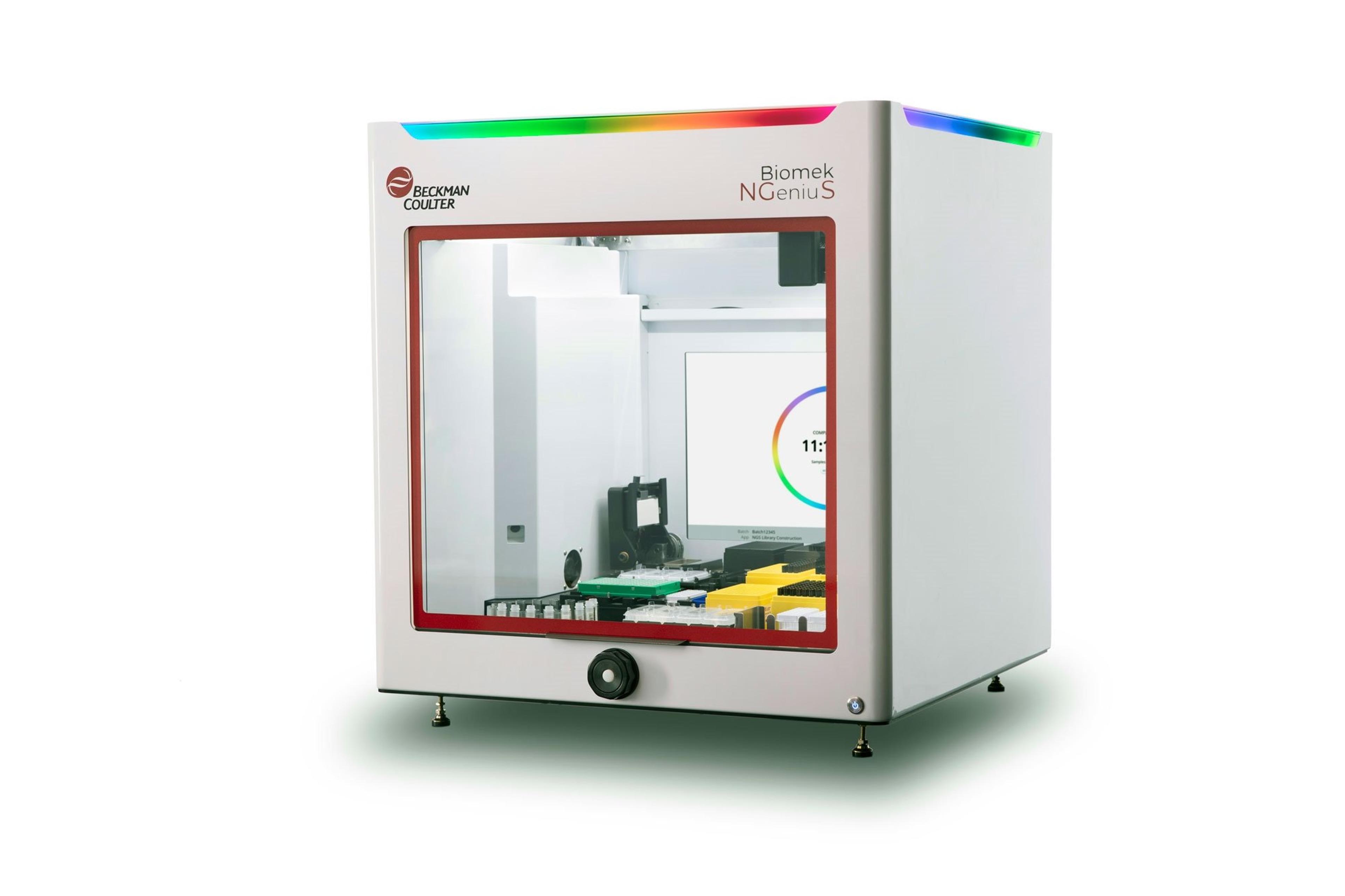
Biomek NGeniuS Next Generation Library Prep System
Beckman Coulter Life SciencesThe future of NGS library preparation is here.