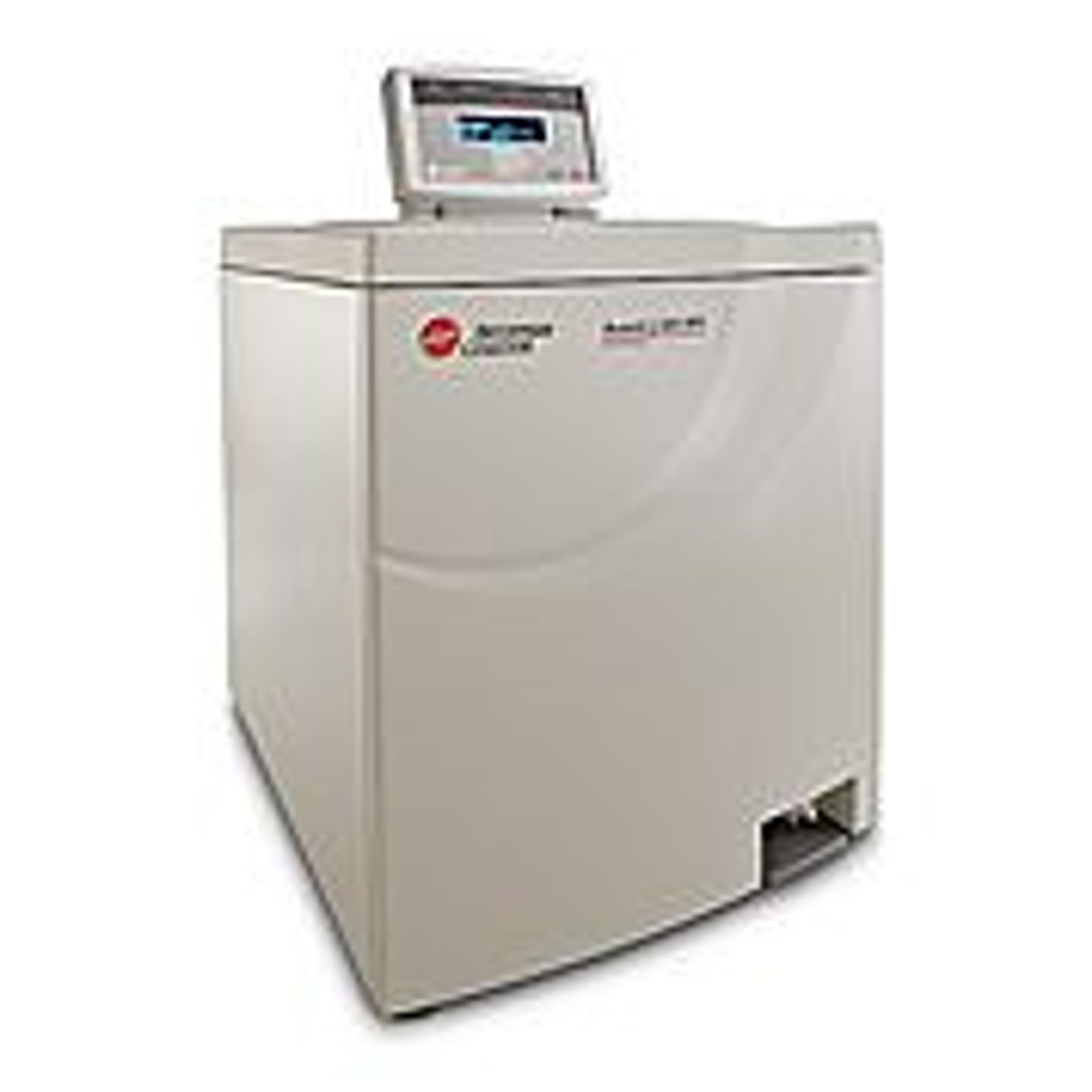
Avanti J-26S High Performance Centrifuge Provides Enhanced Environmental and Safety Benefits

15 Aug 2012
Tesni Perry
Administrator / Office Personnel

Product news

The newly redesigned Avanti J-26S high performance centrifuge from Beckman Coulter Life Sciences combines important environmental benefits with increased BioSafety features. Coupling the J-26S with new 1-liter polypropylene bottles furthers sample security and extends the range of biopharmaceutical and research applications.

Built upon benchmark performance, the J-26S provides high speed, low heat output, imbalance tolerance and low noise, and a range of ever-expanding separations capabilities. Ergonomic design, featuring lower instrument height and hands-free door operation, remains unchanged.

Dual-system rotor recognition automatically detects which rotor is installed and prevents it from being run above its maximum rated speed, and does so without shutting down the run. Rotor library includes fixed-angle, swinging bucket, elutriation, continuous flow and zonal rotors that offer speeds as high as 26,000 rpm and rcf up to 81,800 (x g).

Application versatility is built in: the J-26S can process up to six liters of fermenter output, deliver a subcellular fraction, run 24 microplates at a time and separate live-cell populations with centrifugal elutriation.

BioCertified rotors, instruments and labware reduce microbiological aerosols, while sterilizing grade filters capture harmful aerosols that might be expelled into the lab environment.

Made of resin that incorporates 18% post-consumer recycled plastic water bottles, each centrifuge keeps approximately 7.5 pounds of post-consumer materials from entering a landfill. The resin offers impact, scratch and chemical resistance throughout its life. Non-CFC, non-ozone depleting refrigerant extends the environmental benefits.

Thick walls made of strong resin enable the new 1-liter polypropylene bottles to be used in runs at speeds up to 16,800 x g and temperatures up to 40°C, providing higher g forces and more efficient run times while protecting samples from bottle failure.

Equipped with a wide mouth that provides easy access to samples, the bottles offer more head space to prevent leakage and have a vent to release pressure. Accessories include a tool to tighten or loosen the cap, a custom spatula to simplify pellet removal and a carrier.

"Security for users and for samples is an important benefit of these additions to the Avanti line," said Patrick O’Donnell, senior global manager of marketing, Beckman Coulter Life Sciences. "We’re happy to offer products that increase productivity, are friendly to the environment, and can be part of an integrated research and production system."

Links

Tags

Sample PreparationSample preparation can improve the quality and speed of separation techniques. Products to assist sample preparation include filtration equipment, evaporators, membranes and sieves.MicroplatesMicroplates are multi-well plates used to increase the throughput of biological investigations. The number of wells microplates contain can range from 6 to 3243 wells, with the 96-well format being the most commonly used. Microplates can come tailored for a range of applications including cell culture, PCR, filtration, storage, non-binding surface, protein crystallization, as well as pre-coated, deep well and normal Standard microplates. Additionally, options for microplate colors include clear , black, white or black with clear bottom and white with clear bottom for absorbance microplate reader applications. Find the best microplates for your lab in our peer-reviewed product directory: compare products, check customer reviews and receive pricing direct from manufacturers.CentrifugesCentrifuges are used to separate particulates suspended in a liquid via the application of a centrifugal force including cells, macromolecules, nanoparticles and precipitates. Centrifuges come in three sizes: microcentrifuges, benchtop and floor-standing centrifuges, depending on the volume and number of samples that require separation. When choosing a centrifuge, consider its maximum separation power indicated by its relative centrifugal force (RCF) value. Low force centrifuges reach a maximum RCF of 8,000 g, high-force centrifuges can reach maximum RCF values of 80,000 g. For extremely high forces, consider ultracentrifuges (up to 800,000 g). Refrigerated and vacuum centrifuges also known as concentrators are available for more specialized applications. A range of volumes are available for centrifuge tubes and microfuge tubes, depending on sample sizes. Find the best centrifuges in our peer-reviewed product directory: compare products, check customer reviews and receive pricing direct from manufacturers.MicrobiologyMicrobiology is the study of microorganisms including protists, prokaryotes, fungi, and, often, viruses. Microorganisms are a useful research tool as genetic vectors and, in immunology, for antibiotic susceptibility testing, cellular biology and genetics. Microorganisms commonly grow readily in incubators with microbial culture media; this can contain chromogenic supplements to differentiate between cell lines. Estimate your culture’s density of microorganisms with colony counters, or screen and select colonies for desirable clones with automated colony pickers. Additionally, equipment is available to monitor environments for the presence of microbes and identify with microbial identification instruments. Find the best microbiology products in our peer-reviewed product directory: compare products, check customer reviews and receive pricing direct from manufacturers.Sample ManagementSample management systems include sample storage devices such as freezers and plate storers, sample environment enclosures and sample organization, retrieval and sorter systems. Useful system features include high-throughput, automation, robotic arms, automated liquid handling and associated database systems. Accessories in sample management include barcode scanners, heat sealers and tubes.Research and Development