
“Automation for all” PAA shows the way at ELRIG Drug Discovery 2019
Low-cost, flexible and dependable automation possibilities open up for any research group
21 Oct 2019
Industry news
Peak Analysis & Automation, a global leader at the heart of laboratory automation, will be showcasing how automation can be used to enhance research without involving major investment at the upcoming ELRIG Drug Discovery 2019 meeting, 5-6th November, ACC, Liverpool, UK.
Dispelling the myth that automation is expensive, PAA will host a workshop at Drug Discovery 2019 entitled “High Value Research with Low Cost Automation”, on Wednesday 6th November at 11am in room 11a. Guest speakers from UCL School of Pharmacy and University of Liverpool’s Department of Biochemistry, will talk about some of the successful research they have performed using S-LAB, PAA’s entry-level automation platform. Designed to enable multiple applications, the S-LAB automated plate handler is extremely easy to set up and use, is as reliable as an expensive robotic arm, yet with a highly-affordable price point. Significantly this means that automating anything from routine lab work to sensitive assays is now possible in almost any research laboratory, enhancing the possibility of faster scientific breakthroughs.
Offering extreme flexibility, S-LAB is small enough to fit most lab benches and safety cabinets, easily handles lidded plates, and an internal barcode reader and optical plate sensor ensures reliable walk-away operation.
Visitors to Drug Discovery 2019 will be able to see the S-LAB automated plate handling solution which is designed for easy use in multiple applications on PAA’s stand - F3. PAA experts will be on hand to discuss how researchers can apply automation in their laboratories, and advise on getting more consistent control over processes while improving reliability and enhancing data connectivity, by using PAA’s Harmony Batch Manager and Overlord software.
In addition to the workshop, PAA will also be demonstrating how its automation hardware and software can significantly improve sample throughput and data integrity in a sponsored poster by Farah Mughal, Research Project Specialist at the Department of Biochemistry, University of Liverpool on “High-throughput analysis using flow cytometry”.
Register for your free SelectScience membership today to receive the latest editorial articles and technology news direct to your inbox>>
Related products
Request Quote for All Products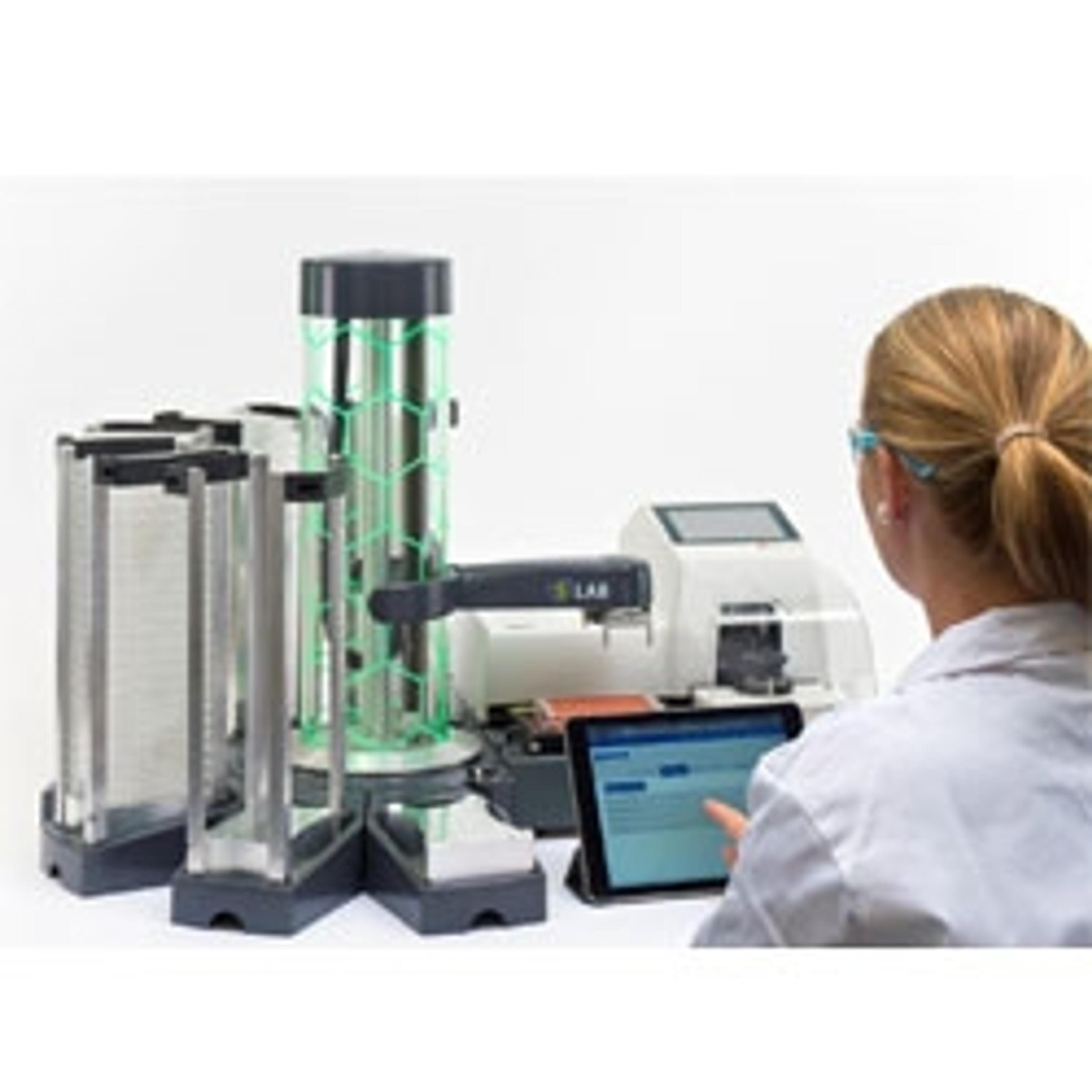
S-LAB™ automated plate handler
Peak Analysis and Automation LtdThe S-LAB™ automated plate handler is an entry level automation solution designed for multiple applications and ease of use