Automated cell culture from Tecan

11 Oct 2006

Product news

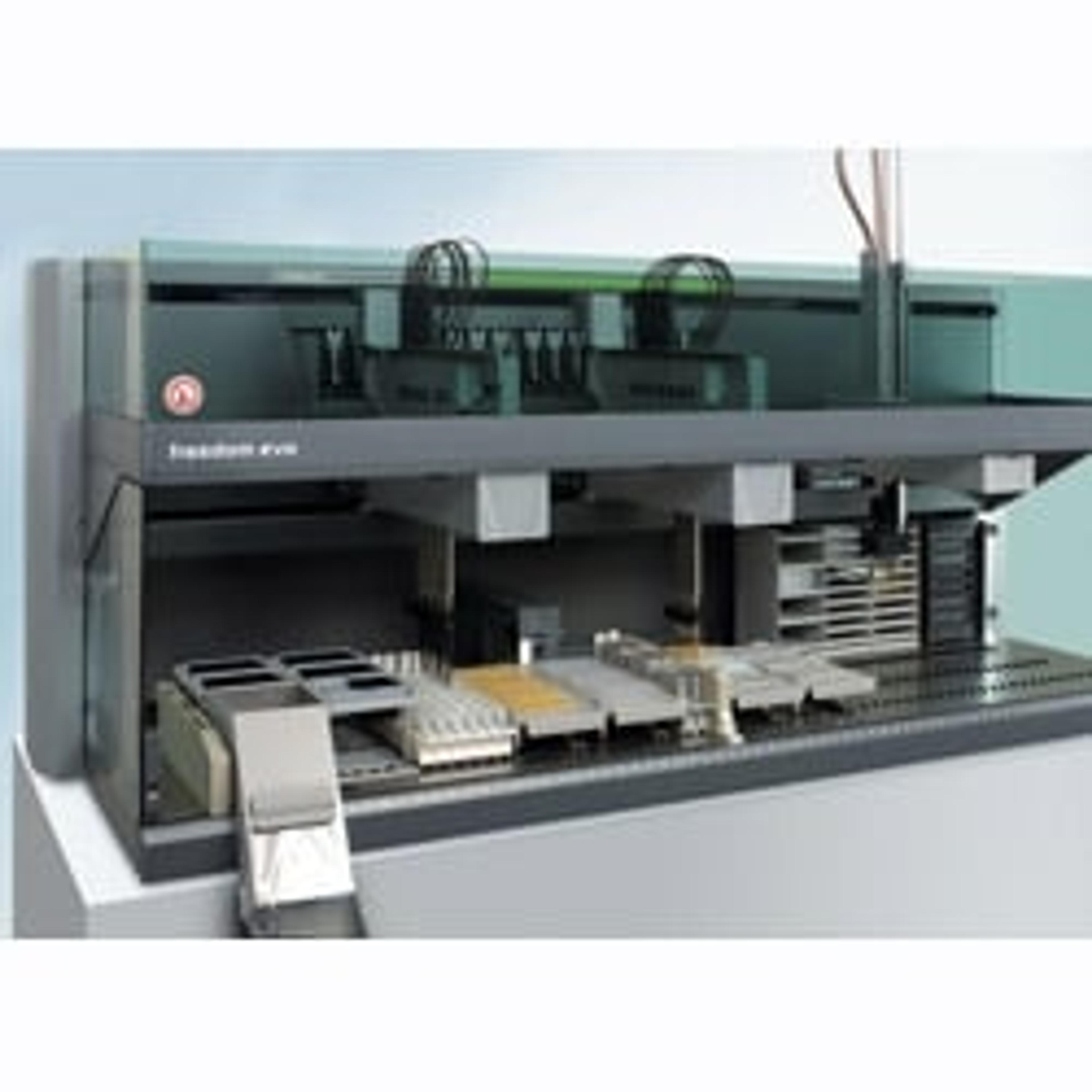
Tecan, one of the world's leading players in the growing life sciences industry, has released the new Flask Flipper™ module which fits Tecan's Freedom EVO® liquid handling workstations.

The new module handles tissue cultures in microplate-sized, automation friendly cell culture flasks, which have been introduced by recognized consumable manufacturers, including the RoboFlask™ vessel by Corning Life Sciences.

The module eliminates manually tedious cell culturing processes by automating the harvest, passage, splitting and seeding of adherent cell cultures. The Flask Flipper module assists the cell harvesting process by shaking, knocking cells off flask surfaces and holding flasks in the upright position for liquid addition or removal.

Studies in association with the Institute of Chemistry and Biotechnology of the Zurich University of Applied Sciences in Winterthur have shown that various cell types grown to near confluency in Corning RoboFlask vessels showed no statistical differences in cell counts and cell viability when harvested either manually or by the Freedom EVO equipped with the Flask Flipper (data available from Tecan).

Tecan Freedom EVO® Workstation

Tecan

The Freedom EVO platform offers fully automated liquid handling and robotics for life sciences and diagnostics. This flexible system offers virtually unlimited options, which can be tailored to provide individual solutions.

(67)

Links

Tags

Cell / Tissue CultureCell culture or tissue culture is used to study the biology of cells or tissues and to isolate cellular products in an environment which can be manipulated and well defined. Accurately control your culture environment with bioreactors or culture incubators, bind your cells to a surface or together with an extracellular matrix. Distinguish cell types with differential media or proliferate cells with certain characteristics using selective media. Enrich your media with supplements such as growth factors, sera and vitamins. Find the best cell and tissue culture products, kits and equipment in our peer-reviewed product directory: compare products, check customer reviews and receive pricing direct from manufacturers.Lab-on-a-ChipLab-on-a-chip (LOC) technology uses microfluidic chips, such as microarrays, to perform biochemical assays on a small scale. Benefits of lab-on-a-chip include the small volume of sample required as well as the speed of analysis. In selecting lab-on-a-chip devices consider the assay, cost, reliability, sensitivity and signal to noise ratio.Microplate Readers / DetectorsMicroplate readers are used to automate the detection and analysis of labeled or label-free components in microplates during assays or live-cell monitoring. Microplate readers are generally distinguished by their mode of detection. Types include absorbance, luminescence, fluorescence intensity, fluorescence polarization, TRF / FRET and multimode microplate readers. Microplate readers deliver a high throughput of samples by reading multiple wells simultaneously, with the 96-well format the most commonly used. As a result, microplate readers are often used in the drug discovery, bioassays, research and pharmaceutical industries for screening applications. Microplate loading can also be automated, with robotic microplate stackers to increase throughput. Find the best microplate readers in our peer-reviewed product directory: compare products, check customer reviews and receive pricing direct from manufacturers.