
Autism Linked to Abnormal Immune Responses of Pregnant Mothers
Learn how the maternal immune profile of mothers can predict neurodevelopmental abnormalities
5 Jan 2017
Editorial article

Autism with intellectual disabilities correlates with the immune profile during gestation
Dr Karen L. Jones, a postdoctoral research fellow in the lab of Dr Judy Van de Water at the University of California, Davis, told SelectScience® about her research, using Luminex based immunoassays from MilliporeSigma. The lab is focused on the neuroimmunological mechanisms underlying autism. Specifically, Dr Jones is interested in how interactions between the nervous and immune systems during pregnancy lead to abnormal development and, in a recently published study, revealed a significant link between the maternal immune system and a higher risk of autism.
Maternal immune profiling and autism
Luminex has been an integral component of our research, as it is a highly sensitive immunoassay that allows for simultaneous measurement of numerous cytokines and chemokines while requiring only a small amount of sample.
Dr Karen L Jones University of California, Davis
Autism is a developmental disorder that can result in impaired communication skills, difficulties with social interaction and abnormal repetitive behaviors. The disorder presents as a spectrum, with patients affected to differing degrees. The exact cause is unknown but research has implicated both genetic and environmental components. More recent studies have indicated that the maternal immune environment during gestation could play a major role in mediating the neurodevelopmental anomalies associated with autism spectrum disorders (ASDs).
In a recent publication, Dr Jones and colleagues examined the relationship between the mid-gestational maternal immune environment and risk of autism in a large, population-based prospective study. The study found that mothers with elevated levels of particular cytokines and chemokines during pregnancy had a significantly increased risk of having an autistic child with intellectual disabilities. Interestingly, this maternal profile was not present in mothers of children with autism or intellectual disability alone, which suggests that autism with intellectual disability has a distinct etiology.
Dr Jones explained that these findings not only further the understanding of ASD variability but also point towards potential mechanisms underlying this subtype. Identification of the associated neurobiological mechanisms could aid in the development of strategies to prevent ASD.
Detection of cytokines and chemokines
Dr Jones and colleagues use Luminex based immunoassays from MilliporeSigma for simultaneous measurement of several cytokines and chemokines. As Dr Jones comments, “Luminex has been an integral component of our research, as it is a highly sensitive immunoassay that allows for simultaneous measurement of numerous cytokines and chemokines while requiring only a small amount of sample.” MILLIPLEX® MAP Human Cytokine/Chemokine kits enable several analytes to be analyzed quickly, from a single sample, as opposed to the alternative of running several separate ELISAs. Dr Jones is also happy with the quality of the data, “The Cytokine/Chemokine kits are highly sensitive and reproducible and allow us to conserve our sample as they require a very low volume to run.”
Future perspectives
Dr Jones and colleagues are now working to replicate and expand their published findings to establish the longitudinal relationship of the maternal immune profile with clinically validated behavioral outcomes in the child. Further studies are investigating the potential relationships between maternal mid-gestational immune profiles and additional risk factors of ASD, both genetic and environmental.
Dr Jones believes that these studies, in combination with future research to elucidate the potential mechanisms of action by which the maternal mid-gestational immune profile may alter neurodevelopment, are of great importance to the research field and autism community. A better understanding of autism etiology is critical for identification of biomarkers that could enable earlier diagnoses and intervention strategies, and also for development of personalized treatment approaches. Dr Jones concludes that collaboration will be the key to success, “While a wide variety of technologies will be fundamental in these efforts, collaborations that integrate these approaches will be of upmost importance to achieving success.”
Read the full academic publication here.
Do you use MILLIPLEX® MAPHuman Cytokine/Chemokine kits? Tell us what you think, leave a review today.
Related products
Request Quote for All Products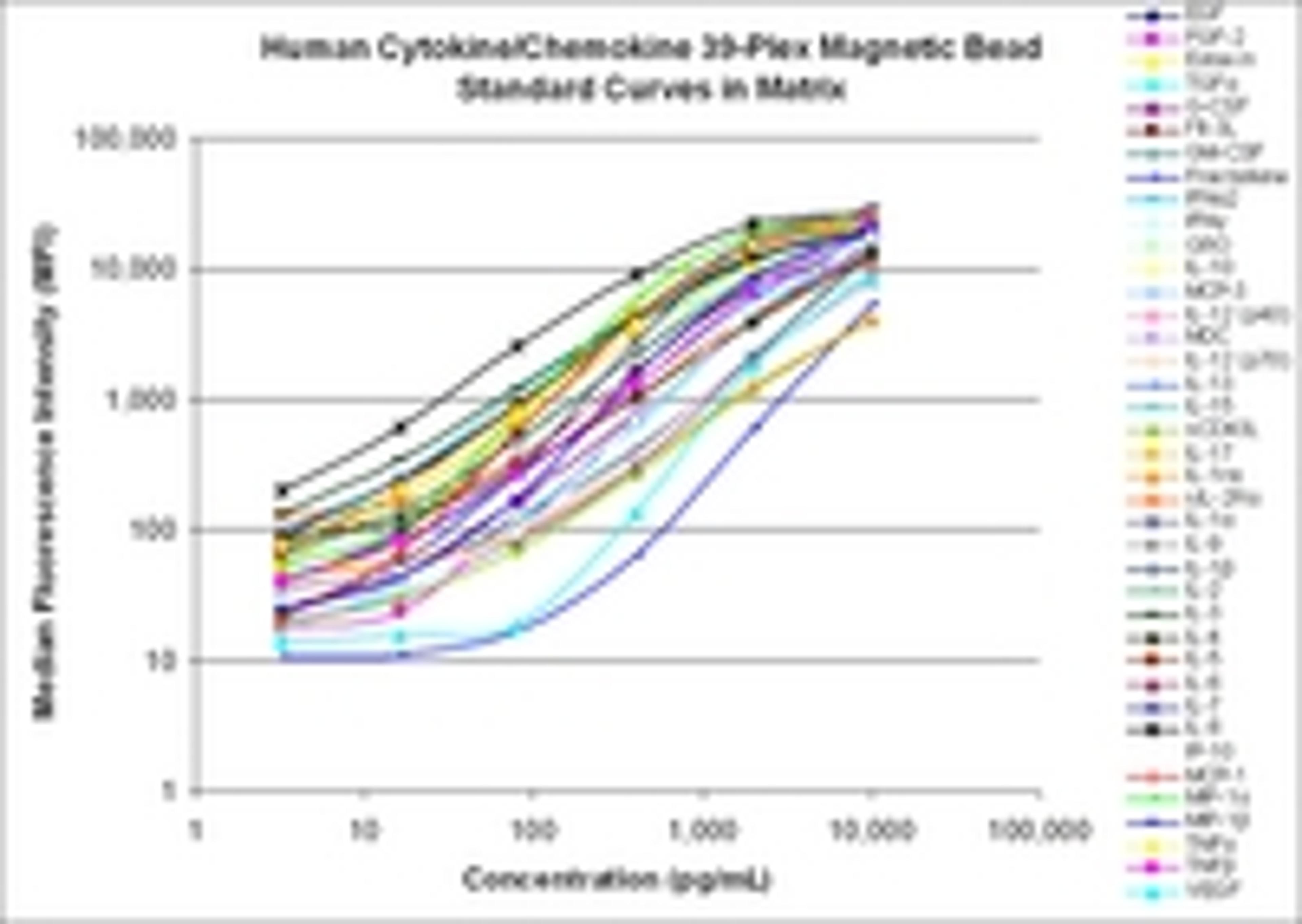
MILLIPLEX MAP Human Cytokine/Chemokine Magnetic Bead Panel - Immunology Multiplex Assay
Merck KGaA, Darmstadt, GermanySimultaneously analyze multiple cytokine and chemokine biomarkers with Bead-Based Multiplex Assays using the Luminex technology, in mouse serum, plasma and cell culture samples.

MILLIPLEX MAP Human Complement Panel 1 - Immunology Multiplex Assay
MerckEMD Millipore’s MILLIPLEX® MAP Complement Panel 1 Magnetic Bead Panel is an 8-plex kit to be used for the simultaneous quantification of any or all of the following analytes in serum, plasma or culture supernatant samples: Complement 2, Complement C4B, Complement C5, Complement C5a, Complement C9, Adipson/Complement Factor D, Mannose-Binding Lecting (MBL) and Complement Factor I. MILLIPLEX® MAP offers the broadest selection of analytes across a wide range of disease states and species. Once the analytes of interest have been identified, you can rely on the quality that we build into each kit to produce results you can trust. In addition to the assay characteristics listed in the protocol, other performance criteria evaluated during the validation process include: cross-reactivity, dilution linearity, kit stability, and sample behavior(e.g. detectability and stability). Each panel and kit meets stringent manufacturing criteria to ensure batch-to-batch reproducibility. Each MILLIPLEX® MAP panel and kit includes: Quality controls (QCs) provided to qualify assay performance Comparison of standard (calibrator) and QC lots to a reference lot to ensure lot-to-lot consistency Optimized serum matrix to mimic native analyte environment Detection antibody cocktails designed to yield consistent analyte profiles within panel EMD Millipore’s MILLIPLEX® MAP Complement Panel 1 Magnetic Bead Panel is part of the most versatile system available for complement factor research. From our single to multiplex biomarker solutions, we partner with you to design, develop, analytically validate and build the most comprehensive library available for protein detection and quantitation.