Ask New Research Questions with the Latest Live Cell Imaging Technology

Learn how scientists around the world are using IncuCyte technology to investigate dynamic biological processes in real time

19 Jun 2017

Sarah Thomas
Associate Editor

Expert insights

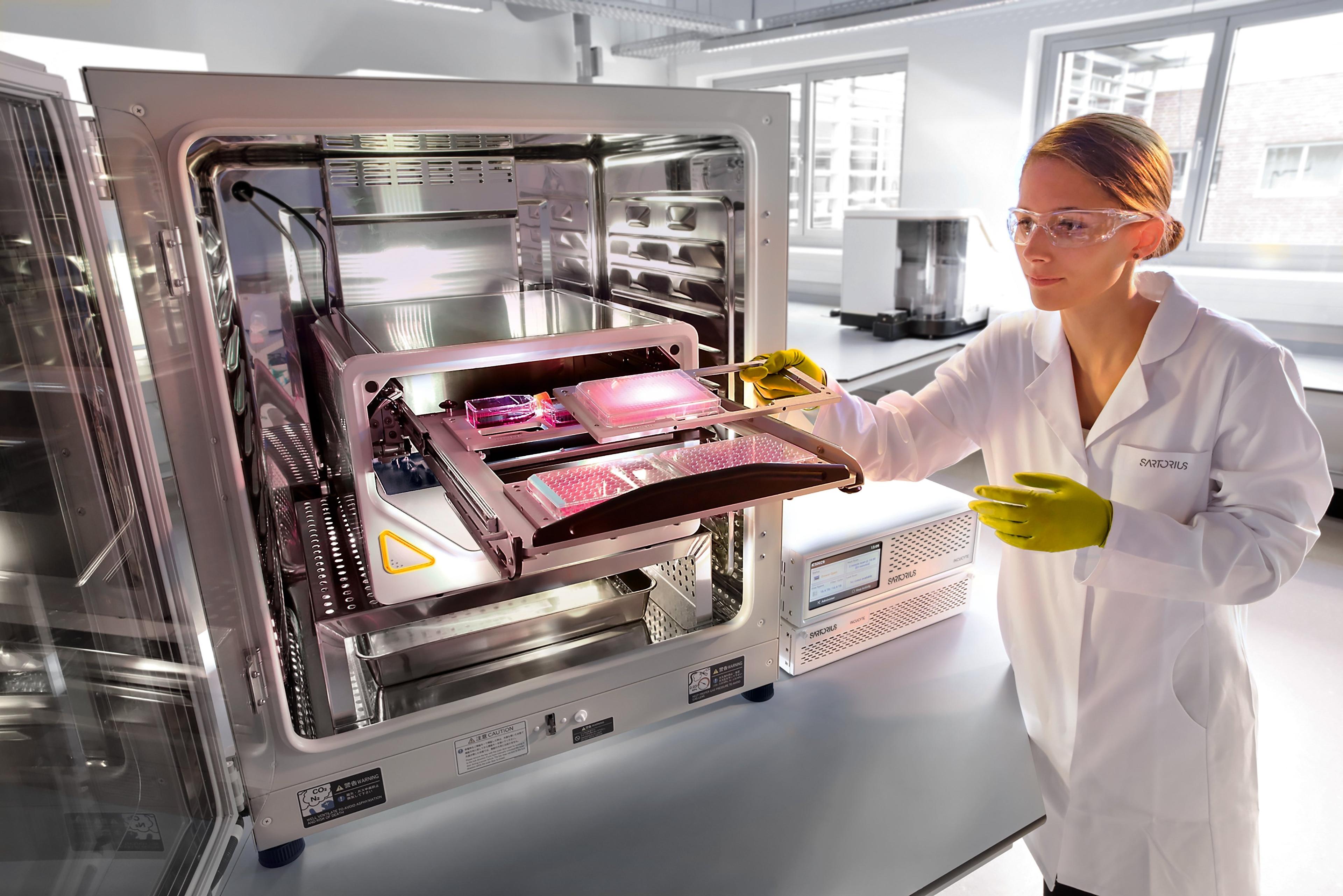
IncuCyte Technology The next-generation IncuCyte® S3 Live-Cell Analysis System enables you to observe your experiments in real time.

The next-generation IncuCyte® S3 Live-Cell Analysis System, from Essen BioScience, is designed to provide information-rich analysis of biological processes. The imaging system is contained within an incubator, enabling undisturbed qualitative and quantitative measurement of cells over time in a physiologically relevant environment. Round-the-clock image acquisition and analysis records kinetic and spatial information, meaning you won’t miss a thing, and enables you to perform experiments that were not previously possible.

The flexible assay platform can support a whole research team by enabling multiple cell-based applications and up to six microplate experiments from different users to be run in parallel, making the IncuCyte S3 a highly productive instrument for your laboratory. IncuCyte technology is suitable for the study of cell health, cell movement and cell function across a range of research areas, and has already been cited in over 1,000 journal publications. Read on for some of the latest research highlights of the IncuCyte technology in oncology, immunology and neuroscience.

Enabling advanced oncology research

Dr. Kim Wicklund, Director of Product Management, Essen BioScience, explains how the IncuCyte S3 Live-Cell Analysis System is suited for many in vitro applications in cancer research, including assays for cell proliferation, cell health and immune cell killing. Plus, hear how the intuitive software enables even first-time users to begin collecting images and capturing data in just a few clicks.

Dr. Kim Wicklund discusses how IncuCyte technology is being applied in oncology research

Learn more about how the IncuCyte S3 can be used to perform live-cell tumor spheroid assays for automated measurement of tumor size in real time in this free download.

Recently published research has also demonstrated the use of IncuCyte technology in helping to elucidate cell signaling pathways in prostate cancer, investigate angiogenesis in colon cancer and explore the role the tumor microenvironment may play in breast cancer treatment. The system has also been used in the analysis of drug interactions for treatment of brain tumors. In the search for an effective treatment for the malignant adult brain tumor, glioblastoma multiforme, Linnéa Schmidt et al., Oncotarget, 2016, measured cell density in real time to analyze the effect of combinations of drug interactions on glioblastoma cells from patient samples. The study identifies a potential modulator of anticancer drug response.

How neuroscientists are using IncuCyte technology

Some of the more recently published studies in neuroscience have used the IncuCyte for research into Alzheimer's disease, Parkinson's disease, peripheral nerve injury and regeneration, as well as neuroblastoma and glioblastoma research. Research by Hideki Yagi et al., PLoS One, 2015, performed time-lapse imaging of axonal elongation of primary motor neurons to investigate a potential drug for nerve regeneration.

Innovations in immunology

In the field of immunology, IncuCyte technology has been used to support the investigation of lymphocyte activation, autoimmune reactions and vaccine response. Research by Christine Gonzales et al., PLoS One, 2016, demonstrated a method for tracking of T cells in a melanoma tumor model, where the cytotoxic action of labelled T cells was determined using the IncuCyte Live-Cell Analysis System. A SelectScience® interview with Professor David R. Greaves, University of Oxford, also highlighted the use of the system in the study of macrophage biology, including chemotaxis, phagocytosis and differentiation of bone marrow progenitor cells. Learn more about how the IncuCyte can provide deeper biological insight and improve productivity in immune-cell biology in the SelectScience webinar.

Find out more about the next-generation IncuCyte® S3 Live-Cell Analysis System and how it can be used to investigate cell proliferation, apoptosis, cytotoxicity, neurite growth, migration and invasion, chemotaxis, scratch wound, immune cell killing, immune cell activation, phagocytosis and angiogenesis, among other potential applications.

Do you use the IncuCyte system? Write a review today for your chance to win an iPad or a $400 Amazon voucher (or equivalent currency).

References

Schmidt L, Baskaran S, Johansson P, Padhan N, Matuszewski D, Green LC, Elfineh L, Wee S, Häggblad M, Martens U, Westermark B, Forsberg-Nilsson K, Uhrbom L, Claesson-Welsh L, Andäng M, Sintorn IM, Lundgren B, Lönnstedt I, Krona C, Nelander S. Case-specific potentiation of glioblastoma drugs by pterostilbene. Oncotarget. 2016

Yagi H, Ohkawara B, Nakashima H, Ito K, Tsushima M, Ishii H, Noto K, Ohta K, Masuda A, Imagama S, Ishiguro N, Ohno K. Zonisamide Enhances Neurite Elongation of Primary Motor Neurons and Facilitates Peripheral Nerve Regeneration In Vitro and in a Mouse Model. PLoS ONE. 2015

Gonzales C, Yoshihara HAI, Dilek N, et al. In-Vivo Detection and Tracking of T Cells in Various Organs in a Melanoma Tumor Model by 19F-Fluorine MRS/MRI. PLoS ONE. 2016

Links

Tags

Microplate Readers / DetectorsMicroplate readers are used to automate the detection and analysis of labeled or label-free components in microplates during assays or live-cell monitoring. Microplate readers are generally distinguished by their mode of detection. Types include absorbance, luminescence, fluorescence intensity, fluorescence polarization, TRF / FRET and multimode microplate readers. Microplate readers deliver a high throughput of samples by reading multiple wells simultaneously, with the 96-well format the most commonly used. As a result, microplate readers are often used in the drug discovery, bioassays, research and pharmaceutical industries for screening applications. Microplate loading can also be automated, with robotic microplate stackers to increase throughput. Find the best microplate readers in our peer-reviewed product directory: compare products, check customer reviews and receive pricing direct from manufacturers.Cell-Based AssaysCell-based assays are used to monitor the presence, quantity and activities of a desired cellular analyte including drug molecules or biomarkers. This can reveal information on cell health (apoptosis, cytotoxicity, viability and proliferation assays), cell metabolism, cell migration and cell signaling mechanisms. Find the best cell-based assay products, kits and equipment with our peer reviewed product directory: compare products, check customer reviews and receiving pricing direct from manufacturers.ImmunologyImmunological techniques measure and characterize immune responses. Immunology kits and analysis systems often use techniques such as ELISA, radioimmunoassay (RIA) and immunodiffusion assays, Immunohistochemistry, and flow cytometry. Immunologists use equipment such as flow Cytometers, plate readers, plate washers and fluorescent microscopes.NeuroscienceNeuroscience research investigates the neurological mechanisms underlying behavior, neurodegenerative diseases, and other brain conditions. Learn about the innovative technologies for bioimaging, electrophysiology, cell culture, chromatography and other techniques used in this field.AngiogenesisCell ImagingCell imaging can be achieved using a number of techniques including confocal microscopy, transmission electron microscopy, atomic force microscopy, and light sheet microscopy.NeurobiologyNeurobiology studies the biology of the nervous system, including the structure and function of neurons, glial cells, and their interactions. It is a key field in understanding neurological disorders such as Alzheimer�s, Parkinson�s, and schizophrenia. Research in neurobiology is essential for developing therapies for these conditions. Browse our peer-reviewed product directory to find the best neurobiology research tools, compare products, check reviews, and get pricing directly from manufacturers.Cell AnalysisThe analysis of cells allows researchers to understand the factors which contribute to cell health and function. These influencing processes can then be predicted and altered, leading to the development of medication and disease treatments.Cell GrowthCell growth refers to the process by which cells increase in size and number. It is essential for tissue development, wound healing, and cancer research. Understanding and controlling cell growth is a fundamental part of cell biology and regenerative medicine. Browse our peer-reviewed product directory to find the best tools for studying cell growth, compare products, check reviews, and get pricing directly from manufacturers.Live Cell ImagingLive cell imaging is the study of living cells using microscopes and high-content imaging systems. This technique provides in-depth insight into fast and complex biological processes, by allowing dynamic imaging of living cells instead of acquiring an individual image at a single point in time.Regenerative MedicineCell ProliferationCell proliferation refers to the process by which cells divide and multiply. This is a key concept in cancer research, tissue regeneration, and immunology studies. Explore cell proliferation tools in our peer-reviewed product directory; compare products, check reviews, and get pricing directly from manufacturers.NeuronsNeurons are the fundamental units of the brain and nervous system, involved in transmitting information. Understanding neuron function is critical in neurobiology, neuroscience, and neurodegenerative disease research. Explore neuron research tools in our peer-reviewed product directory; compare products, check reviews, and get pricing directly from manufacturers.Drug DiscoveryDrug discovery is the process of identifying potential new medications, involving stages such as target identification, compound screening, and preclinical development. It relies on cutting-edge technologies like high-throughput screening, artificial intelligence, and molecular modeling to accelerate the identification of drug candidates. Drug discovery plays a pivotal role in developing new therapies for diseases ranging from cancer to rare genetic disorders. Browse our peer-reviewed product directory to find the latest drug discovery technologies, compare options, check customer feedback, and get pricing directly from manufacturers.Cell Based AssaysCell-based assays use living cells to measure biological responses to various treatments or stimuli. They are essential for drug discovery, toxicology testing, and understanding cellular mechanisms. These assays are used to assess cell viability, proliferation, gene expression, and other cellular activities. Browse our peer-reviewed product directory to find the best cell-based assay tools and reagents, compare products, read customer reviews, and get pricing directly from manufacturers.
Ask New Research Questions with the Latest Live Cell Imaging Technology