
Artel Enhances MVS® for Liquid Handling Quality Assurance
30 Jan 2012Product news
During SLAS2012, Artel will be showcasing enhancements to the MVS Multichannel Verification System that make it easier for laboratory technicians to boost liquid handling quality, productivity and – if needed – compliance, without impeding efficiency. The MVS is an objective performance assessment tool that enables users to modify, improve, and optimize the performance of any liquid handling device with up to 384-channels so they can have total confidence in their assay results.
“Our goal is to enable laboratories to trust the data generated by their liquid handlers,” said Tanya Knaide, MVS Product Manager, Artel. “The MVS has already become the industry standard in liquid handling quality assurance worldwide and our aim today is to make its implementation and use even easier across a broader range of assay protocols.”
Visitors to booth 1029 at SLAS2012 in the San Diego Convention Center, San Diego, February 4-8, will have access to Artel experts who will provide guidance on how the MVS can help them better understand their robotic liquid handling instruments so they can have complete confidence in their assay results.
Utilizing patented Ratiometric PhotometryTM technology, the MVS measures the volumes dispensed by any 1-, 2-, 4-, 6-, 8-, 12-, 16-, 24-, 96-, or 384-channel liquid delivery device in just minutes. It automatically produces and documents accuracy and precision data tip-by-tip and well-by-well, with results traceable to the International System of Units (SI) through reference standards developed and maintained by the National Institute of Standards and Technology (NIST).
Able to function within a volume range of 10 nL to 350 µL for aqueous or user defined solvents, the MVS can be fully integrated into existing laboratory workflows and implemented by a technician of any skill level.
“We recognize laboratories are working with smaller and smaller volumes. With the enhanced MVS, these laboratories can ensure that their automated liquid handlers are dispensing volumes even in the nanoliter range to controlled specifications, maximizing efficiency and assay productivity,” continued Tanya Knaide.
The enhancements to the MVS enable volume measurements with an even higher degree of accuracy and precision. For devices utilizing 384-well plates, MVS precision and accuracy tolerances have been reduced to 0.8 – 1.4% and + 2.5 – 3.5% respectively, depending on the volume range. For devices dispensing into 96-well plates, the precision and accuracy specifications have been tightened to 0.4 – 0.5% and + 2 – 3% respectively, depending on the volume range. With these new specifications, laboratories can reduce the uncertainty in their liquid handling operations, and enjoy overall improvements in data quality.
Related products
Request Quote for All Products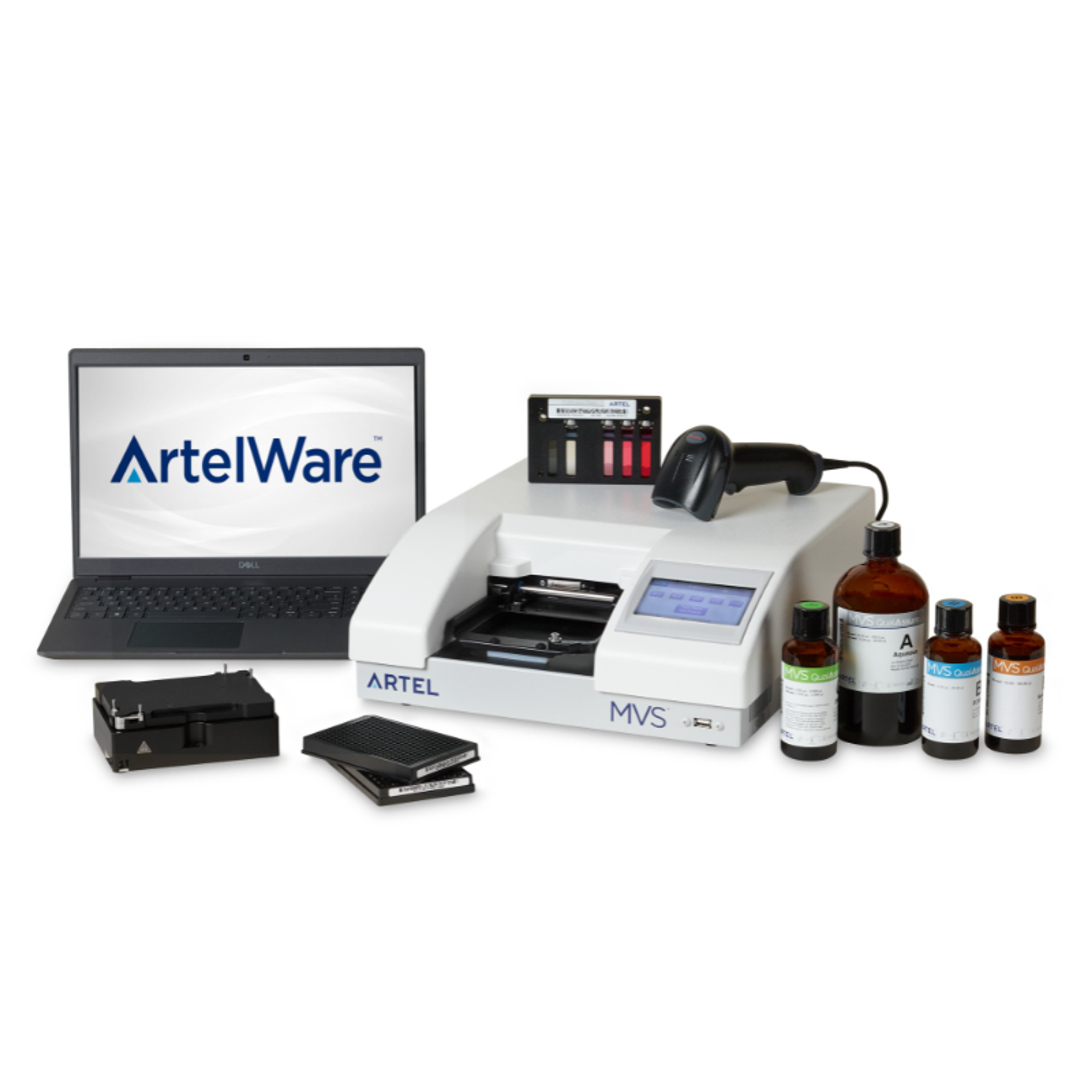
Artel MVS® Multichannel Verification System
Nova Biomedical OsmometersUnderstand and manage the performance of your automated liquid handlers, multichannel pipettes, labware, operators, and more.
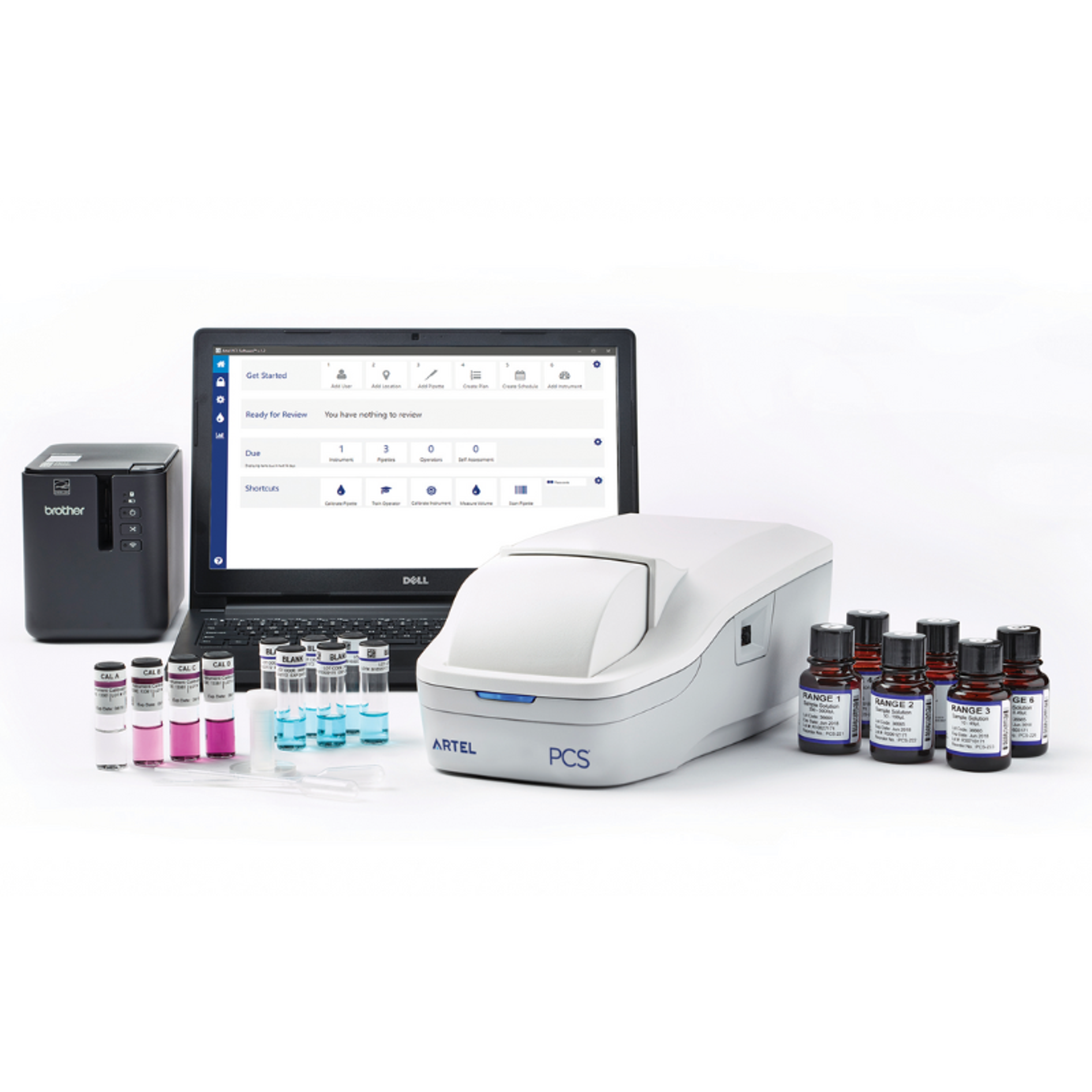
Artel PCS® Pipette Calibration System
Nova Biomedical OsmometersFast, accurate, and precise, the PCS is a portable and easy-to-use volume verification system that simplifies single-channel pipette calibration, interim volume verification, and pipette user/operator training and competency assessment.