
Analytik Reports the Use of a Schmidt + Haensch Polarimeter for the Characterization of Chiral Molecules
25 Feb 2013Product news
Analytik, leading suppliers of innovative analytical instrumentation to the UK and Ireland, partner with German company, Schmidt + Haensch, for the supply of market leading polarimeters and refractometers, is pleased to report on the use of Schmidt + Haensch Polartronic H532 Polarimeter at the University of Leeds, School of Chemistry.
Professor Andrew J Wilson is Professor of Organic Chemistry in The School of Chemistry at the University of Leeds and current Deputy Director of the Astbury Centre for Structural Molecular Biology. His interests include the application of synthetic chemistry to problems in chemical biology and nanotechnology.
Research in the Organic Chemistry Section at Leeds is broad ranging covering drug discovery and chemical biology through to fine chemicals synthesis, the development of synthetic methods and materials synthesis. The research is motivated by modern day grand challenges such as the need for efficient and environmentally friendly synthetic methods and for new chemical entities to combat emerging therapeutic targets.
Polarimetry is regarded as a standard analytical characterization technique. The Leeds Schmidt + Haensch Polartronic H532 Polarimeter is primarily used for the characterization of chiral molecules that have been synthesized in the School of Chemistry, either for confirmation of specific rotation of a previously reported molecule, or for the completion of the characterization of a novel molecule to appropriate scientific rigor. For example, some researchers are involved in the synthesis of unnatural amino acids, where it is essential that enantiopurity is established before further experimentation is done - where specific rotations are cornerstone in confirming chiral purity of synthesized molecules.
The previous school polarimeter had been in use for many years. Its resolution had become inferior and the instrument had become unreliable in terms of measurement accuracy and reproducibility so the decision was made to replace it.
Speaking about the reasons behind choosing the Schmidt + Haensch polarimeter, Professor Wilson said “the benefit of the S&H polarimeter is the precision of the instrument which can resolve and stabilize rotations to four decimal places rapidly and consistently. The specific rotation calculation is also a useful feature that has been well used by members of the department. Researchers within the school who have been using the polarimeter are pleased with its performance and simplicity.”
Schmidt + Haensch have pioneered the technology behind polarimetry and refractometry. They now hold several key patents, enabling them to produce opto-electronic measuring instruments of the highest quality and accuracy. Their automatic digital polarimeters are designed to characterize optical active substances in the most demanding quality control and research laboratories.
Ian Laidlaw, Managing Director at Analytik comments: “The competition that can even approach the H532 with respect to accuracy can only achieve it within the range of ±1°. The H532 achieves the same level of accuracy across the full measurement range of ±89°. This is an exceptional instrument, recommended also by PerkinElmer Inc, a global technology leader in multi-vendor laboratory services, software and informatics.” '
Related products
Request Quote for All Products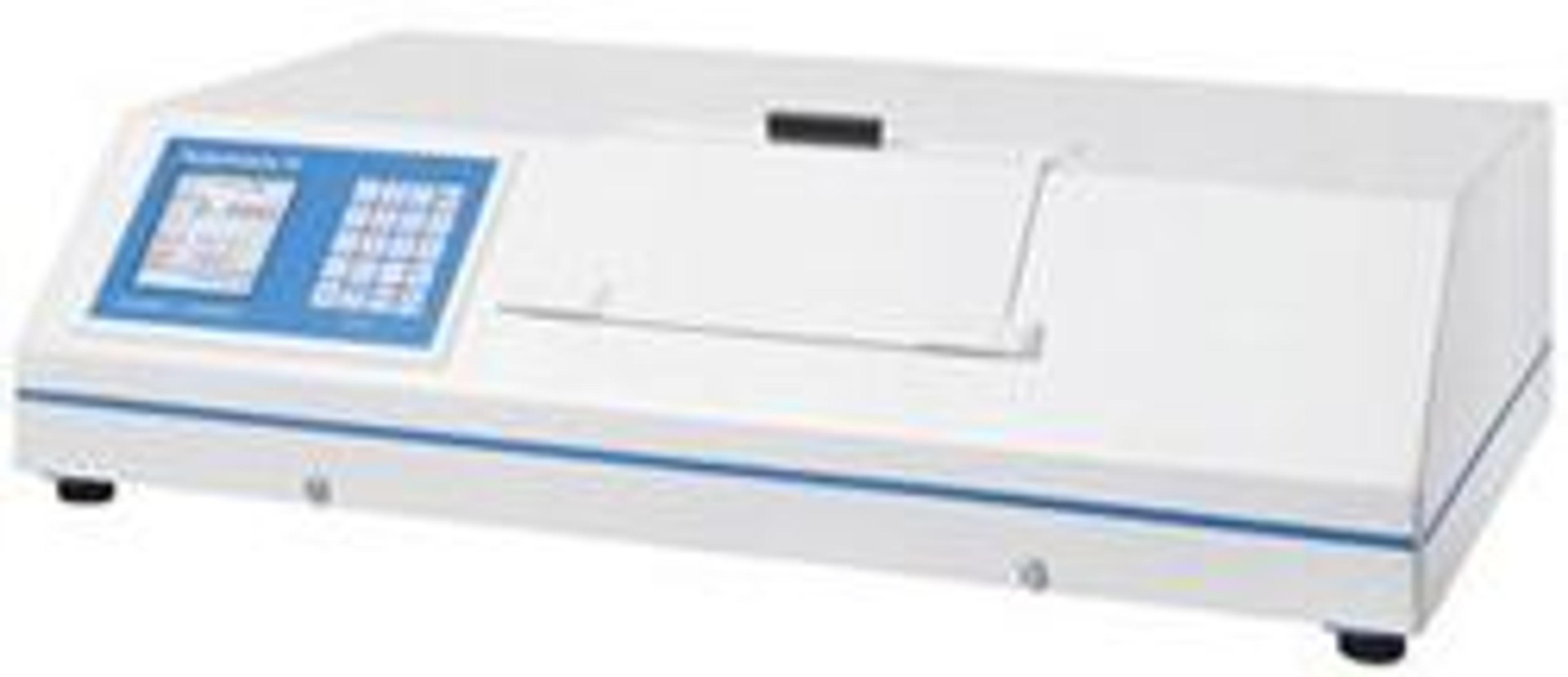
Schmidt + Haensch High Performance Polarimeters
Analytik LtdPolartronic H532 is the highest performance polarimeter available on the market, designed for the most challenging research. The H532 achieves extraordinary precision (±0.002°) across the full measurement range due its patented direct electronic interface between the analyser and optical encoder. Direct reading of the rotation angle without mechanical transmission (patented) results in guaranteed unrivalled precision over the entire measuring range 4th decimal place resolution 0.0001°. Short measuring time, no mechanical abrasion Continuous measurement allows flow through measurements to be easily performed Program up to 10 special scales (glucose, mono sodium glutamate or other) and 10 methods Calibration free due to spectral lamps Selectable apertures for standard cells and micro cells Up to 5 wavelengths 21 CFR part 11 ready Polartronic M & N Touch Series are new versatile polarimeters offering continuous measurement and featuring unique technology for non-destructive quality control and scientific analysis. High performance polarimeter for a wide range of applications Rugged and robust metal housing Highly accurate and reproducible results over the whole measuring range instantly Continuous measurements for reaction monitoring User friendly Operation System displayed by a broad 7" TFT Touchscreen Easy to calibrate by certified Quartz Control Plates (SQCP, TQCP) GLP/GMP, 21 CFR part 11 software and documentation available Long lasting LED light source Extremely low noise Unipol L Series are fully automatic digital polarimeters designed for pharmaceutical and chemical applications. 3 models are available: Unipol L, Unipol L 1000, Unipol L 2000. Resolution 0.01°or 0.001°. Precision up to ±0.005°. 1 or 2 fixed wavelengths Single measurement operation 4 measuring methods and 10 user defined programmable scales Integrated temperature sensor available Latest, state of the art optical and electronic component technology User friendly menu structure operated with splash proof alphanumerical keyboard - results displayed on large LCD display The resolution and precision of the Unipol L 1000 and L 2000 polarimeters are higher than the standard Unipol L model. All models meet European and American Pharmacopeia requirements