An Introduction to Analytical Procedure (Method) Lifecycle Management: Register for Our Upcoming Webinar with Experts from the US Pharmacopeia and Pharmaceutical Industry

Learn about the benefits of the Method Lifecycle Management approach and how to implement this approach in your lab

15 Feb 2019

Sarah Thomas
Associate Editor

Expert insights

The pharmaceutical industry relies on data generated by analytical methods for many critical decisions. Traditional approaches consist of distinct exercises — method development, validation, transfer, verification — with limited understanding of the effect of variation on method performance.

The Method Lifecycle Management (MLCM) approach is a holistic approach encompassing all activities from method development to validation, routine use, change control and retirement of the method. This enhanced approach improves the method understanding and performance, leads to fewer out-of-specification results (OOS), facilitates method transfer and has the potential to lessen the regulatory burden.

On Tuesday, March 5, we’ll be joined by Dr. Horacio Pappa, Director of General Chapters at the United States Pharmacopeia, Dr. Alexander Schmidt, Founder and CEO of Chromicent Pharmaceutical Services, and Mijo Stanic, Co-founder, General Manager and Technical Director of Chromicent Pharmaceutical Services, for a webinar covering the fundamentals of the Method Lifecycle Management approach, its benefits to drug manufacturers and patients, and the current thinking of the USP, FDA and ICH. Case studies will showcase how this approach is being implemented in the pharmaceutical industry.

Register Now

The webinar will cover:

  • How Method Lifecycle Management (MLCM) improves method understanding and robustness, by identifying and controlling the sources of variability
  • Current thinking of the USP and regulatory bodies with an emphasis on USP proposed chapter <1220>
  • Concrete examples on the implementation and impact of the lifecycle approach

Attend the live webinar on Tuesday, March 5, at:

  • 15:00 GMT
  • 10:00 EST
  • 07:00 PST
  • 16:00 CET

Interested, but have a scheduling conflict? Register to watch the webinar on demand at a time more suitable for you.

SelectScience runs 3-4 webinars a month across various scientific topics, discover more of our upcoming webinars>>

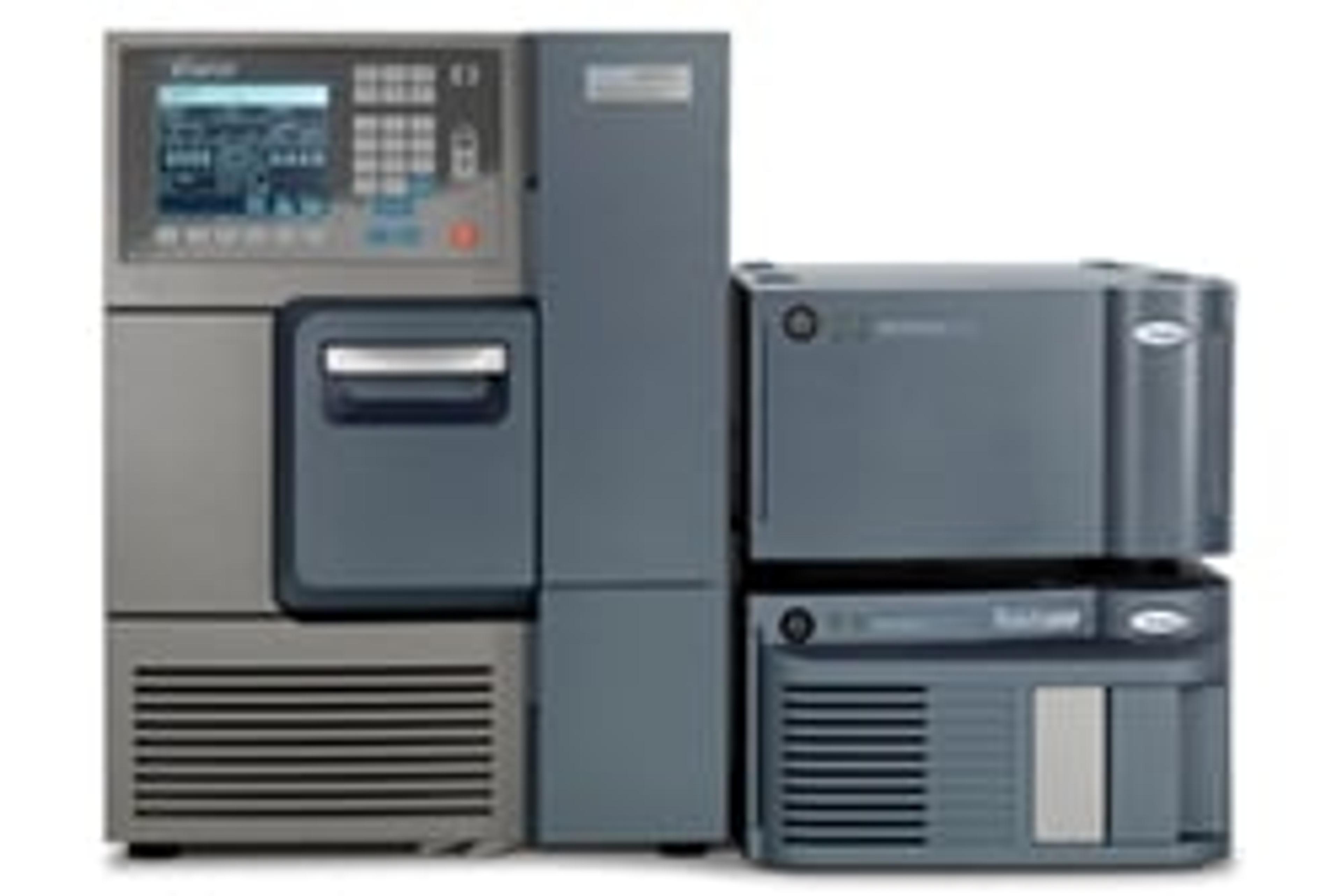
Waters Alliance™ HPLC System

Waters

An integrated HPLC system that works as hard as you do, available with push-button mass detection for the chromatographer. The Alliance™ HPLC System is the flexible and reliable workhorse that meets your fundamental HPLC separation requirements. The system has been continually expanded and perfected to accommodate an enormous range of real-world analytical challenges, culminating in today’s new industrial design which signifies Waters’ commitment to HPLC and our HPLC line. Today, users can extend the Alliance HPLC System’s performance with XP 2.5 µm Columns. XP Columns are compatible with both HPLC and UPLC technology and are designed to not only improve our HPLC productivity, but also facilitate a transfer to UPLC Technology platforms as well. Directly scalable between UPLC and HPLC particle sizes, these new 2.5 um XP Columns bridge the gap between HPLC and UPLC performance. Whether your lab analyzes samples in the pharmaceutical, chemical, food safety, environmental, or quality control arenas, the Alliance HPLC system offers you a field-proven solution. Integrated solvent and sample management to ensure consistent system-to-system performance and high reproducibility. Waters Alliance™ HPLC System Features: Full integration with either Empower® or MassLynx® Software for instrument control and data processing A large, intuitive LCD-based user interface allows rapid system set-up through SystemPREP routines that streamline daily start-ups Easy, tool-free maintenance resulting in maximized uptime Waters complete line of detection technologies – from routine UV/Vis detectors, to the ACQUITY QDa Detector to single, tandem and triple quadrupole mass spectrometers - extend your application capabilities

(164)

Links

Tags

LC-MSLC-MS (liquid chromatography-mass spectrometry) systems and equipment are used for separation and quantitative analysis of complex mixtures, combining liquid chromatography and mass spectrometry. Quantify proteins, contaminants, pesticides or screen for drug metabolites with a high level of sensitivity. LC-MS systems and equipment include reverse phase, normal phase and specialized columns integrated with various MS detectors such as time-of-flight (TOF), quadrupole, orbitrap or ion trap mass analyzers. LC-MS/MS instruments equipped with a qTOF or triple quadrupole analyzer give greater sensitivity and resolving power to your analysis. Find the best LC-MS equipment in our peer-reviewed product directory: compare products, check customer reviews and receive pricing direct from manufacturers.Mass SpectrometryMass spectrometry (MS) is a powerful analytical technique used to identify and quantify molecules based on the mass-to-charge ratio of gas-phase ions. It provides detailed information about the structure, composition, and properties of compounds and is widely used across fields such as environmental monitoring, materials science, drug discovery and development, food and beverage testing, and wider chemical research. Key MS techniques include tandem mass spectrometry (MS/MS), liquid chromatography–mass spectrometry (LS-MS) and inductively coupled plasma (ICP-MS). Choosing from these wide range of techniques and technologies can be a daunting task, so keep up to date with scientific applications, performance expectations, and customer reviews here all in one place. Visit our product directory to receive quotes direct from the manufacturer. GC-MS GC-MS (gas chromatography-mass spectrometry) instruments and equipment are used to separate, quantify and identify mixtures of small and volatile compounds, such as polycyclic aromatics, fatty acids and alcohols. Often used in drug detection, forensic investigation and environmental analysis for pesticides and contaminants, GC-MS is a powerful addition to your lab’s analytical capabilities. GC-MS/MS instruments equipped with a qTOF or triple quadrupole analyzers can give greater sensitivity and resolution to your analysis. Find the best GC-MS instruments and equipment in our peer-reviewed product directory: compare products, check customer reviews and receive pricing direct from manufacturers.Chromatography Method DevelopmentChromatography method development is the process of designing and optimizing chromatographic techniques to separate and analyze complex mixtures. This includes selecting appropriate stationary and mobile phases, determining flow rates, and optimizing detection methods. Successful method development is essential for high-quality results in fields like pharmaceuticals, food safety, and environmental analysis. Explore chromatography method development tools in our peer-reviewed product directory; compare products, check reviews, and get pricing directly from manufacturers.HPLC Method DevelopmentIt is important to develop and validate HPLC methods in order to identify, quantify or purify compounds of interest in the most efficient way. Effective method development ensures optimization, quality control and cost effectiveness.Method DevelopmentMethod development is the process of creating and optimizing experimental techniques and protocols to achieve reliable, reproducible results. This is essential in various fields, including pharmaceuticals, environmental science, and diagnostics. Browse our peer-reviewed product directory to find the best method development solutions, compare products, check reviews, and get pricing directly from manufacturers.BiopharmaceuticalsBiopharmaceuticals are proteins and other compounds (such as nucleic acids) produced by living organisms that have uses as therapeutics or for in vivo diagnostics. The most well known example of a biopharmaceutical product, and the first to be approved for therapeutic use, was recombinant human insulin.Method ValidationMethod validation is the process used to prove that the analytical procedure used for a particular test is capable of providing suitable data.PharmaceuticalsPharmaceuticals are medicinal drugs used in healthcare to diagnose, prevent, cure and treat illnesses. Pharmaceuticals that are excreted after use appear in wastewater and can have detrimental effects on the environment.USP Method