An innovative approach towards standardizing cell therapy manufacturing

Learn about Thermo Fisher Scientific’s modular, fit-for-purpose platforms designed specifically to meet the requirements of cell therapy manufacturing right now, and in the future.

11 Sept 2022

Jess Smith
Analyst / Analytical Chemist

Editorial article

Dr Shikha Mishra Thermo Fisher Scientific
Dr. Shikha Mishra shares how modular, fit-for-purpose platforms from Thermo Fisher Scientific can revolutionize cell therapy manufacturing.

Cell therapy manufacturing is a constantly evolving process. Initially developed through the adaptation of existing tools and technologies from other workflows, it is abundantly clear that there is a need for specialized tools to support standardization as the field continues to move forward.

Dr. Shikha Mishra, Technical Workflow Lead for Cell and Gene Therapy at Thermo Fisher Scientific, speaks to SelectScience® about recent technologies designed specifically for cell therapy manufacturing applications.

Dr. Mishra explains some of the challenges that cell therapy manufacturers face, “The cell therapy manufacturing workflow is a complex, multi-step process. It is very labor intensive with several open processes, making it prone to error and contamination. This contributes to a high manufacturing failure rate, which can significantly impact the cost of the therapy. There are a number of steps where things could go wrong, and cell therapy manufacturing is essentially a zero-failure tolerance setting.”

For treatments such as autologous CAR-T cell therapy that use an individual patient’s cells, there is an inherent variability built into the process. Therefore, any solutions that support cell therapy manufacturing also need to support flexibility while mitigating risks.

A modular, fit-for-purpose system

To address these challenges and support standardization of workflows, Thermo Fisher has developed a modular, fit-for-purpose portfolio of instrumentation and products. The aim is to support cell therapy manufacturers from end-to-end with a closed and flexible solution that can be customized to meet their needs.

“Over the past few years, Thermo Fisher has developed several instruments that span key elements of the workflow, specifically designed with the cell therapy manufacturer in mind,” says Dr. Mishra. These instruments enable customers to ‘close’ their process, reducing the risk of contamination at contact points, and thereby increasing manufacturing success.

Dr. Mishra elaborates on how these modular devices work together, “All of the instruments in the Cell Therapy Systems (CTS) portfolio are compatible. They have been designed to be physically compatible and digitally integratable.” As Dr. Mishra explains, “We have an off-the-shelf software product called Gibco™ CTS™ Cellmation, which allows customers to integrate individual instruments within a common Delta V™ network, using the same operator interface for consistency. What this allows for is a more automated process that also enables maintenance of your data integrity. Importantly, the ability to automate simplifies the workflow steps and reduces labor and manual manipulation. By using closed instrumentation and single use kits, you can reduce contamination and human error, which lends itself to a more reproducible and robust manufacturing process.”

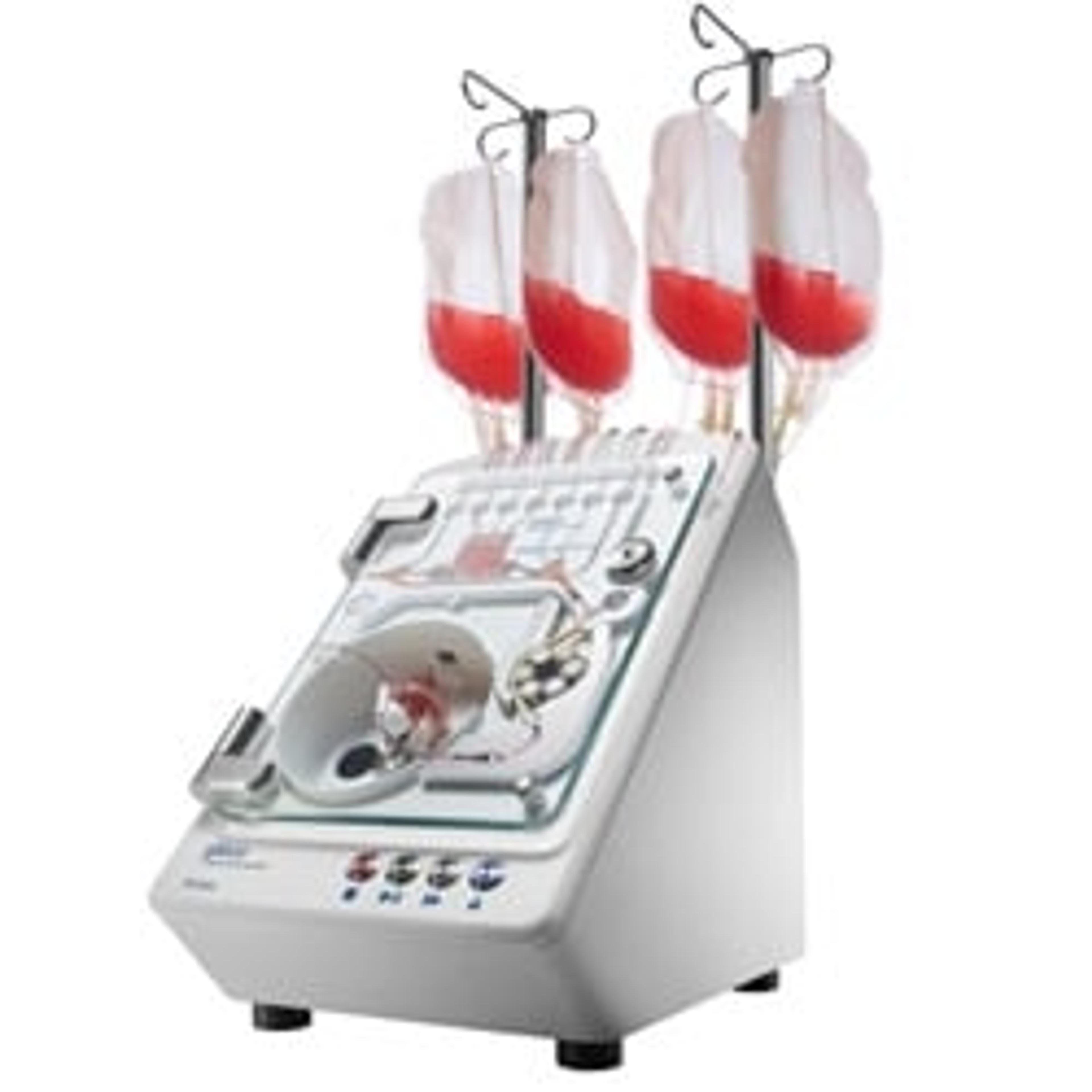
Dr. Mishra shares one example of an instrument from the cell therapy portfolio. “Across the manufacturing workflow, we have instrumentation specialized for each unit operation. The Gibco™ CTS™ Xenon Electroporation System is our newest instrument. It is comprised of the instrument, electroporation chamber or cartridge, current good manufacturing process (cGMP) manufactured buffers, and software. This instrument is closed, flexible, modular, and enabled for digital integration; most importantly, it is designed to scale to address current autologous needs and future allogeneic workflows.”

Dr. Mishra summarizes the advantages that Thermo Fisher’s new cell therapy instruments will bring. “From the outset of your manufacturing process, you will be able to close and automate your workflow all the way through to cell expansion. These innovative solutions minimize manual processing, reduce contamination and ultimately create a safer and more cost effective product.”

These tools are designed to meet the challenges of cell therapy manufacturing today and built to scale for future needs and support manufacturers at every stage of the development pipeline. As Dr. Mishra explains, “Instrumentation needs to scale in order to support a range of clinically relevant volumes. It is not just the autologous single patient model anymore; we need to support the evolution of the field. So, we are developing solutions that can meet commercial needs and support allogeneic and emerging therapies that are up and coming.”

Collaborating with biotech and pharma to develop the right solutions

Notably, these technologies are not created in a vacuum. As part of the development process, Thermo Fisher has collaborated with cell therapy manufacturers across biotech and pharma, and continues to do so. This helps to bridge the transition between early discovery and late-phase development, while also ensuring that the instruments are built to support the needs of cell therapy manufacturers.


When designing a fit-for-purpose solution, if you remain cognizant of the customer needs, that's how you are going to drive success.

Dr. Shikha Mishra  Thermo Fisher Scientific


Dr. Mishra shares the way that collaborations have enhanced the design of these instruments, and how these collaborations are benefiting cell therapy manufacturers, “We're not just a tools provider in the way that we're not just selling you glue to fix your problem. We are actually developing many different types of glue to solve your specific problems. If you collaborate with us, you gain access to our team of scientists and engineers that have experience and expertise, and who are the ones developing these new technologies.”

There are significant benefits for both sides, attests Dr. Mishra, “It is really about that collaborative process optimization. You get effective tech transfer, effective integration of our technologies into your manufacturing process, and this leads to a very high-quality manufacturing output. We also provide product-specific regulatory support to enable your regulatory filings. What we gain as a collaborator are your insights and learnings, and importantly, we can observe how you are actually utilizing and implementing our technologies. This allows us to continuously develop relevant solutions and products to support our customers.”

These collaborations are ongoing, helping to facilitate the challenging transition of moving therapies through the commercialization pipeline. As cell therapy manufacturing evolves, so will the systems to support them.

“It's definitely a two-way communication street,” concludes Dr. Mishra. “When designing a fit-for-purpose solution, if you remain cognizant of the customer needs, that's how you are going to drive success.”

Whether you are just getting started or facing unexpected roadblocks along the journey, Thermo Fisher’s experienced scientists and engineers can work alongside your team to help optimize your process. Learn more about Thermo Fisher’s cell therapy collaboration program, or request information.

Read more about the latest in cell and gene therapy in our Special Feature >>

Links

Tags

Cell / Tissue CultureCell culture or tissue culture is used to study the biology of cells or tissues and to isolate cellular products in an environment which can be manipulated and well defined. Accurately control your culture environment with bioreactors or culture incubators, bind your cells to a surface or together with an extracellular matrix. Distinguish cell types with differential media or proliferate cells with certain characteristics using selective media. Enrich your media with supplements such as growth factors, sera and vitamins. Find the best cell and tissue culture products, kits and equipment in our peer-reviewed product directory: compare products, check customer reviews and receive pricing direct from manufacturers.PCR and Thermal CyclingPolymerase chain reaction (PCR) kits and thermal cyclers are used for the in vitro amplification of DNA permitting subsequent analysis and experimental procedures. Explore a range of high-quality polymerase, primers and nucleotides or simplify your workflow with a PCR mastermix. Find reverse transcription PCR (RT-PCR) and cDNA synthesis kits for RNA products and libraries. Quantitatively measure the amplification of DNA with real-time PCR (qPCR) and droplet digital PCR (ddPCR) kits and systems, and discover automated PCR setup solutions to increase throughput. Alternative DNA amplification methods also include recombinase polymerase amplification (RPA) kits. Find the best PCR kits and thermal cyclers and purification equipment in our peer-reviewed product directory: compare products, check customer reviews and receive pricing direct from manufacturers.Cell Lines Stem Cells and Primary CellsPrimary cell cultures, established cell lines and stem cells are vital for <i>in vitro</i> and <i>ex vivo</i> experimentation. High-quality cells, optimized for your applications, alongside optimized cell substrates, growth medium and supplements, are critical for experimental success. Explore a range of cells suitable for your applications, including isogenic cell lines, competent cells, induced pluripotent stem cell (iPSC)-derived cell lines, fungal/bacterial/mammalian cell lines, stem cells and cancer cell lines. Find the best cells for your research in our peer-reviewed product directory: compare products, check customer reviews and receive pricing direct from manufacturers.Sample ManagementSample management systems include sample storage devices such as freezers and plate storers, sample environment enclosures and sample organization, retrieval and sorter systems. Useful system features include high-throughput, automation, robotic arms, automated liquid handling and associated database systems. Accessories in sample management include barcode scanners, heat sealers and tubes.SNPs TechnologySingle nucleotide polymorphisms (SNPs) are individual base variations in a DNA sequence. SNPs are used in research to study predispositions to disease and drug discovery. Products for studying single nucleotide polymorphisms include SNP arrays and detection systems to detect polymorphisms, SNP typing systems for genotyping DNA, and PCR to amplify specific SNPs.Cellular PathologyCellular Pathology deals with the microscopic analysis of tissue samples and cells. Sample preparation and processing includes fixation, staining, sectioning and slide mounting, using equipment such microtomes and cryostats. In choosing immunohistochemistry and immunocytochemistry kits, consider chromogens, staining method, antibodies, microscopes and imaging.DNA / RNA Extraction and PurificationPurified DNA and RNA are required for numerous downstream molecular biology applications. Consequently, the importance of high-quality DNA/RNA extraction and purification equipment cannot be underestimated. Many purification kits are available and are typically optimized for nucleic acid type and source, including plasmid DNA, genomic DNA, mRNA, RNA and viral nucleic acid purification kits. Automated extraction and purification of nucleic acids can be implemented with magnetic bead separator instruments or high-throughput purification workstations. Find the best DNA/RNA extraction and purification equipment in our peer-reviewed product directory: compare products, check customer reviews and receive pricing direct from manufacturers.DNA SequencingDNA sequencing, such as sanger sequencing, is a biological technique that determines the precise order of nucleotide bases in a fragment or template of DNA. DNA sequencers and genetic analyzers are based on capillary electrophoresis, where labeled DNA fragments are electrophoretically separated by size as they migrate through a polymer. Find the best DNA sequencing products, including DNA sequencing kits, genomic libraries and genetic identity kits in our peer-reviewed product directory: compare products, check customer reviews and receive pricing direct from manufacturers.Gene Expression and Molecular CloningMolecular cloning is a set of techniques that utilizes vectors to transfer recombinant DNA into host cells and is an essential tool for investigating the expression of genes and proteins in bacterial or mammalian cells. A variety of vectors optimized for gene cloning and expression in a range of host organisms are available, alongside competent cells for genetic replication. Here, you can explore a range of molecular tools, high-quality genomic and cDNA libraries, premade clones, transformation and transfection reagents and mutagenesis or gene expression detection assays and expression arrays. Find the best gene expression and molecular cloning products in our peer-reviewed product directory: compare products, check customer reviews and receive pricing direct from manufacturers.Next Generation SequencingNext-generation sequencing (NGS), also known as whole-genome sequencing, high-throughput sequencing and massive parallel sequencing, produces and analyses thousands to millions of nucleotide sequences at once. Sequencing systems operate via varying technologies depending on the manufacturer, including sequencing by synthesis, ligation, pyrosequencing, ion semiconductor and single-molecule real-time sequencing. For NGS, library preparation is paramount to successful sequencing. In this section, explore a range of library preparation kits, from targeted, amplicon-based or hybridization-based kits including epigenomic, transcriptomic and genomic workflows to fragmentation kits. Find the best next-generation sequencing products in our peer-reviewed product directory: compare products, check customer reviews and receive pricing direct from manufacturers.DNA / RNA QuantificationDetection and quantification of nucleic acids is important in molecular biology, cloning, expression, forensics and clinical diagnostics. Nucleic acids can be detected by labeling with colorimetric, fluorescent or radio labels and using in situ hybridization kits to identify specific sequences. Multiple nucleic acids can be detected and quantified at once using RNA / DNA detection beads or RNA / DNA microarrays. Find the best DNA / RNA Quantification products in our peer-reviewed product directory: compare products, check customer reviews and receive pricing direct from manufacturers.Cell TherapyCell therapy involves using living cells to treat diseases, often by replacing damaged cells or stimulating regeneration. Stem cell therapy and CAR-T cell therapy are examples of cutting-edge treatments in regenerative medicine and cancer immunotherapy. Browse our peer-reviewed product directory to find the best cell therapy tools, compare products, check reviews, and get pricing directly from manufacturers.Gene EditingGene editing is the precise alteration to an organism's DNA, with CRISPR being the most well-known technique. It is used in a wide range of applications, including the development of disease models and gene therapy, and crop improvement. Browse our peer-reviewed product directory to find the best gene editing solutions, compare products, check reviews, and get pricing directly from manufacturers.