AMSBIO launches powerful human iPSC-derived cells, kits & services for high-throughput experiments

This proprietary technology allows for rapid, reproducible differentiation of human iPSC-derived excitatory, GABAergic, dopaminergic and cholinergic neurons

6 Oct 2020

Diane Li
Assistant Editor

Product news

AMSBIO is launching a new range of human iPSC-derived cells and human iPSC differentiation reagent kits optimized for high-throughput experiments in areas including drug discovery and toxicity screening.

These new products are based upon a novel technology platform that relies on key transcription factor (TF) genes, a combination of which determines the identity of cells. These TFs are so powerful that they can rapidly and efficiently differentiate human iPS cells into specific cell types, such as neurons and skeletal muscle cells. These transcription factors are introduced into cells in a form that does not leave any footprint on the genome.

Human-induced pluripotent stem cells (iPSCs) are a powerful tool for studying neuronal activity in vitro. Human iPS cells overcome many of the limitations of other popular models, such as immortalized cell lines and primary mouse neurons, which can be plagued by reproducibility issues and lack of biological relevance. Although human iPS cells have many advantages over existing models, one drawback is that differentiation into the desired cell type is a time and labor-intensive process. To address this research bottleneck, AMSBIO is launching a variety of products and services to make research more efficient. This proprietary technology allows for rapid, reproducible differentiation of human iPSC-derived excitatory, GABAergic, dopaminergic, and cholinergic neurons without sacrificing purity.

The new range also includes a kit to facilitate rapid and efficient differentiation of human iPS or ES cells into skeletal muscle cells in just 7 days. The kit uses a proprietary transcription factor-based stem cell differentiation method to produce a highly pure population of skeletal muscle cells without a genetic footprint. Differentiated cell cultures display typical skeletal muscle morphology and markers, such as myosin heavy chain.

To provide you with differentiated stem cells on a fast turnaround - AMSBIO is also launching a Stem Cell Differentiation Service to supply highly pure populations without a genetic footprint. Services will begin with a free consultation with one of our experts so that we can tailor services to fit the needs of each project.

Want more of the latest science news straight to your inbox? Become a SelectScience member for free today>>

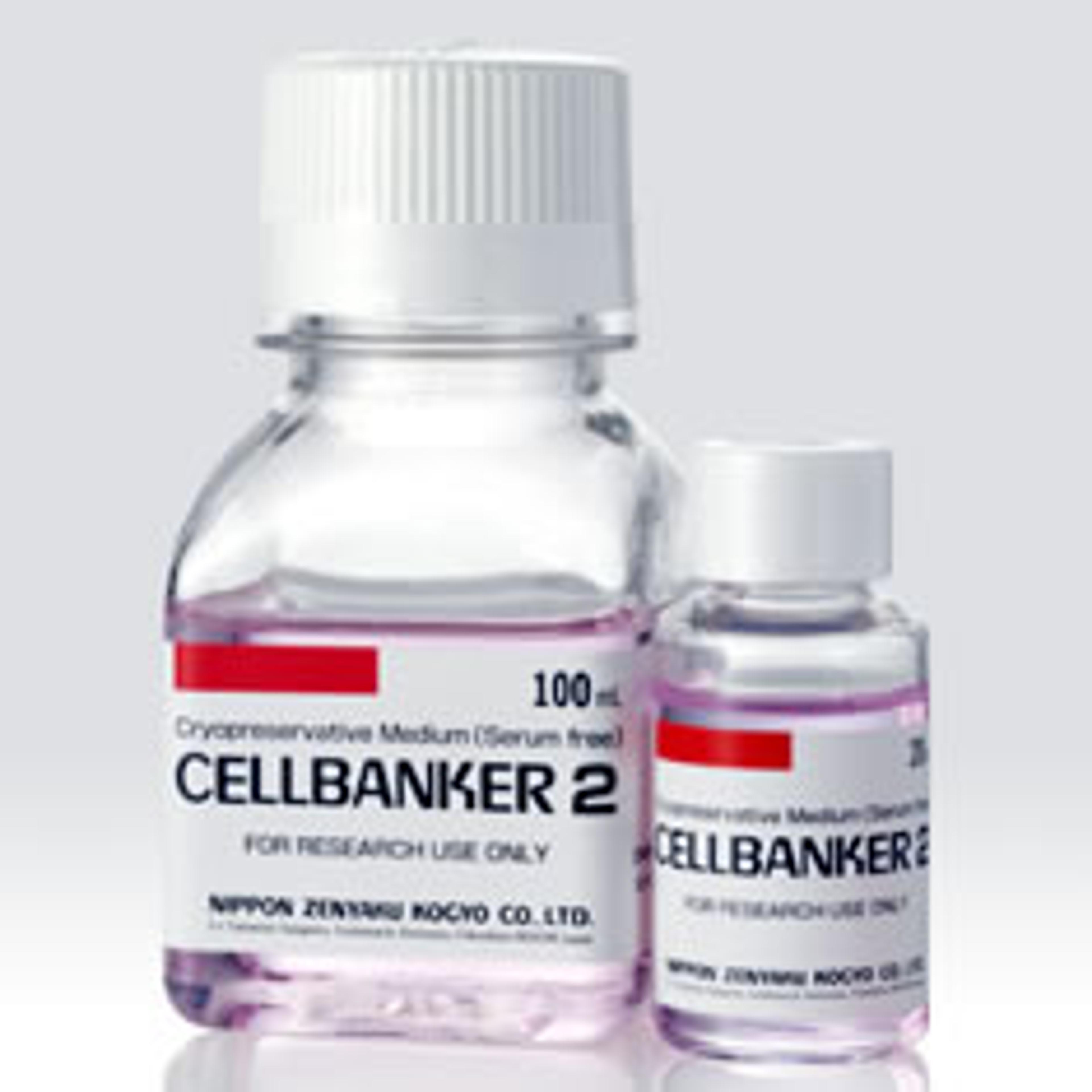
CELLBANKER® 2

AMSBIO

CELLBANKER® 2 serum-free cryopreservation media ensure stable long-term storage of cells.

(3)

Links

Tags

Cell Adhesion AssaysCell adhesion assays are used to quantitate attachment and analyze the molecular mechanisms for extracellular matrix adhesion, cell migration and sensitivity to inhibitors. Find the best cell adhesion assay equipment in our peer-reviewed product directory: compare products, check customer reviews and receive pricing direct from manufacturers.Cell / Tissue CultureCell culture or tissue culture is used to study the biology of cells or tissues and to isolate cellular products in an environment which can be manipulated and well defined. Accurately control your culture environment with bioreactors or culture incubators, bind your cells to a surface or together with an extracellular matrix. Distinguish cell types with differential media or proliferate cells with certain characteristics using selective media. Enrich your media with supplements such as growth factors, sera and vitamins. Find the best cell and tissue culture products, kits and equipment in our peer-reviewed product directory: compare products, check customer reviews and receive pricing direct from manufacturers.Cell Lines Stem Cells and Primary CellsPrimary cell cultures, established cell lines and stem cells are vital for <i>in vitro</i> and <i>ex vivo</i> experimentation. High-quality cells, optimized for your applications, alongside optimized cell substrates, growth medium and supplements, are critical for experimental success. Explore a range of cells suitable for your applications, including isogenic cell lines, competent cells, induced pluripotent stem cell (iPSC)-derived cell lines, fungal/bacterial/mammalian cell lines, stem cells and cancer cell lines. Find the best cells for your research in our peer-reviewed product directory: compare products, check customer reviews and receive pricing direct from manufacturers.Biopharmaceutical AdvancesBiopharmaceutical advances follow the development of pharmaceuticals derived from biotechnology, also known as biotechnology medicines. Biopharmaceuticals may be produced from cell lines, plants, or microbial cells. Important considerations of biopharmaceutical use include application, cost, production process and purification.IpscCell AnalysisThe analysis of cells allows researchers to understand the factors which contribute to cell health and function. These influencing processes can then be predicted and altered, leading to the development of medication and disease treatments.Stem Cell ResearchStem cells have the ability to produce identical daughter cells as well as progeny, which commit and differentiate. Stem cell research has exciting prospects of biomedical applications in cellular disease modeling, pharmaceutical screening, and regenerative medicine. High ThroughputHigh throughput experiments allow the simultaneous processing of several samples. This parallelization reduces the cost per experiment and increases reproducibility and output volume of data.Cell ProliferationCell proliferation refers to the process by which cells divide and multiply. This is a key concept in cancer research, tissue regeneration, and immunology studies. Explore cell proliferation tools in our peer-reviewed product directory; compare products, check reviews, and get pricing directly from manufacturers.Drug DiscoveryDrug discovery is the process of identifying potential new medications, involving stages such as target identification, compound screening, and preclinical development. It relies on cutting-edge technologies like high-throughput screening, artificial intelligence, and molecular modeling to accelerate the identification of drug candidates. Drug discovery plays a pivotal role in developing new therapies for diseases ranging from cancer to rare genetic disorders. Browse our peer-reviewed product directory to find the latest drug discovery technologies, compare options, check customer feedback, and get pricing directly from manufacturers.Cell BiologyCell biology studies the structure, function, and behavior of cells. Understanding cellular processes is essential for research in areas such as cancer biology, stem cell research, and neurobiology. Techniques like flow cytometry, microscopy, and cell culture enable researchers to explore cellular mechanisms in detail. Browse our peer-reviewed product directory to find the best cell biology tools and equipment, compare products, check customer reviews, and get pricing directly from manufacturers.hiPS Cell Lines