
Allegra V-15R benchtop centrifuge launched by Beckman Coulter Life Sciences during diamond year celebration
Refrigerated, compact instrument offers more versatility and efficiency for evolving needs
18 Feb 2022
Product news
Celebrating a 75-year legacy in centrifugation, Beckman Coulter Life Sciences launches its most versatile 3-liter benchtop centrifuge yet – the Allegra V-15R refrigerated centrifuge. Featuring 10 rotor configurations and 50 programmable runs along with a comprehensive selection of adapters, a variety of workflows and applications can be performed – from cell and blood separation to high-throughput screening.
“A lot has changed since 1947 when we debuted the Model E, but we’ve never lost sight of the fundamental principles of centrifugation and our obligation to our customers and their evolving needs,” said Walter Mitchell, Director of Product Management for Centrifugation. “Customer feedback helped drive the newest innovations packed into this compact model, which is up to 28% smaller than comparable models, and we’ve made just as big of a focus on safety.”
Achieving a gravitational force of up to 20,412 x g and speeds up to 13,500 rpm, the Allegra V-15R is still a quiet companion in the lab, registering ≤55 dBA at max speed.
Enhanced safety features include Automatic Rotor Recognition and Rotor Cycle Count, which tracks the number of cycles by rotor model and bucket type to help labs make an informed decision about rotor maintenance and retirement. BioSafe rotors include hermetic seals which provide air- and water-tight protection and fluid containment to further eliminate leakage into the centrifuge chamber in the case of a sample tube leak.
The Allegra V-15R centrifuge also has the ability to maintain a consistent temperature, allowing users to spin faster and longer without the risk of overheating samples. Rapid Temp* allows for the chamber to be pre-cooled to a set temperature and ECO Mode allows for even more user functionality and efficiency.
“We’re able to get the added bonus of a more comfortable centrifuge without losing any of the performance of what we had before,” said Martin Richer Associate Professor of Microbiology & Immunology at Indiana University – Purdue University (IUPUI). “I didn’t even know it was on, which is a very positive thing. We’re not rushing to either get out of the room or turn off the centrifuge, so it’s a lot more comfortable in the lab. Another huge benefit of this is a much smaller footprint. This buys me about an extra half a bench, which I think is going to be important especially in smaller or shared spaces while maintaining all the capacity of the centrifuge.”
Additional features include an ergonomic design with a soft-close lid for stress-free closing and an easy-to-use illuminated interface. From fixed-angle to conical fixed-angle to swinging-bucket, the extensive rotor portfolio from Beckman Coulter Life Sciences gives users flexibility and options for complex research needs.
Want the latest science news straight to your inbox? Become a SelectScience member for free today>>
Related products
Request Quote for All Products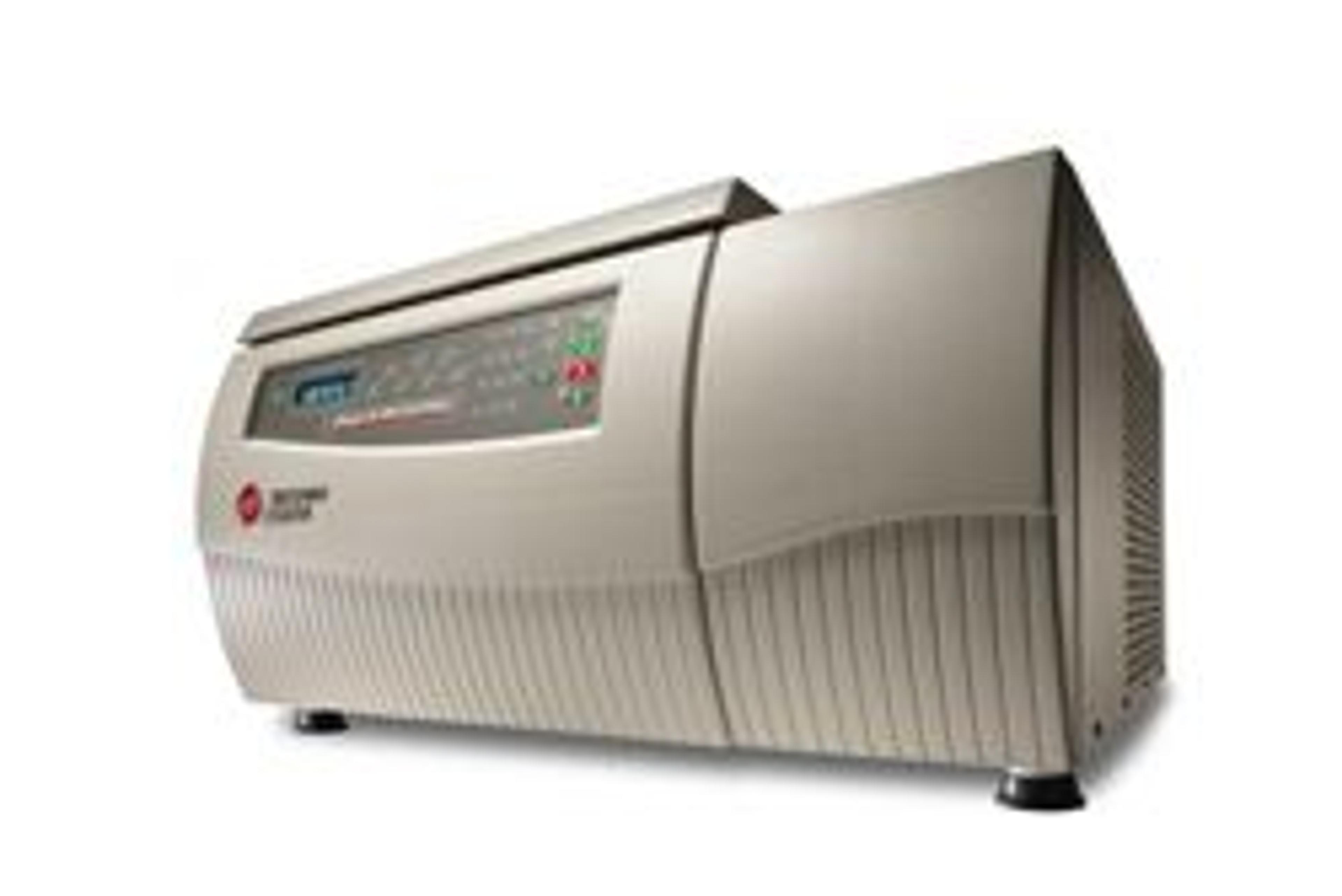
Allegra X-14R Refrigerated Benchtop Centrifuge
Beckman Coulter Life SciencesMeet your evolving application needs with the refrigerated model