
Agilent unveils the InfinityLab Pro iQ Series at ASMS 2025
This next-generation in LC-mass detection is setting new standards for intelligent mass detection, sensitivity, and sustainability
4 Jun 2025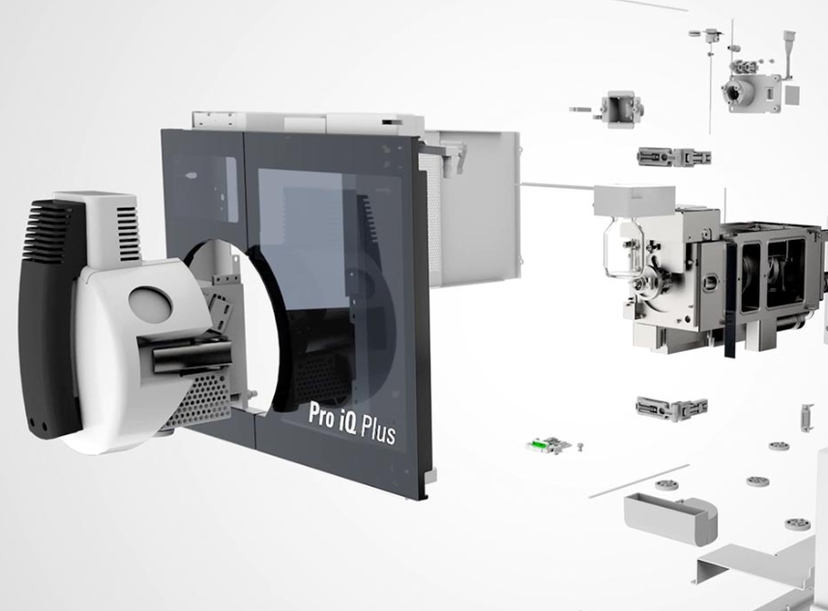
Agilent Technologies has launched its latest innovation in liquid chromatography (LC)-mass detection: the Agilent InfinityLab Pro iQ Series at ASMS 2025 in Baltimore, USA.
This ground-breaking series includes the InfinityLab Pro iQ and the InfinityLab Pro iQ Plus, each tailored with distinct features and capabilities to meet the diverse analytical needs of modern laboratories. These advanced, intelligent systems are particularly well-suited for analyzing essential molecules such as therapeutic small molecules, oligonucleotides, peptides, and proteins.
The Pro iQ Series is designed to serve a broad range of end markets, including pharmaceutical and biopharmaceutical industries, academic and government research institutions, environmental testing labs, food safety organizations, and the chemical and specialty materials sector.
With its precision, sensitivity, and intelligent design, the series supports applications such as mass confirmation, impurity profiling, biomolecule characterization, trace contaminant detection, and compound purification — empowering scientists to achieve high-quality, reliable results in both routine and advanced analytical workflows.
The Pro iQ Series delivers exceptional performance and sensitivity, making it ideal for monitoring complex biomolecules and detecting impurities. Whether analyzing therapeutic small molecules, oligonucleotides, peptides, or proteins, the systems provide robust, high-resolution data to ensure accuracy, safety, and stability. The series also enables mass-based purification, allowing precise isolation of target compounds for downstream applications.
The Pro iQ Plus system is engineered for high-end applications that demand ultimate sensitivity and performance. With an expanded mass range of m/z 2–3,000 and enhanced sensitivity through Agilent Jet Stream (AJS) technology, it supports both routine and trace-level detection of small and large molecules. These capabilities make it especially valuable in advanced R&D environments where extended analytical performance is critical.
Both the Pro iQ and Pro iQ Plus systems are designed for operational efficiency and ease of use, enabling faster compound confirmation with greater specificity and selectivity than traditional UV detection — even for chromatographically unresolved compounds. The Pro iQ system, with a mass range of m/z 2–1,600, is optimized for small molecule analysis, making it a reliable choice for standard laboratory workflows.
Jennifer Gushue, associate vice president of LC/MS Product Marketing at Agilent, highlighted the broad applicability of the new systems, “The versatility of the Pro iQ Series opens new possibilities across a wide spectrum of application areas — from pharmaceutical development and quality control to biotherapeutics, environmental testing, and academic research. Whether it's ensuring the purity of life-saving drugs, characterizing complex biomolecules — such as oligonucleotides and peptides — or advancing cutting-edge research, these systems deliver the precision, sensitivity, and intelligence today’s scientists need to solve tomorrow’s challenges.”
Want the latest science news straight to your inbox? Become a SelectScience member for free today>>