Agilent Technologies Introduces First Commercial Software for Metabolic Flux Analysis

MassHunter VistaFlux will help cancer researchers better understand metabolic pathways

17 Apr 2016
Alex Waite
Editorial Assistant

Product news

Agilent Technologies Inc. has introduced new software to help researchers analyze qualitative metabolic flux—tracking the different pathways a metabolite participates in under different biological experiments.

This analytical capability is of particular interest to cancer researchers who want to better understand the metabolic pathways associated with cancer cells.

Agilent introduced VistaFlux at the annual meeting of the American Association for Cancer Research (AACR) 2016 in New Orleans.

“MassHunter VistaFlux speeds up clinical research data analysis so scientists can quickly understand the underlying cause of diseases, such as cancer,” said Monty Benefiel, Agilent vice president and general manager, Mass Spectrometry Division.

“The new Agilent VistaFlux will be an essential tool for us,” said Dr. Simon Thain, metabolic phenotyping manager, GeneMill, University of Liverpool. “I have been waiting 10 years for software like VistaFlux. It will allow my lab to complete flux projects in a fraction of the time.”

VistaFlux, the first commercially available software of its kind, is the newest addition to the company’s comprehensive suite of software for metabolomics and the MassHunter MS software portfolio.

With VistaFlux software, researchers will be able to more easily analyze data from targeted metabolic flux experiments when using Agilent time-of-flight and quadrupole time-of-flight liquid chromatography mass spectrometry systems.

“VistaFlux enables cutting-edge, targeted, isotopologue data extraction and pathway visualization of flux results for greater biological understanding,” Benefiel said. “It will enable multidisciplinary research teams to quickly mine and interpret the data they collect from targeted qualitative flux experiments.”

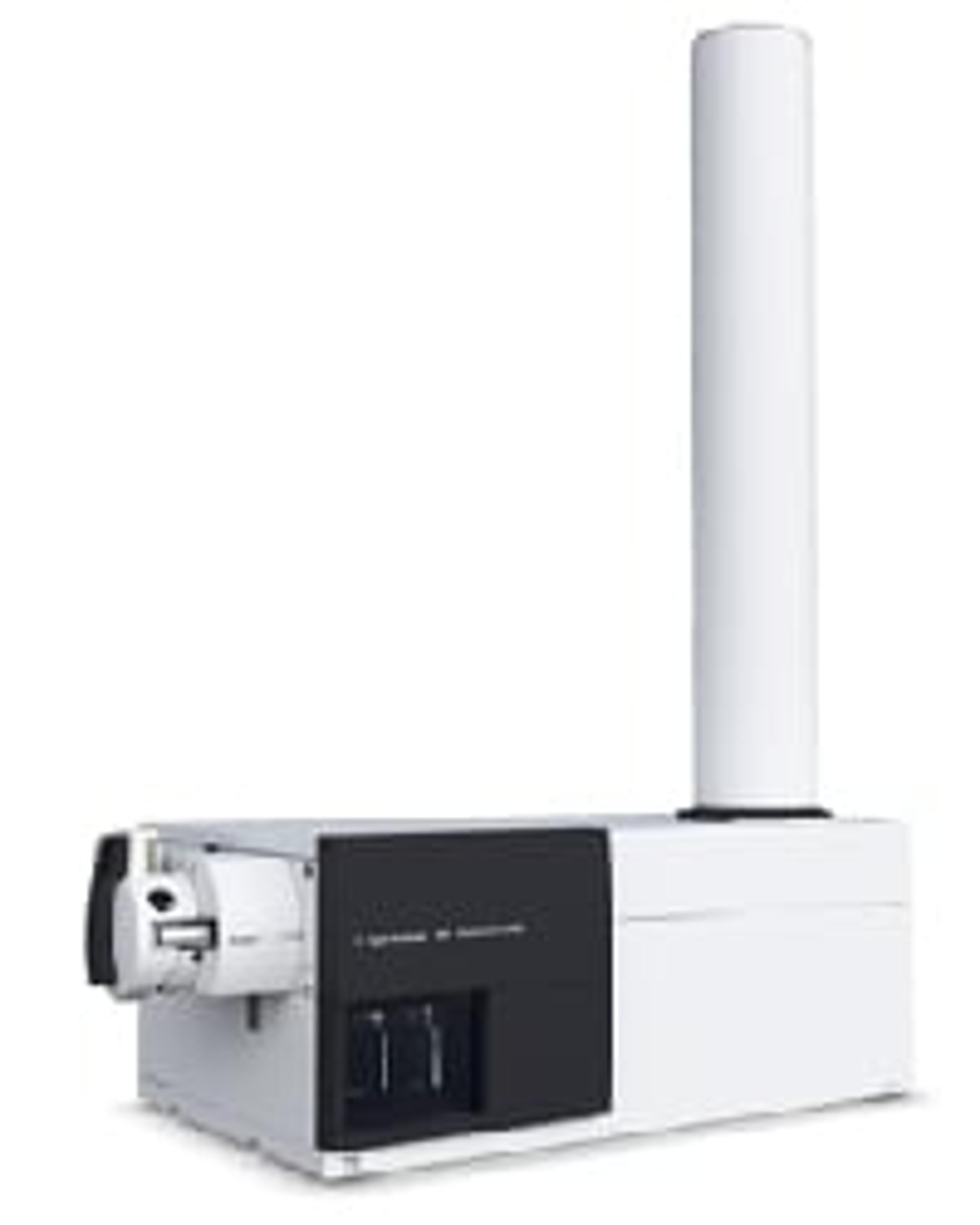
6500 Series Accurate-Mass Quadrupole Time-of-Flight (Q-TOF) LC/MS

Agilent Technologies

Whether you need to identify, screen, profile, or perform quantitation on complex samples, Agilent Q-TOF is ready. When simultaneous speed, sensitivity, accuracy, and dynamic range come together, you get the most information from your samples. The immense detail revealed is harnessed by MassHunter software to provide answers you can trust. 

(21)

ICP-MS MassHunter Software

Agilent Technologies

ICP-MS MassHunter 4.3 Workstation software controls all aspects of the setup and operation of your Agilent ICP-MS and ICP-QQQ instruments and accessories. Compatible with the 7800 and 7900 quadrupole ICP-MS, and 8800/8900 Triple Quadrupole ICP-MS (ICP-QQQ), as well as the previous 7700 Series, ICP-MS MassHunter 4.3 makes running your Agilent ICP-MS system easier than ever. 

(11)

Links

Tags

AutosamplersAutosamplers are automated sample loaders used with a number of separation and analytical techniques. HPLC autosamplers use automated partial or full-loop injection systems and place samples in vials or microplates for analysis. Autosamplers can also be used for elemental analysis. Features to consider include repeatability, syringe capacity, footprint and temperature controls.  Sample PreparationSample preparation can improve the quality and speed of separation techniques. Products to assist sample preparation include filtration equipment, evaporators, membranes and sieves.Size Exclusion ChromatographySize exclusion chromatography (SEC) is a liquid chromatographic technique used to separate and identify molecules based on their size, including polymers, proteins, nanoparticles & nucleic acid. SEC is further subdivided into gel filtration chromatography (GFC) and gel permeation chromatography (GPC) when an aqueous or organic mobile phase is used respectively. HPLC-based SEC systems and columns are available for analytical separation alongside SEC spin columns or filters to prep samples for many protocols. Find the best size exclusion chromatography equipment in our peer-reviewed product directory: compare products, check customer reviews and receive pricing direct from manufacturers.Cell / Tissue CultureCell culture or tissue culture is used to study the biology of cells or tissues and to isolate cellular products in an environment which can be manipulated and well defined. Accurately control your culture environment with bioreactors or culture incubators, bind your cells to a surface or together with an extracellular matrix. Distinguish cell types with differential media or proliferate cells with certain characteristics using selective media. Enrich your media with supplements such as growth factors, sera and vitamins. Find the best cell and tissue culture products, kits and equipment in our peer-reviewed product directory: compare products, check customer reviews and receive pricing direct from manufacturers.ProteomicsProteomics is the systemic bioinformatics study of proteins and amino acids, including their structure, size, function and identification. Tools used in proteomics include chromatography, blotting and gels, protein arrays, mass spectrometry and ELISA and associated analysis software. Analyzers and proteomic systems should be sensitive, high resolution, fast and may be automated for high-throughput.Data AnalysisData analysis hardware and software is available to make data processing straight-forward yet powerful. Data software can be used for math and stats, technical graphing and image analysis. In addition, software is available for specific data analysis of electrophoresis, densitometry, ELISA and DNA sequencing.Sample ManagementSample management systems include sample storage devices such as freezers and plate storers, sample environment enclosures and sample organization, retrieval and sorter systems. Useful system features include high-throughput, automation, robotic arms, automated liquid handling and associated database systems. Accessories in sample management include barcode scanners, heat sealers and tubes.Cell-Based AssaysCell-based assays are used to monitor the presence, quantity and activities of a desired cellular analyte including drug molecules or biomarkers. This can reveal information on cell health (apoptosis, cytotoxicity, viability and proliferation assays), cell metabolism, cell migration and cell signaling mechanisms. Find the best cell-based assay products, kits and equipment with our peer reviewed product directory: compare products, check customer reviews and receiving pricing direct from manufacturers.BiomarkersBiomarkers are biological markers which can be measured and evaluated to indicate a biological state. The use of biomarkers in research and diagnosis can indicate a normal or disease state or drug response of cells / tissues. Biomarkers include genetic markers, cell surface markers such as antigens, antibodies or receptors and secreted molecules such as cytokines. An assay system is required for identification of biomarkers. :Animal ModelsThe use of non-human animals in experiments or behavorial observations. The research is conducted inside universities, medical schools, pharmaceutical companies, farms, defence establishments, and commercial facilities that provide animal-testing services to industry. It includes pure research such as genetics, developmental biology, behavioral studies, as well as applied research such as pharmaceutical testing in pre-clinical, before human, studies. RegulatoryPharmaceutical regulations impact on all areas of drug development, manufacture and control and supply. Services are provided from the early stages of drug development and clinical trials through to dossier submission, approval and marketing. Regulatory also includes submission of analytical studies from the pharmaceutical product and safety. Mass SpectrometryMass spectrometry (MS) is a powerful analytical technique used to identify and quantify molecules based on the mass-to-charge ratio of gas-phase ions. It provides detailed information about the structure, composition, and properties of compounds and is widely used across fields such as environmental monitoring, materials science, drug discovery and development, food and beverage testing, and wider chemical research. Key MS techniques include tandem mass spectrometry (MS/MS), liquid chromatography–mass spectrometry (LS-MS) and inductively coupled plasma (ICP-MS). Choosing from these wide range of techniques and technologies can be a daunting task, so keep up to date with scientific applications, performance expectations, and customer reviews here all in one place. Visit our product directory to receive quotes direct from the manufacturer. Software PlatformsSoftware platforms are useful for various stages of laboratory experiments from data collection to data storage and processing. For instance lab software is available for system control, data management, data analysis and qualification / validation.MetabolomicsMetabolomics is the study of small metabolites (the intermediates and products of metabolism). It involves the identification and quantification of cellular metabolites using analytical technologies such as GC, HPLC, NMR, and LC/MS.Data AnalysisThe analysis of data is the process of transforming, modeling and evaluating data to discover useful information from experimental results.