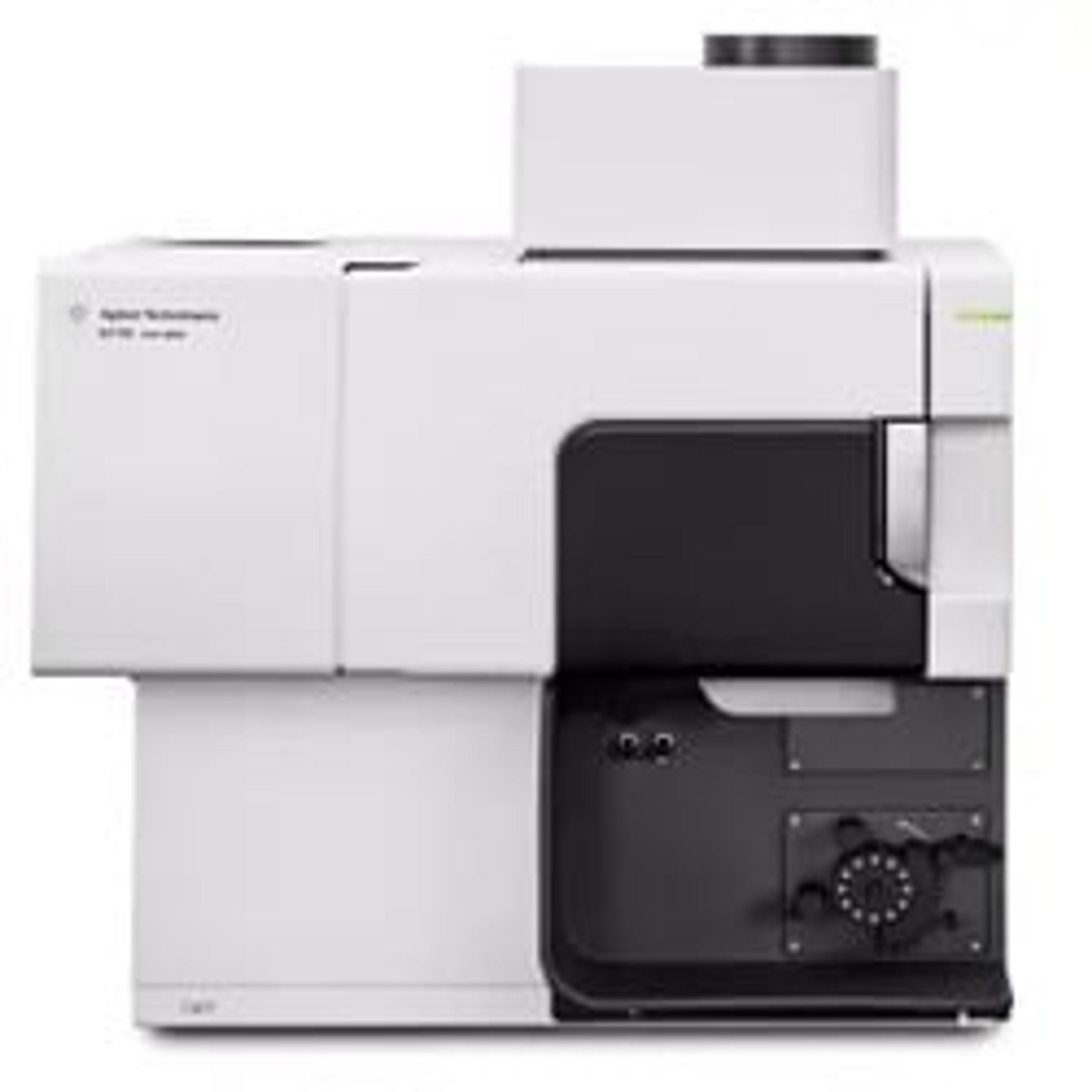
Agilent announces new generation of ICP-OES systems with improved instrument intelligence

The new smart capabilities aim to deliver deep insight into samples, processes and operational status

28 Feb 2020

Diane Li
Assistant Editor

Product news

Agilent Technologies, Inc. has announced a new generation of ICP-OES systems for laboratories serving the environmental, food, energy, chemicals and materials markets.

The new Agilent 5800 ICP-OES and 5900 ICP-OES systems incorporate an entirely new layer of smart capabilities that deliver deeper insight into samples, processes, and operational status. Greater instrument intelligence enables labs to avoid unplanned downtime, and take a more pro-active approach to reduce the need to remeasure samples.

"Remeasurement is a key issue because it leads to higher costs, lower profit margins, and inefficiencies in the laboratory," said Keith Bratchford, vice president, and general manager of Agilent's Atomic Spectroscopy division. "Thanks to a range of sensors linked to unique software tools, the 5800 and 5900 will help labs get the right answer the first time by guiding them through their analysis."

"It's like having an experienced scientist with you as you measure your samples," added Bratchford. "The 5800 and 5900 remove the requirement of being an expert in ICP-OES, which helps address staff turnover in labs and minimizes the costs associated with retraining."

Do you use Agilent products in your lab? Write a review today for your chance to win a $400 Amazon gift card>>

5110 ICP-OES

Agilent Technologies

The Agilent 5110 ICP-OES Instrument features unique Dichroic Spectral Combiner (DSC) technology that enables synchronous radial and axial measurements.

(18)

Links

Tags

Atomic Absorption / Emission SpectroscopyAtomic absorption spectroscopy (AAS) and atomic emission spectroscopy (AES) — also called optical emission spectroscopy (OES) — are used to detect the elemental constituents in samples. Both techniques involve the atomization of a sample. Atomic absorption spectrometers may use a flame or furnace to create an atomic vapor of the sample before irradiation with spectral light. Optical emission spectrometers may use a flame, inductively coupled plasma (ICP), microwave plasma (MP) or spark arcs to atomize and excite the sample. At higher excitation energies, electrons can be emitted instead of photons, which can be useful for samples that can’t be atomized and for surface analysis. Explore electron spectroscopy equipment such as Auger spectrometers and photoelectron spectrometers for surface elemental analysis of samples. Find the best atomic absorption, photoelectron and optical emission spectrometers in our peer-reviewed product directory: compare products, check customer reviews and receive pricing direct from manufacturers.Food SafetyFood safety describes the prevention of food-borne illnesses. Contamination with a variety of pathogens can be prevented with adequate temperature control, hygiene and labeling. Food samples can be tested using GC/MS, HPLC, SPE, and qPCR to ensure their adherence to regulations.Environmental AnalysisEnvironmental analysis describes a variety of tests that determine the effect of chemicals, processes and particulates such as persistent organic pollutants (POPs) have on the environment.SpectroscopySpectroscopy is a technique that analyzes the interaction of light with matter to study molecular properties, concentrations, and structural information. Widely used in chemical, pharmaceutical, and environmental analysis, spectroscopy offers insights into molecular composition and helps identify unknown compounds. It plays a key role in quality control, research, and diagnostics. Browse our peer-reviewed product directory to compare spectroscopy tools, read reviews, and get prices directly from manufacturers.
Agilent announces new generation of ICP-OES systems with improved instrument intelligence