Advances in materials characterization, from graphene production and correlative imaging to transmission Raman spectroscopy

Explore cutting-edge technologies and the latest resources to support your materials characterization

2 Jun 2021

Carrie Haslam
Associate Editor

Editorial article

Materials characterization delivers a deeper understanding of the structure and properties associated with a given material at the atomic scale. Characterization tools can provide important insight into the optical, morphological, electrical, thermal, and magnetic characteristics of a material. Understanding the structure and properties of the material will not only help accelerate materials science forward, but also improve the performance of future products used in clinical diagnostics, environmental science, and beyond. Technological developments and discoveries in the field of materials science have shaped the methods and tools now used to characterize a range of materials, from 2D nanomaterials, ceramics, and polymers, to bulk materials.

In this new special feature, we take a look at some of the latest technologies and techniques advancing materials science and characterization, providing insight into the production of pristine graphene films, transmission Raman spectroscopy, correlative imaging, particle and image analysis, tare volume recommendations, atomic force microscopy, and scanning electron microscopy tools, to help you probe and measure the structure and properties of a material like never before. Plus, don't miss the exclusive free SelectScience Materials Characterization Webinar Series, starting on Monday, June 7, 2021.
TRANSMISSION RAMAN SPECTROSCOPY: Quantitative analysis of warfarin

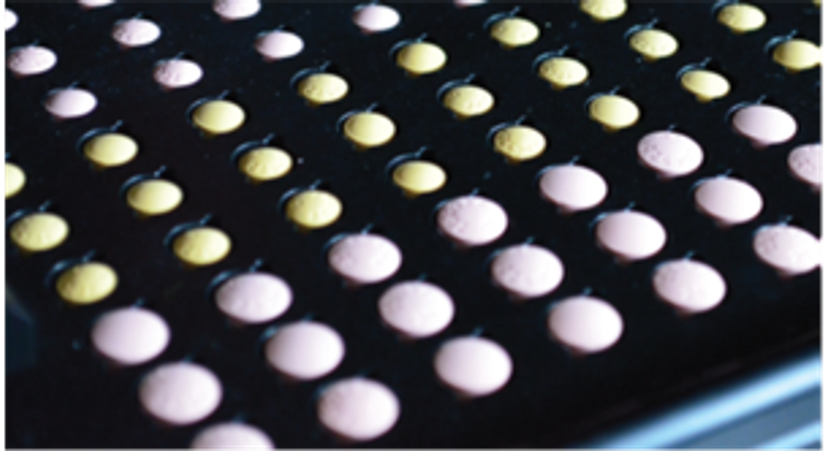
Find out how to use transmission Raman spectroscopy (TRS) for the effective quantification of warfarin in tablet form, and discover how TRS can differentiate and quantify two forms of warfarin without sample preparation to enable fast quantitative bulk analysis, with Agilent.
Download Method

2D MATERIALS: The power behind correlative imaging

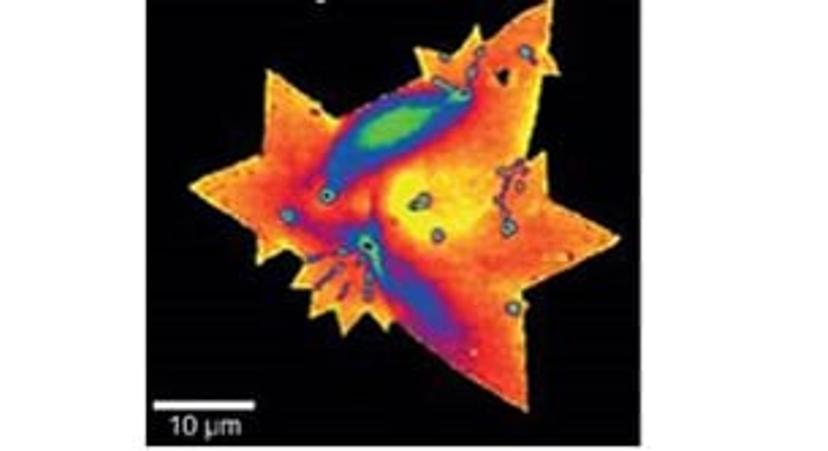
Find out more about the power of correlative Raman imaging and discover how this technique can function as an effective tool to characterize the crystal properties of a range of 2D materials, with WITec GmbH.

Download Poster

TARE VOLUME: Achieving high accuracy just got easier

Find out how to select the most appropriate tare volume for your application, to generate accurate, repeatable, and reproducible results, and discover the tare volume recommendations for high-accuracy (HIAC) systems with Beckman Coulter Life Sciences.

Download Poster

GRAPHENE: Now able to go mainstream

Hear from Dr. Marco Caffio at Integrated Graphene to discover his pioneering work on graphene production, and how his team has found a winning formula to manufacture pristine, reproducible graphene at surprisingly low cost.

Read Article

TIMED-RELEASE DRUG: Combining particle & image analysis

Discover how Microtrac MRB’s SYNC system unites two measurement technologies, laser diffraction particle size and image analysis instrumentation, to deliver full characterization of powders, granulates and suspensions.

Download Method

EXPERT WEBINAR: Making the most of your microscope

Dr. Louise Hughes, Oxford Instruments NanoAnalysis, reveals the SEM tools available to biologists for the analysis of plants, tissues, cells and organelles, and explains how to adjust microscope imaging conditions to optimize data acquisition.
Register Now

WONDER MATERIALS: Correlating graphene’s functional properties via AFM

Discover how atomic force microscopy offers a holistic approach to the nanoscale characterization of graphene and other 2D materials, in this expert application note from Park Systems.

Download Method

Hear from the experts

Biomaterials: Prof. Silke Christiansen, Fraunhofer Institute, describes how she explores the mechanical properties of bone to help better treat osteoporosis and highlights the technological advances enabling new insights. Read article >>

Biosensing: Dr. Jacqueline Barnett and Dr. Joel Allainguillaume, University of the West of England (UWE), discuss their work to develop handheld detectors to combat the spread of cacao swollen shoot virus and arrest the decline in the cocoa industry. Read article >>

Graphene biosensors: Dr. Shakil Awan, University of Plymouth, outlines the challenges and urgency of early Alzheimer’s disease detection and explains why graphene and 2D materials are highly suitable as biosensors. Watch video >>

3D Printing: Professor Tim Long, Virginia Tech University, explains how 3D printing is enabling scientists to envision next-generation polymers with novel properties and vast applications. Watch video >>

Expand your materials science knowledge with these top eBooks:

Microscopy: Are you looking to invest in a microscope for your research? Make sure you have all the information you need to help you find the best microscopy equipment to meet your lab’s imaging needs. Download eBook >>

NIR spectroscopy: Download this free application eBook to find out the basic principles of near-infrared (NIR) spectroscopy, including the benefits of this technique, and a detailed evaluation of cost savings. Download eBook >>

Rapid QC: This application eBook will help you discover how Raman microscopy can yield information on molecular structures, crystal phases, polymorphisms, and much more. Download eBook >>

Thermal desorption: In this application eBook, find out what thermal desorption can do for you, including the benefits of using thermal desorption in your organic compound analysis. Download eBook >>

Our collection of expert materials science webinars

  • Webinar Series: Register for the free Materials Characterization Webinar Series to find out all you need to know about the latest tools and techniques advancing materials science. Register now >>
  • Non-destructive characterization of electrospun fibers with 3D high-resolution X-ray microscopy. Register now >>
  • UV-Vis spectroscopy for validated pharmaceutical testing. Register now >>

Your recommendations

Find out what researchers around the world are saying about the products they use! Filip Svetoslavov, at Inovexa, shared this review of the TRS100 by Agilent Technologies.
Links

Tags

Infrared / IR SpectroscopyInfrared (IR) spectroscopy measures the interaction of infrared light with a sample, including transmission, reflectance & absorbance, facilitating the identification of analytes. Equipment used for quantitative analysis includes Fourier-transform infrared (FTIR) spectrometers, infrared cameras, FTIR gas analyzers, as well as attenuated total reflectance (ATR) accessories and pellet or film presses. Find the best IR spectroscopy products in our peer-reviewed product directory: compare products, check customer reviews and receive pricing direct from manufacturers.LC-MSLC-MS (liquid chromatography-mass spectrometry) systems and equipment are used for separation and quantitative analysis of complex mixtures, combining liquid chromatography and mass spectrometry. Quantify proteins, contaminants, pesticides or screen for drug metabolites with a high level of sensitivity. LC-MS systems and equipment include reverse phase, normal phase and specialized columns integrated with various MS detectors such as time-of-flight (TOF), quadrupole, orbitrap or ion trap mass analyzers. LC-MS/MS instruments equipped with a qTOF or triple quadrupole analyzer give greater sensitivity and resolving power to your analysis. Find the best LC-MS equipment in our peer-reviewed product directory: compare products, check customer reviews and receive pricing direct from manufacturers.Raman SpectroscopyRaman spectroscopy is used to discern the vibrational and rotational states of molecules and hence the chemical composition of a sample by measuring the inelastic scattering of monochromatic light. Explore a range of Raman spectrometers, including handheld/portable Raman spectrometers for QC/QA labs and in situ spectrometers for processes. Conduct Raman imaging for microanalysis of mixed samples using a Raman microscope. Raman spectrographs are also available. Find the best Raman spectroscopy products in our peer-reviewed product directory: compare products, check customer reviews and receive pricing direct from manufacturers.UV-Visible SpectroscopyUltraviolet-visible (UV-Vis) spectrophotometers are used to measure the interaction of UV and visible light with a sample, including transmission, reflectance & absorbance. The two major instrument classes are single-beam or double-beam spectrophotometers. More specialized equipment includes colorimeters, spectroradiometers and refractometers. Portable and microvolume spectrophotometers are also available. For the modular spectroscopy lab, explore a range of light sources for combination with a spectrograph/spectrometer and optics. Find the best UV-Vis spectroscopy products in our peer-reviewed product directory: compare products, check customer reviews and receive pricing direct from manufacturers.BiosensorsBiosensors are devices used to detect an analyte using biological molecules specific to the analyte coupled to a detector. Biosensor instruments may be photometric, typically using surface plasma resonance (SPR), electrochemical or QCM (quartz crystal microbalance) biosensors. Biosensors should be selective, portable, robust and sensitive and have a fast response time. Systems may be manual or automated and usually have associated software.Point-of-CarePoint-of-Care Testing (POCT) or Near Patient Testing (NPT) products are available for urine, blood and other clinical chemistry analyses. POCT includes: blood glucose testing, blood gas and electrolytes analysis, rapid coagulation testing (PT / INR), rapid cardiac markers diagnostics, drugs of abuse screening, urine strips testing, pregnancy testing, fecal occult blood analysis, food pathogens screening, hemoglobin diagnostics, infectious disease testing and cholesterol screening.BiomarkersBiomarkers are biological markers which can be measured and evaluated to indicate a biological state. The use of biomarkers in research and diagnosis can indicate a normal or disease state or drug response of cells / tissues. Biomarkers include genetic markers, cell surface markers such as antigens, antibodies or receptors and secreted molecules such as cytokines. An assay system is required for identification of biomarkers. :Non-Destructive TechniquesNon-destructive techniques (NDT) describes a variety of analytical techniques used to evaluate the properties of a material. Common methods include ultrasonic, magnetic-particle, liquid penetrant, radiographic, remote visual inspection (RVI), and eddy-current testing. NDT is regularly used in forensic engineering, civil engineering, mechanical engineering, electrical engineering, systems engineering, aeronautical engineering, and medicine.Light MicroscopyLight microscopes or optical microscopes are used to visualize microscale objects under magnification, including cells, clinical specimens and materials. Lab equipment for light microscopy includes confocal microscopes, fluorescence microscopes, zoom and stereo microscopes. Microscope slides and imaging reagents are available for visualizing samples, as well as various microscope stages and incubators for large or temperature-sensitive samples. Find the best light microscopes in our peer-reviewed product directory: compare products, check customer reviews and receive pricing direct from manufacturers.Electron MicroscopyElectron microscopes (EM) are used to create high-resolution images of samples at the nanoscale by means of an accelerated beam of electrons as a source of illumination. Types of electron microscope include scanning electron microscopes (SEM), transmission electron microscopes (TEM), scanning transmission electron microscopes (STEM) and cryo-electron microscopes. Focused ion beam (FIB) microscopes are useful for modifying or milling a sample surface with nanometer precision, as well as imaging. Find the best electron microscopes in our peer-reviewed product directory: compare products, check customer reviews and receive pricing direct from manufacturers.Atomic Force Microscopy / Scanning Tunneling MicroscopyAtomic force microscopes (AFM) and scanning tunneling microscopes (STM) are high-resolution forms of scanning probe microscope (SPM) used to generate topological information of a sample down to the atomic scale. Instruments can generate an image of the surface topology, manipulate objects and reveal information on localized properties such as Young’s modulus, conductivity, and magnetism. High-quality STM and AFM probes optimized for your application are available, as well as other SPM-based instruments such as scanning ion conductance microscopes (SICM) & near-field scanning optical microscopes (NSOM). Find the best AFM and STM equipment in our peer-reviewed product directory: compare products, check customer reviews and receive pricing direct from manufacturers.ImagingImaging techniques are essential for obtaining visual representations of samples to understand structures, processes, and function in biological, chemical, and physical research. These tools range from traditional light microscopy to advanced imaging modalities like MRI and electron microscopy, providing researchers with valuable data for diagnostics, drug discovery, and material analysis. Explore imaging solutions in our peer-reviewed product directory to compare products, check reviews, and get pricing directly from manufacturers.PolymersPolymers are large molecules made up of many repeat units. Natural polymers such as DNA and proteins are essential to life, whereas synthetic polymers such as polystyrene and polyethylene are used widely due to their functionality. Typical techniques for analysis include GPC, SEC, DSC, FT-IR and NMR.MicroscopyMicroscopy is a technique used to observe small objects in detail, from cells to materials, using light or electron microscopes. It enables researchers to examine structures with high resolution, aiding in fields such as biology, medicine, and materials science. With advanced microscopy techniques, scientists can gain insights into cellular processes, tissue structures, and material properties. Explore the best microscopy solutions in our peer-reviewed product directory, compare products, read customer reviews, and get pricing directly from manufacturers.AFM