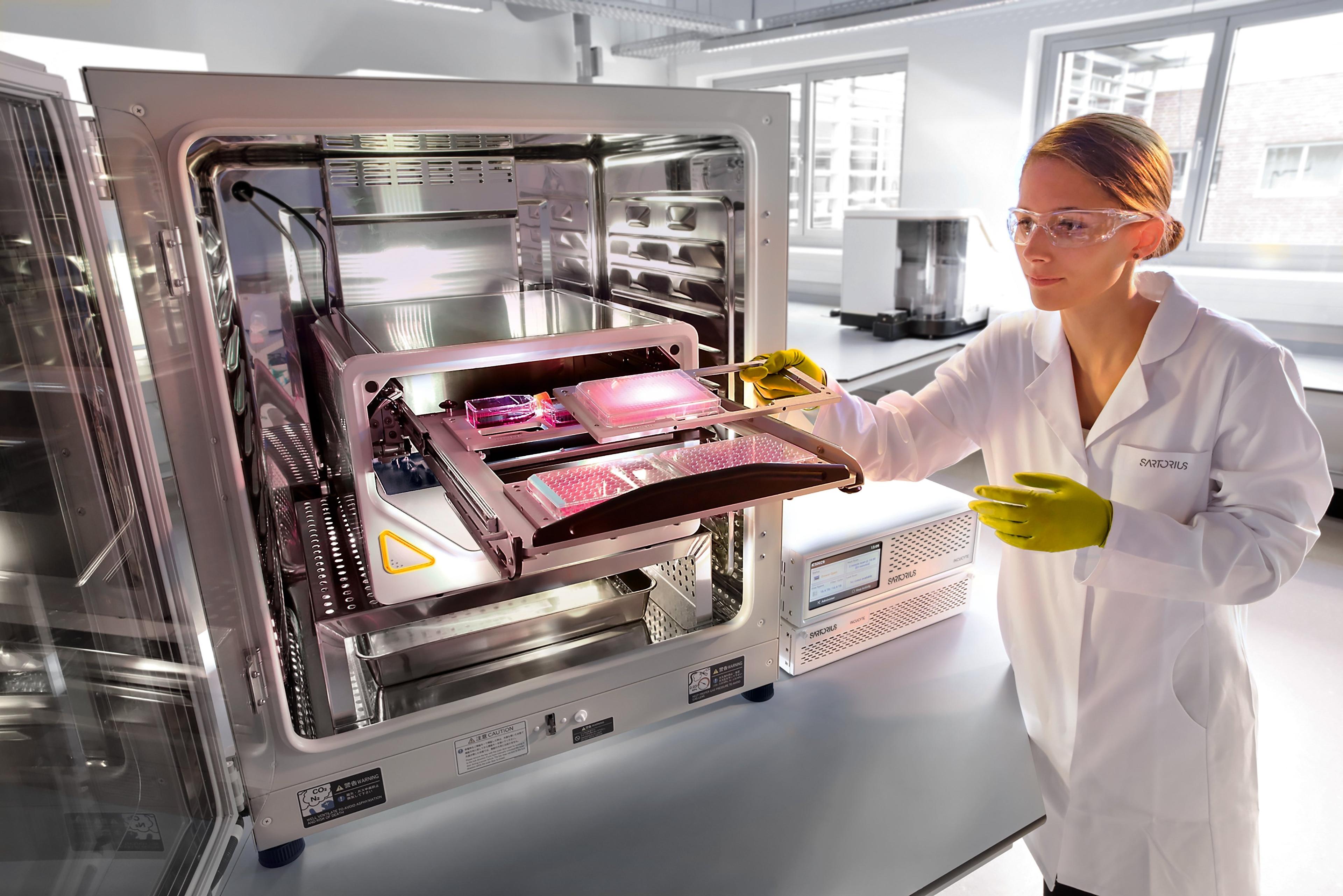
Advanced Cell Modeling: Live-Cell Analysis in Neuroscience Research

Register now to save a space at the upcoming webinar and be sure you don't miss out on new techniques and expert insights

11 Feb 2019

Finn Price
Administrator / Office Personnel

Expert insights

Despite exciting recent developments in neuroscience, identifying novel, truly effective treatments for patients with neurological and psychiatric conditions remains highly challenging. There is an unmet need for more translational models and advanced analytical techniques that afford greater biological insight and productivity.

For cell-based assays, traditional approaches rely on end-point readouts (e.g. immunocytochemistry, high-content imaging) and short-term functional measurements (e.g. electrophysiology). These methods are not best suited to probing neuronal plasticity and the long-term changes that occur during development, learning, and the inevitable decline in age and disease.

In this upcoming webinar, senior R&D scientist and highly experienced neurobiologist Susana L. Alcantara will discuss novel live-cell analysis techniques and their applications in neuroscience. Data on a range of advanced cell models and phenotypic readouts, amenable for neuro-toxicity, neuro-degeneration and neuro-inflammation studies will also be presented.

Register Now

The webinar will cover:

  • The basics of live-cell analysis and applications in neuroscience discovery research
  • How to gain greater biological insight and productivity with advanced cell models
  • Relevant examples for neuro-toxicity, neuro-degeneration and neuro-inflammation
  • Automated assays for neuronal activity, neurite dynamics, cell health and neuro-immune functions (phagocytosis, chemotaxis) in stem cells and primary neuronal cultures

Attend the live webinar on Monday, February 25, at:

  • 16:00 GMT
  • 11:00 EST
  • 08:00 PST
  • 17:00 CET

Interested, but have a scheduling conflict? Register to watch the webinar on demand at a time more suitable for you.

SelectScience runs 3-4 webinars a month across various scientific topics, discover more of our upcoming webinars>>

Links

Tags

Cell-Based AssaysCell-based assays are used to monitor the presence, quantity and activities of a desired cellular analyte including drug molecules or biomarkers. This can reveal information on cell health (apoptosis, cytotoxicity, viability and proliferation assays), cell metabolism, cell migration and cell signaling mechanisms. Find the best cell-based assay products, kits and equipment with our peer reviewed product directory: compare products, check customer reviews and receiving pricing direct from manufacturers.High-Content ScreeningHigh-content screening (HCS), also known as high-content analysis (HCA), is a high-throughput technique used in drug discovery to identify substances that alter the phenotype of cells. HCS uses fluorescent microscopic imaging and automated image analysis to investigate cellular events such as apoptosis, cell viability, GPCR activation, oxide production, neurite outgrowth, and cell signaling. Find the best fluorescent labeling reagents, cellular assays, and high-content imaging systems in our peer-reviewed product directory: compare products, check customer reviews and receive pricing direct from manufacturers.AutomationAutomation in laboratories and manufacturing processes enhances efficiency, precision, and scalability by reducing the need for manual intervention. It plays a critical role in improving productivity, minimizing human error, and accelerating workflows in fields like diagnostics, drug development, and industrial testing. Automation technologies include robotic systems, automated liquid handlers, and process control systems that streamline complex tasks and ensure consistent, reproducible results. Explore our peer-reviewed product directory to discover the best automation solutions, compare options, read user reviews, and get prices directly from manufacturers.NeurobiologyNeurobiology studies the biology of the nervous system, including the structure and function of neurons, glial cells, and their interactions. It is a key field in understanding neurological disorders such as Alzheimer�s, Parkinson�s, and schizophrenia. Research in neurobiology is essential for developing therapies for these conditions. Browse our peer-reviewed product directory to find the best neurobiology research tools, compare products, check reviews, and get pricing directly from manufacturers.NeurotoxinStem Cell ResearchStem cells have the ability to produce identical daughter cells as well as progeny, which commit and differentiate. Stem cell research has exciting prospects of biomedical applications in cellular disease modeling, pharmaceutical screening, and regenerative medicine. Live Cell ImagingLive cell imaging is the study of living cells using microscopes and high-content imaging systems. This technique provides in-depth insight into fast and complex biological processes, by allowing dynamic imaging of living cells instead of acquiring an individual image at a single point in time.High Content ImagingHigh content imaging is a method combining two or more fluorescent microscopy experiments to identify substances that alter a cell’s phenotype in a desired manner. The process is adapted to multi-well plates and both the image acquisition and analysis are automated.NeuritesNeurodegenerationNeurodegeneration refers to the progressive deterioration of the structure and function of the nervous system, often seen in diseases like Alzheimer's and Parkinson's. Research focuses on early detection and potential therapies. Explore neurodegeneration research tools in our peer-reviewed product directory; compare products, check reviews, and get pricing directly from manufacturers.