
Advance your drug discovery and development with improved drug screening, imaging, and characterization
Explore exclusive interviews and the latest resources to support your drug discovery workflows, from chemical imaging and fragment screening to assay development and gene therapy
19 Apr 2021
Editorial article

For this new special feature, we’ve pulled together a selection of the top new resources to support and advance your work in drug discovery. Find out how next-generation fragment screening can streamline biophysical research, learn the pros and cons of flow imaging microscopy, discover how to achieve your compound's optimal druggable potential, and much more.

CHEMICAL IMAGING:Clarity and speed to make informed, faster decisions
In this eBook, discover how the Agilent 8700 Laser Direct Infrared (LDIR) chemical imaging system provides a simple highly automated approach for obtaining reliable high-definition chemical images.
CYTOTOXICITY: Increase MTT cell proliferation assay throughput
In this guide, see how conducting MTT assays with the INTEGRA Biosciences ASSIST PLUS pipetting robot offers a simple, fast and cost-effective solution for assessing cellular metabolic activity.
SCREENING: Pushing the boundaries of fragment-based drug design
In this presentation, hear how next-generation fragment screening can streamline biophysical research, including the benefits of Malvern Panalytical's automated ITC workflow and other techniques.

POSTER: Top tips for discovery and development of novel compounds
This poster by Buchi provides tips to help you develop reliable high-throughput methods to identify promising compounds as quickly and accurately as possible, as well as solutions for development workflows.
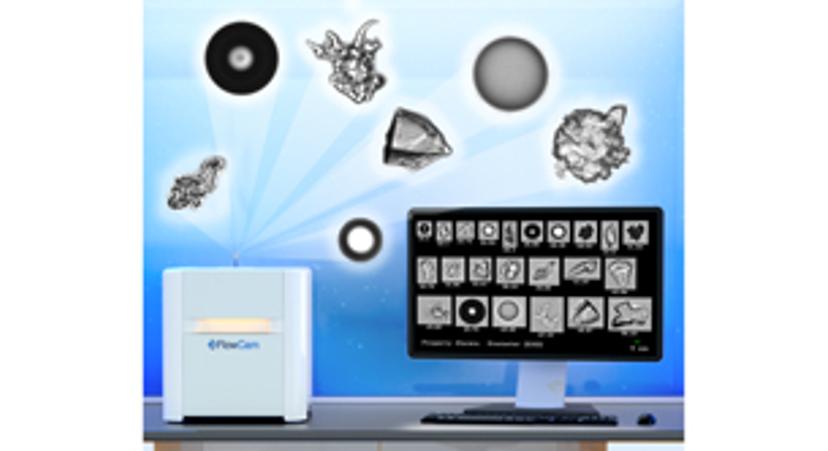
NEW eBOOK: Ultimate guide to flow imaging microscopy for protein therapeutics
Learn the pros and cons of flow imaging microscopy and how it compares to other particle analysis methods for characterizing proteins and subvisible particles, in this eBook by Yokogawa Fluid Imaging Technologies.
ASSAY: Targeting kinases involved in the innate immune response
Learn how the BellBrook Labs Transcreener ADP2 Kinase Assay allows rapid assay development to enable screening and dose-response measurements for multiple kinases involved in innate immunity.

CHARACTERIZATION: Are you advancing the best version of your compound?
Learn how Charles River Laboratories' Drug Discovery Services can help you achieve your compound's optimal druggable potential through studies that provide vital data to minimize toxicity and maximize efficacy.

SCREENING & SELECTION: Why chemistry-led design brings the greatest value
In this guest article by LGC, learn how the application of organic chemistry in screen design, analysis and interpretation of results is powerful in creating efficient screens, optimized forms and positive recommendations.
GENE THERAPY: How to design MOA reflective cell-based potency assays
In this downloadable case study, learn how Svar Life Sciences' iLite® cell-based reporter gene assays can help meet the analytical challenges of creating bioassays for gene therapy projects.
WEBINAR SERIES: Drug Discovery & Development
Hear from experts on the latest techniques and technologies helping researchers advance their drug discovery and development workflows. Plus, discover your Scientists’ Choice Awards winners.

YOUR WINNERS: Drug Discovery & Development Scientists' Choice Awards
The annual Scientists' Choice Awards celebrate the industry’s top technological innovations and give scientists the chance to recognize the instruments, services, and consumables that have made the biggest impact in their labs.
More expert interviews:
- Transform your pharmaceutical workflow with cutting-edge chromatography data management: Scientists around the world discuss the chromatography data system streamlining QC and QA workflows.Read article>>
- Targeting protein-protein interactions (PPIs): Identifying PPI inhibitors for novel therapeutics: Dr. David Andrews, AstraZeneca, discusses the future of small-molecule drug discovery for PPIs. Read article>>
- How AI is advancing neurodegenerative disease research: Guest editors Dr. Matthias Fassler, Genedata, and Daniel O’Connor, Molecular Devices, take a look at how the combination of automated imaging and deep learning is addressing research challenges and highlight how this approach helps accelerate drug development. Read article>>
- Clinical proteomics: Identifying biomarkers to predict patient risk of COVID-19: Learn how Radboud University Medical Center researchers have identified protein biomarkers linked to COVID-19 infection. Read article>>
- Instrumentation specialist shares secrets to flow cytometry success in a shared resource lab: Discover how the Bauer Core provides high-resolution and full-spectral flow cytometry data to life sciences researchers. Read article>>
- PARP inhibitors: A new frontier in the battle against cervical cancer: Dr. Santu Saha describes his team’s groundbreaking work to develop improved cancer treatments to avoid the potential side effects of chemotherapy.Read article>>
- The quest for precision medicine: Decoding cancer pathogenesis and overcoming drug resistance: Dr. Komal Kumar Javarappa shares insights from the multidisciplinary forefront of immuno-oncology, where translational biologists race against time to optimize new cancer therapies.Read article>>
- The rise of proteomics in advancing drug discovery and human health: Learn how the latest proteomics technology is driving large-scale, high-throughput studies in disease biology. Read article>>
- Incubation monitoring for cancer cell line quality control and banking: Find out how experts at the Ellison Institute are harnessing new cell monitoring technology to build cancer cell biobanks and enhance cell line quality control and authentication. Read article>>
Watch scientists at the forefront of drug discovery:
- Supporting science: Discover the technology enabling innovation communities in bioscience: Susie Harborth, Executive Vice President at Breakthrough Properties, explains how her company is delivering high-quality resources and environments that enable scientists to develop pioneering therapies, diagnostics, and vaccinations. Watch here>>
- Rare disease: How miniaturized immunoassays are advancing therapeutic development: Mark Dysinger, Developmental Scientist III, Bioanalytical Development, Alexion Pharmaceuticals, describes how miniaturized immunoassays enable accurate analysis of drug-target engagement. Watch here>>
- The magic behind conjugate vaccine development: Dr. Andrew Lees, CEO and Scientific Director of Fina Biosolutions, explains how the company has grown to offer a variety of bioconjugation and protein services.Watch here>>
- Photodynamic treatment of cancer: Dr. Theodossis Theodossiou discusses his team’s cutting-edge research into curing cancer with photodynamic therapy (PDT). Watch here>>
- Trends in drug discovery from SLAS2020: From cellular target engagement technologies to AI disrupting pharmaceutical developments: Melanie Leveridge, SLAS2020 Co-Chair and Head of Screening, Profiling & Mechanistic Biology, GSK (UK), explores the hot drug discovery trends at SLAS2020, including artificial intelligence and cellular target engagement technologies for the progression of drug discovery projects.Watch here>>
- Merck scientists present: dragonfly dispensing in drug discovery: Merck scientists Tina Minnick and Dr. Liudmila Dzhekieva share examples of how they have used the dragonfly discovery liquid handler from SPT Labtech in various drug discovery settings. Watch here>>
- Trends in drug discovery: New technologies, AstraZeneca’s approach and ELRIG event highlights: Steve Rees, Vice President Discovery Biology at AstraZeneca and Chair of ELRIG, discusses the latest technologies and techniques advancing drug discovery, including CRISPR, cryo-electron microscopy, PROTACS, artificial intelligence and machine learning. Watch here>>
Expand your drug discovery research skills with these top resources:
- How to Buy Microplate Readers: Here, we guide you through buying a new microplate reader by providing expert insight and all the information you should consider to select the best technology for your lab. Download eBook>>
- How to Buy Liquid Handling Technology: Expert insight and the information you should consider to select the best pipettes or automated liquid handling systems. Download eBook>>
- How to Buy Cell Imaging Technology: Find useful resources to help simplify your choice when it comes to purchasing your next cell imager.Download eBook>>
- How to Buy Flow Cytometers for Screening: Discover key factors and important considerations that can help guide your choice of flow cytometer for drug discovery and screening applications.Download here>>
- How to Buy Biophysical Characterization Technology: Take an in-depth look at biophysical methods for protein characterization including surface plasmon resonance (SPR), biolayer interferometry (BLI), isothermal titration calorimetry (ITC), microscale thermophoresis (MST), and microfluidic diffusional sizing (MDS).Download eBook>>
- How to Buy LC-MS Technology for Life Sciences: Discover the key factors and application considerations when looking to buy LC-MS technology, from sample prep to the latest LC-MS system.Download eBook>>
- How to Buy a UV/Vis Spectrophotometer: Here, we present a guide to all the key considerations to help you purchase the best UV/Vis technology to meet your lab’s needs. Download eBook>>
- Advances in CRISPR-Cas9 gene editing and screening technology: This eBook details a number of applications for gene editing and functional genomics screening using Horizon Discovery’s Edit-R™ CRISPR genome engineering platform.Download eBook>>
- High-content imaging for diverse 3D cell culture models: Learn how to capture in-depth and high-quality images of spheroids, stem cells, organs-on-chips and whole organisms, and read case studies from the scientists developing 3D cell assays to delve into the complex biology of neurodegenerative disease, angiogenesis and tumor microenvironment.Download eBook>>
- PCR/microplate sealing and peeling for high-throughput labs: Explore the key benefits of automating PCR, assay and compound storage plate sealing and peeling for medium to high-throughput laboratories, from reducing cross-contamination and reagent costs to freeing up scientist time and mitigating risk of repetitive strain injury. Download eBook>>
Your recommendations
Take a look at what other researchers and scientists all over the world are saying about the latest equipment and technologies in drug discovery. Logie Pillai, Viatris, shared his opinion on the Mastersizer 3000 by Malvern Panalytical:
