
Achieve knockout success with these 5 top tips from the CRISPR/Cas9 experts
Explore our roundup of key considerations for a successful CRISPR/Cas9 experiment
23 Sept 2020
Editorial article

CRISPR/Cas9 has emerged as an effective gene-editing tool with many applications, most notably in producing genetic models for biomedical research. As a simple and affordable way to manipulate and edit DNA, there is limitless potential for the technique’s applications. However, it can be intimidating for a first-time researcher, as genome-editing results can be easily influenced by technical parameters and biological considerations. When designing your CRISPR/Cas9 experiments, there are several considerations to keep in mind: How do you increase the efficiency of your experiments? What is the best way to design your RNA guides? What’s the best validation method?
These decisions can be overwhelming, but we have come up with a list of resources from experts in the field to help you optimize your CRISPR/Cas9 experiments:
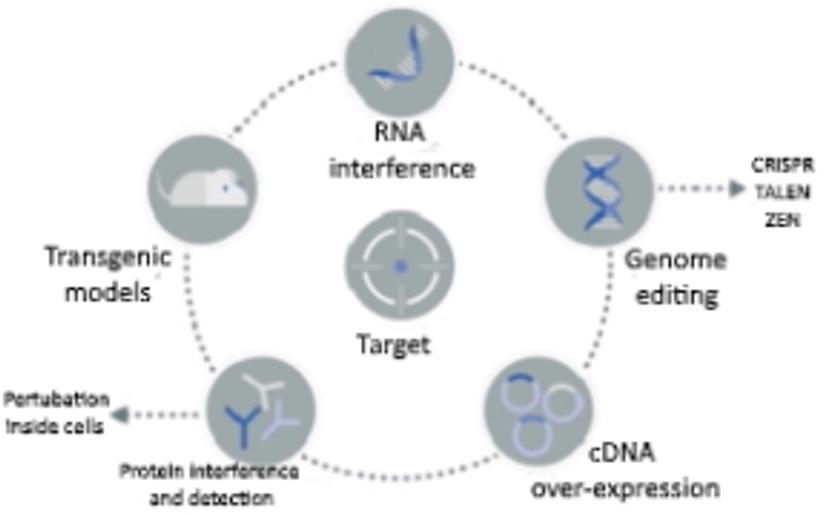
1. Know your target

The careful determination of target sites is essential. In this interview, we speak with Dr. Hanna Dreja, principal scientist at Abcam, whose top tip for making the most of your knockouts (KOs) is to know your target.
2. Select a guide RNA (gRNA)

The specificity of gRNA will greatly influence the success of your CRISPR experiment, as any unintentional binding to random sites could have detrimental effects on the cell. In this webinar, hear from Abcam’s gene-editing experts, Nicole Ha and Dr. Yongwon Kwon, to understand how improvements in gRNA design can increase CRISPR efficiencies and discover what tools are needed to achieve this.
3. Improve efficiency with a novel multi-gRNA method
Current challenges in CRISPR-Cas9 gene editing include highly variable KO efficiency, off-target cuts, and safety concerns. We speak with Dr. Yongwon Kwon about a novel multi-gRNA method that saves both time and resources while simplifying the gene-editing process.
4. Detect and validate your knockout
Once you have carried out your gene-editing experiment, the last step is verifying and characterizing the editing efficiency. In this webinar, Dr. Hanna Dreja provides a method to harness KO validation for reproducible research.
5. Consider using pre-made CRISPR/Cas9 KO cell lines
Using pre-made CRISPR/Cas9 KO cell lines can greatly speed up target identification, validation, and pathway discovery. In this interview, Dr. Karine Enesa, head of cell line development at Abcam, highlights the benefits associated with using pre-made CRISPR-Cas9 KO cell lines.
Want to know more? Here are the highlights of the Q&A session with KO validation expert Dr. Hanna Dreja:
Q: What are the advantages of CRISPR over technologies such as siRNA for validating antibodies?
If you use cloned CRISPR cell lines to modify the cell, you will end up with a reproducible, stable cell line. The main difference between siRNA and CRISPR is that siRNA reduces gene expression at the mRNA level (knockdown), while CRISPR completely silences the gene at the DNA level (knockout). The reduction in RNA levels directly correlates with the reduction in protein levels. For instance, siRNAs that induce an 80% inhibition of RNA will generate a corresponding 80% decrease in protein levels.
This is much more difficult to judge when it comes to siRNA. For western blotting, you need to ensure that you load equal amounts of proteins so you can measure those differences. There are other areas where siRNA will be advantageous over the CRISPR modification of the cell. For example, this could be for essential genes where you cannot grow your cell yourself without that protein of interest. The cell just will not survive. However, by removing that protein for a short period of time, it should be sufficient for you to validate your antibodies.
Q: How can I be sure I have knockout in my cell line?
Once you begin to genetically modify the cell, the first step would be to sequence it and see whether there is an indication of knockout in the gene of interest. You would know what to look for since you have chosen a gRNA to ensure that it will target that specific gene. Then you would sequence it and find out whether there is a mutation there. When we look for a mutation, it needs to be a mutation that would cause the stop of the protein. For instance, it should either be an insertion or deletion that causes the same shift. If you remove three nucleotides, you may remove an amino acid, but that does not mean that the rest of the protein is gone.
Once you have that, there are a few different ways of detecting knockout in your cell line. One way is looking at RNA levels, but this method is reliant on nonsense-mediated mRNA decay (NMD). It can be used as an indication, but it does not completely correlate with the protein levels. At Abcam, there is an extensive library of human KO haploid cell lines to perform antibody validation. These cell lines can provide you with a good number of antibodies to test against so you can feel confident in the data. Choosing specific antibodies should yield no signal when tested in a KO cell line data while giving the specific target protein signal in the wild-type (WT) cell line. In this way, KO validation serves as a true negative control to confirm antibody specificity and makes your life much easier.
Q: If results show cross-reactivity, do you inform customers of the potential for error in their work?
Yes. If we test an antibody that we think has bands that do not correspond to the band or protein of interest, and we see that band of interest is gone in a knockout, we consider that as binding to the protein of interest. We share that information with our customers so they know what to expect and can reproduce their data. We put it on the website so they would see that it does detect the protein of interest but there are additional bands that they must be aware of. In this case, we would not remove the product from the catalog. We would share that information with the customer so they can make their mind up. There are cases where we do see a band at the site of the protein of interest and so we would remove that antibody from the catalog because we have clearly demonstrated that it was non-specific. In those cases, we would need to contact the customers that have purchased that product, so they are aware of the status of the antibody that they have in their laboratory.
Do you use Abcam products in your lab? Write a review today for your chance to win a $400 Amazon gift card>>
Related products
Request Quote for All Products
Human EZR knockout HeLa cell line
Abcam plcKnockout achieved by using CRISPR/Cas9, 2 bp deletion in exon 6 and Insertion of the selection cassette in exon 6

Human MLH1 knockout HeLa cell line
Abcam plcKnockout achieved by using CRISPR/Cas9, 10 bp deletion in exon 12 and 1 bp deletion in exon 12 and 4 bp deletion in exon 12