Accelerate, Standardize and Document - Complete Workflow for Guaranteed Scientific Success
Cell Culture Solutions from Olympus
30 May 2016
Product news
Laying the foundations for experimental success throughout life science research, Olympus cell culture solutions include dedicated microscopes, cell confluency checker software and cell counters.
Accelerating the workflow
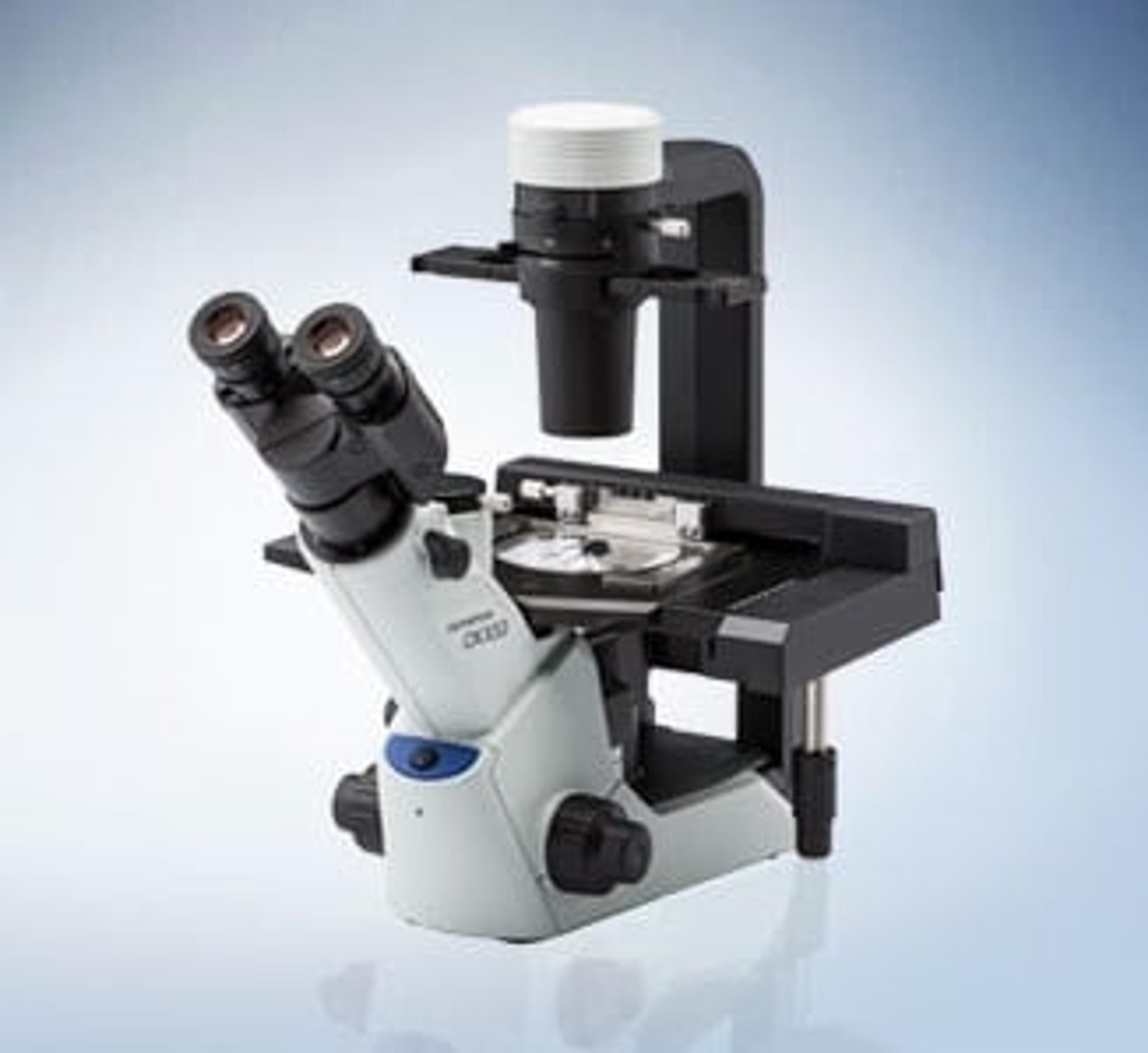
Speed and efficiency maintains culture health by minimizing the time cells remain outside optimum incubation conditions, while fast operation also frees up time for scientists to focus on other tasks. Incorporating ergonomic features and the latest optics, the Olympus CKX53 cell culture microscope facilitates fast and efficient screening, with a large field number expanding the field of view. This allows easy inspection of multiwell plates, where each of e.g. 96 wells can now be observed in a single view. A new integrated Phase Contrast (iPC) technology also removes the need to individually change the ring slit when switching from 4X-40X objectives, allowing fast and high contrast observation of phase objects under the most insightful conditions. Moreover, enhancing observation of thicker samples such as induced pluripotent stem (iPS) cell colonies, the new Olympus inversion contrast (IVC) technique extends phase contrast to generate clear, artefact-free images with enhanced 3D information.
Reliable results, every time
Success in cell culture applications such as stem cell research and regenerative medicine rely on routinely checking the health and growth status of cultures. Previously, microscopic inspection would provide a rough visual estimate of confluency, ascertaining whether growing cells were ready to passage or assay. Lacking standardization, this would often lead to inconsistencies or cells exceeding the recommended growth density, negatively impacting downstream experimentation. Introducing a new level of accuracy, the Olympus CKX-CCSW confluency checker software quickly creates quantifiable cell growth data to determine when cells require passaging or experimentation, and also facilitates the optimization of cell culture conditions. Once cells are ready to passage or assay, they can be accurately counted in-solution with the Olympus Cell Counter R1, which presents a faster and more accurate alternative to the traditional hemocytometer, combining the benefits of speed and standardized results.
Documentation made easy
An accurate picture of cell behavior over time is achieved through documenting results, allowing traceability for future reference, audits, peer review queries or patent applications. With the CKX-CCSW software, cell confluence measurements can be saved and exported as a CSV file for further analysis or archiving. Enabling comprehensive recording, these can also be easily paired with associated cell culture images from the CKX53 microscope and in-solution cell count reports from the Cell Counter Model R1.
Together, the CKX-CCSW, CKX53 cell culture microscope and Cell Counter Model R1 help standardize and accurately document every stage of the cell culture workflow, with speed and efficiency.
Features
• Fast and ergonomic cell handling with CKX53 cell culture microscope
• Fast cell counting and documentation with cell counter R1 supports cell health
• Reliable results and standardized passaging with CKX-CCSW confluency checker software
Applications
• Cell culture
• Stem cell biology
• Regenerative medicine
• Cancer research
• Neuroscience
Visit the website for more information.