
Abbott's 15-minute, $5 COVID-19 antigen test receives FDA emergency use authorization
Test delivers results in just 15 minutes with no instrumentation, using proven lateral flow technology with demonstrated sensitivity of 97.1% and specificity of 98.5%
26 Aug 2020
Industry news
Abbott has announced that the U.S. Food and Drug Administration (FDA) has issued Emergency Use Authorization (EUA) for its BinaxNOW™ COVID-19 Ag Card rapid test for detection of COVID-19 infection. Abbott will sell this test for $5. It is highly portable (about the size of a credit card), affordable and provides results in 15 minutes. BinaxNOW uses proven Abbott lateral flow technology, making it a reliable and familiar format for frequent mass testing through their healthcare provider. With no equipment required, the device will be an important tool to manage risk by quickly identifying infectious people so they don't spread the disease to others.
Abbott will also launch a complementary mobile app for iPhone and Android devices named NAVICA™. This first-of-its-kind app, available at no charge, will allow people who test negative to display a temporary digital health pass that is renewed each time a person is tested through their healthcare provider together with the date of the test result. Organizations will be able to view and verify the information on a mobile device to facilitate entry into facilities along with hand-washing, social distancing, enhanced cleaning and mask-wearing.
"We intentionally designed the BinaxNOW test and NAVICA app so we could offer a comprehensive testing solution to help Americans feel more confident about their health and lives," said Robert B. Ford, president and chief executive officer, Abbott. "BinaxNOW and the NAVICA app give us an affordable, easy-to-use, scalable test, and a complementary digital health tool to help us have a bit more normalcy in our daily lives."
In data submitted to the FDA from a clinical study conducted by Abbott with several leading U.S. research universities, the BinaxNOW COVID-19 Ag Card demonstrated sensitivity of 97.1% (positive percent agreement) and specificity of 98.5% (negative percent agreement) in patients suspected of COVID-19 by their healthcare provider within the first seven days of symptom onset.
"The massive scale of this test and app will allow tens of millions of people to have access to rapid and reliable testing," said Joseph Petrosino, Ph.D., professor and chairman, Molecular Virology and Microbiology, Baylor College of Medicine, whose labs have been leading efforts to provide COVID-19 testing for the college and Harris County. "With lab-based tests, you get excellent sensitivity but might have to wait days or longer to get the results. With a rapid antigen test, you get a result right away, getting infectious people off the streets and into quarantine so they don't spread the virus."
Under FDA EUA, the BinaxNOW COVID-19 Ag Card is for use by healthcare professionals and can be used in point-of-care settings that are qualified to have the test performed and are operating under a CLIA (Clinical Laboratory Improvement Amendments) Certificate of Waiver, Certificate of Compliance, or Certificate of Accreditation. Within these settings, the test can be performed by doctors, nurses, school nurses, medical assistants and technicians, pharmacists, employer occupational health specialists, and more with minimal training and a patient prescription.
"Our nation's frontline healthcare workers and clinical laboratory personnel have been under siege since the onset of this pandemic," said Charles Chiu, M.D., Ph.D., professor of Laboratory Medicine at University of California, San Francisco. "The availability of rapid testing for COVID-19 will help support overburdened laboratories, accelerate turnaround times and greatly expand access to people who need it."
Currently, AdvaMed (The Advanced Medical Technology Association) estimates that test manufacturers are shipping about 1 million tests per day. Abbott will ship tens of millions of tests in September, ramping to 50 million tests a month at the beginning of October. The company has invested hundreds of millions of dollars since April in two new U.S. facilities to manufacture BinaxNOW at massive scale.
The BinaxNOW COVID-19 Ag Card can be used as a first line of defense to identify people who are currently infected and who should isolate themselves to help prevent the spread of the disease. It is intended for the qualitative detection of nucleocapsid protein antigen from SARS-CoV-2 in nasal swabs from individuals suspected of COVID-19 by their healthcare provider within the first seven days of symptom onset.
As a near-person rapid antigen test, BinaxNOW was engineered for point-of-care settings, near-patient, and not for reference labs. Patient samples should be tested immediately and should not be diluted in viral transport media.
NAVICA mobile app will help facilitate return to daily activities
Abbott is also offering a mobile app at no charge that will allow people to display their results obtained through a healthcare provider when entering facilities requiring proof of testing. The NAVICA app is optional and an easy-to-use tool that allows people to store, access and display their results with organizations that accept the results so people can move about with greater confidence. The app is supported by Apple and Android digital wallets and will be available from public app stores in the U.S.
"While BinaxNOW is the hardware that makes knowing your COVID-19 status possible, the NAVICA app is the digital network that allows people to share that information with those who need to know," said Ford. "We're taking our know-how from our digitally-connected medical devices and applying it to our diagnostics at a time when people expect their health information to be digital and readily accessible."
If test results are negative, the app will display a digital health pass via a QR code, similar to an airline boarding pass. If test results are positive, people receive a message to quarantine and talk to their doctor. As they're required to do for all COVID-19 tests, healthcare providers in all settings will be required to report positive results to the CDC and other public health authorities, regardless of whether they use the app. The digital health pass is stored in the app temporarily and expires after the time period specified by organizations that accept the app.
The app's user interface is supported by a back-end digital infrastructure that is cloud-based, scalable and secure. It's been designed to support a very large number of users and enable access from anywhere. The app is not for contact tracing and only collects a person's first and last name, email address, phone number, zip code, date of birth and test results.
About the BinaxNOW COVID-19 Ag Card Test
The BinaxNOW COVID-19 Ag Card is an assay for the qualitative detection of specific antigens to COVID-19 in the human nasal cavity. A simple nasal swab is used to collect specimens from people suspected of having an active infection. No equipment is required to process samples or read test results. In addition, minimal chemical reagents are required, which lessens exposure to biohazardous materials and improves safety for those administering the test.
The BinaxNOW COVID-19 Ag Card is the sixth test that Abbott is launching in the U.S. to help fight the coronavirus pandemic. Abbott's tests are performed on its high-volume m2000™ and Alinity® m molecular laboratory systems; its ID NOW™ rapid molecular point-of-care platform; antibody tests for its high-throughput ARCHITECT® i1000SR and i2000SR and Alinity™ i laboratory instruments.
Abbott has provided more than 27 million COVID-19 tests in the U.S. to date, including 14 million detection tests and 13 million antibody tests.
Want more of the latest science news straight to your inbox? Become a member of SelectScience for free today>>
Related products
Request Quote for All Products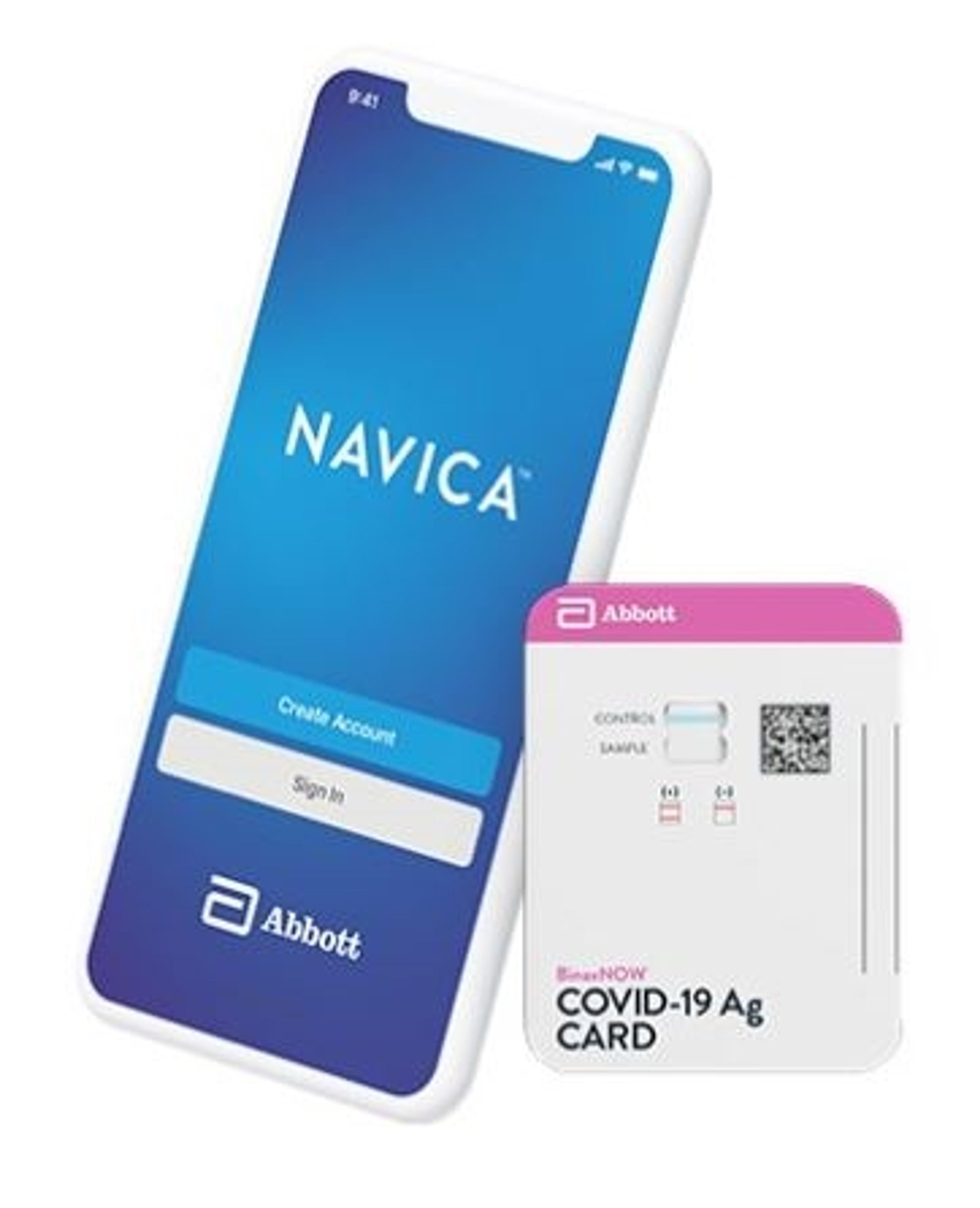
NAVICA Mobile App and BinaxNOW COVID-19 Ag Card
AbbottThe revolutionary NAVICA™ app helps people navigate daily life in a new normal. NAVICA displays results from the 15-minute BinaxNOW™ COVID-19 Ag Card, a rapid antigen test, to help individuals make informed decisions.

ID NOW™ Instrument (formerly Alere™ i)
AbbottA rapid, instrument-based, isothermal system for the qualitative detection of infectious diseases.
ARCHITECT i1000SR
AbbottThe ARCHITECT i1000SR immunoassay analyzer meets your laboratory’s high standards by delivering STAT results when you need them. The flexible protocols built into the ARCHITECT i1000SR enhance laboratory workflow and allow you to report results with confidence. For in vitro diagnostic use only.