Abbott receives FDA EUA for test that detects SARS-CoV-2 and three other respiratory infections

The test helps save on much-needed testing supplies since it allows for testing for all four viruses with one swab

8 Mar 2021

Diane Li
Assistant Editor

Product news

Abbott has announced U.S. Food and Drug Administration (FDA) Emergency Use Authorization (EUA) for the company's Alinity™ m Resp-4-Plex molecular assay to detect and differentiate SARS-CoV-2, influenza A, influenza B and respiratory syncytial virus (RSV) in one test. This is an important tool because these viruses have similar symptoms but require different treatment approaches. This test is CE Marked and available in countries outside the U.S.

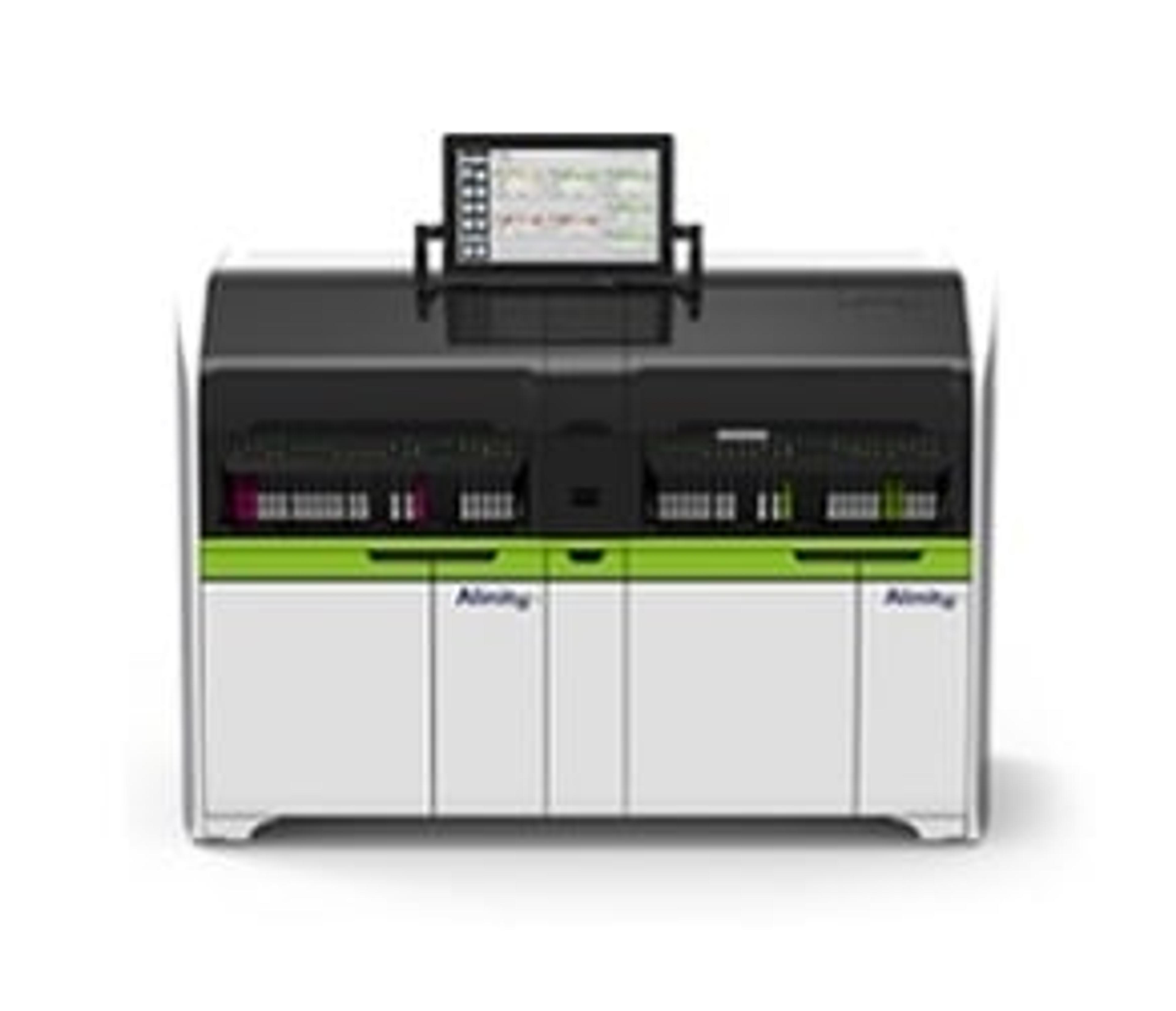
The Alinity m Resp-4-Plex test can be conducted with one swab specimen (anterior nasal or nasopharyngeal) collected by a healthcare provider or an anterior nasal swab specimen self-collected at a healthcare location from individuals suspected by their provider of respiratory viral infection consistent with COVID-19. Test will run on Abbott's Alinity m system — the company's most advanced high-volume laboratory molecular instrument. Alinity m uses Polymerase Chain Reaction (PCR) technology, which is known for its high sensitivity in detecting infectious diseases. To help fight the pandemic, Abbott has accelerated placements of the Alinity m system in hospital labs, academic centers and labs that are critical to patient care.

"Abbott has been developing and introducing tests that have been playing a critical role in fighting the pandemic. The need for a combination of testing methods in different settings has never been more clear," said Andrea Wainer, executive vice president, Rapid and Molecular Diagnostics, Abbott. "This newest test will allow for fast and efficient diagnosis and triage of patients who present with respiratory symptoms so they can be given the right care."

Advanced technology's role in the fight

The Alinity m Resp-4-Plex assay will be a critical tool in detecting these four prevalent respiratory viruses. The advanced technology of the Alinity m system provides automation and on-demand access, meaning an urgent test can be run at any time. This flexibility and efficiency allow for the testing of multiple diseases while still producing fast results in high volumes. This assay's ability to detect and differentiate these viruses simultaneously with only one swab will also ease the resource strain on collection devices, which have been in high demand throughout the COVID-19 pandemic.

Expanding Alinity m SARS-CoV-2 to asymptomatic cases

Abbott is also announcing that the EUA for the company's Alinity m SARS-CoV-2 test has been updated to include an asymptomatic claim – detecting COVID-19 in individuals who do not have symptoms. A recent study found that more than 60% of COVID-19 infections present as asymptomatic cases, which is why it's critical to catch those cases before they spread.1 With the recent update to the Alinity m SARS-CoV-2 test EUA, the assay can now be used to detect individuals who are infected with SARS-CoV-2, but do not have symptoms or other reason to suspect COVID-19 infection. The Alinity m SARS-CoV-2 test EUA was also updated to include a pooling claim, which allows up to five samples to be tested at the same time. The updated Alinity m SARS-CoV-2 test, Alinity m Resp-4-Plex assay, and Abbott's existing testing technologies will now all be available to support front-line healthcare workers.

About Alinity m

Assays available for use on the Alinity m system worldwide include: SARS-CoV-2, HCV (hepatitis C), HBV (hepatitis B), HIV-1 (human immunodeficiency virus type 1), STI (CT/NG/TV/MG) and HR HPV. The easy-to-use system will help to improve laboratory workflow and efficiency with its large capacity and fast turnaround time, being able to run up to 1,080 tests in a 24-hour period based on laboratory practice and workflow. Alinity m systems are designed to be more efficient – running more tests in less time and minimizing human errors – while continuing to provide quality results. The availability of the Alinity m system and tests varies by geography. More information is available at molecular.abbott.

Do you use Abbott products in your lab? Write a review today for your chance to win a $400 Amazon Gift Card>>
Links

Tags

Cell Adhesion AssaysCell adhesion assays are used to quantitate attachment and analyze the molecular mechanisms for extracellular matrix adhesion, cell migration and sensitivity to inhibitors. Find the best cell adhesion assay equipment in our peer-reviewed product directory: compare products, check customer reviews and receive pricing direct from manufacturers.PCR and Thermal CyclingPolymerase chain reaction (PCR) kits and thermal cyclers are used for the in vitro amplification of DNA permitting subsequent analysis and experimental procedures. Explore a range of high-quality polymerase, primers and nucleotides or simplify your workflow with a PCR mastermix. Find reverse transcription PCR (RT-PCR) and cDNA synthesis kits for RNA products and libraries. Quantitatively measure the amplification of DNA with real-time PCR (qPCR) and droplet digital PCR (ddPCR) kits and systems, and discover automated PCR setup solutions to increase throughput. Alternative DNA amplification methods also include recombinase polymerase amplification (RPA) kits. Find the best PCR kits and thermal cyclers and purification equipment in our peer-reviewed product directory: compare products, check customer reviews and receive pricing direct from manufacturers.Data AnalysisData analysis hardware and software is available to make data processing straight-forward yet powerful. Data software can be used for math and stats, technical graphing and image analysis. In addition, software is available for specific data analysis of electrophoresis, densitometry, ELISA and DNA sequencing.ImmunologyImmunological techniques measure and characterize immune responses. Immunology kits and analysis systems often use techniques such as ELISA, radioimmunoassay (RIA) and immunodiffusion assays, Immunohistochemistry, and flow cytometry. Immunologists use equipment such as flow Cytometers, plate readers, plate washers and fluorescent microscopes.Cellular PathologyCellular Pathology deals with the microscopic analysis of tissue samples and cells. Sample preparation and processing includes fixation, staining, sectioning and slide mounting, using equipment such microtomes and cryostats. In choosing immunohistochemistry and immunocytochemistry kits, consider chromogens, staining method, antibodies, microscopes and imaging.Cell-Based AssaysCell-based assays are used to monitor the presence, quantity and activities of a desired cellular analyte including drug molecules or biomarkers. This can reveal information on cell health (apoptosis, cytotoxicity, viability and proliferation assays), cell metabolism, cell migration and cell signaling mechanisms. Find the best cell-based assay products, kits and equipment with our peer reviewed product directory: compare products, check customer reviews and receiving pricing direct from manufacturers.Clinical TrialsClinical Trials, an essential part of drug discovery process, assess the safety and effectiveness of a new medication or device in the pharmaceutical industry. Clinical Trials are a phased process (Phase 0, Phase I, Phase II, Phase III and Phase IV) which begins after initial preclinical testing.Clinical ChemistryBiochemistry (or clinical chemistry) involves the analysis of bodily fluids using chemical tests. Techniques used include HPLC, chromatography, spectroscopy, mass spectrometry, immunochemical, electrophoresis, turbidometric / spectrophotometric assay, MRI and ISE analysis. Tests are often carried out on plasma or serum but urine (urinalysis) and fecal specimens are also processed.Clinical GeneticsMolecular Genetics covers the analysis of hereditary genetic disease and chromosomal abnormalities. Genetics can be analysed using DNA, RNA, and protein microarrays, PCR, RT PCR and DNA sequencing. Genetic equipment includes genetic workstations, thermal cyclers, cooling blocks and electrophoresis products. Diagnostic kits are used for DNA / RNA extraction and purification.Clinical MicrobiologyMicrobiology is the study of microorganisms including protists, prokaryotes, fungi, and, often, viruses. Microorganisms are a useful research tool as genetic vectors and, in immunology, for antibiotic susceptibility testing, cellular biology and genetics. Microorganisms commonly grow readily in incubators with microbial culture media; this can contain chromogenic supplements to differentiate between cell lines. Estimate your culture’s density of microorganisms with colony counters, or screen and select colonies for desirable clones with automated colony pickers. Additionally, equipment is available to monitor environments for the presence of microbes and identify with microbial identification instruments. Find the best microbiology products in our peer-reviewed product directory: compare products, check customer reviews and receive pricing direct from manufacturers.RegulatoryPharmaceutical regulations impact on all areas of drug development, manufacture and control and supply. Services are provided from the early stages of drug development and clinical trials through to dossier submission, approval and marketing. Regulatory also includes submission of analytical studies from the pharmaceutical product and safety. Respiratory InfectionsRespiratory infections are caused by pathogens such as bacteria, viruses, and fungi, leading to diseases like pneumonia, tuberculosis, and COVID-19. It is important to identify respiratory infections quickly in patients to ensure appropriate treatment and care, and to prevent sepsis. Browse our peer-reviewed product directory to find the best tools for respiratory infection detection, compare products, check reviews, and get pricing directly from manufacturers.Assay DevelopmentThe process of proving an assay to be sensitive with respect to the target is known as assay development. The assay should be able to characterize novel compounds and measure the potency of these compounds against a validated biological target.Molecular DiagnosticsMolecular diagnostics use an individual’s genetic code and gene expression to diagnose and monitor diseases. The technique is used increasingly in the field of infectious diseases and oncology, as well as areas such as coagulation, HLA typing and pharmacogenomics. Molecular diagnostics plays a pivotal role in personalized medicine.Cell Based AssaysCell-based assays use living cells to measure biological responses to various treatments or stimuli. They are essential for drug discovery, toxicology testing, and understanding cellular mechanisms. These assays are used to assess cell viability, proliferation, gene expression, and other cellular activities. Browse our peer-reviewed product directory to find the best cell-based assay tools and reagents, compare products, read customer reviews, and get pricing directly from manufacturers.
Abbott receives FDA EUA for test that detects SARS-CoV-2 and three other respiratory infections