A New Automated HTS Format to Quantify Receptor-Ligand Binding to GPCRs in Live Cells

17 Jan 2013

Product news

Ligand binding affinities at G-protein coupled receptors (GPCRs) have historically been determined using a radioligand that competes for receptor binding sites against an unlabeled drug-like compound. But the potential hazards of open-source radioisotope handling, and the environmental impact of radioisotope disposal, make this a less desirable and costly technology. Therefore, new fluorescent based alternatives have been developed to replace radioligands.

Fluorescent ligands for GPCRs (CellAura Tehnologies, Ltd.) provide a safer method for determining ligand binding affinities. However, measurement of fluorescent ligand binding to cells relies on complex high resolution images. This approach can be lengthy and can result in 96-well plate read times of over 30 minutes. Therefore, these High Content Analysis (HCA) assays are too slow to be useful for High Throughput Screening (HTS) and automation.

HTS Microplate Reader is Sensitive Enough for Live Cell Assays
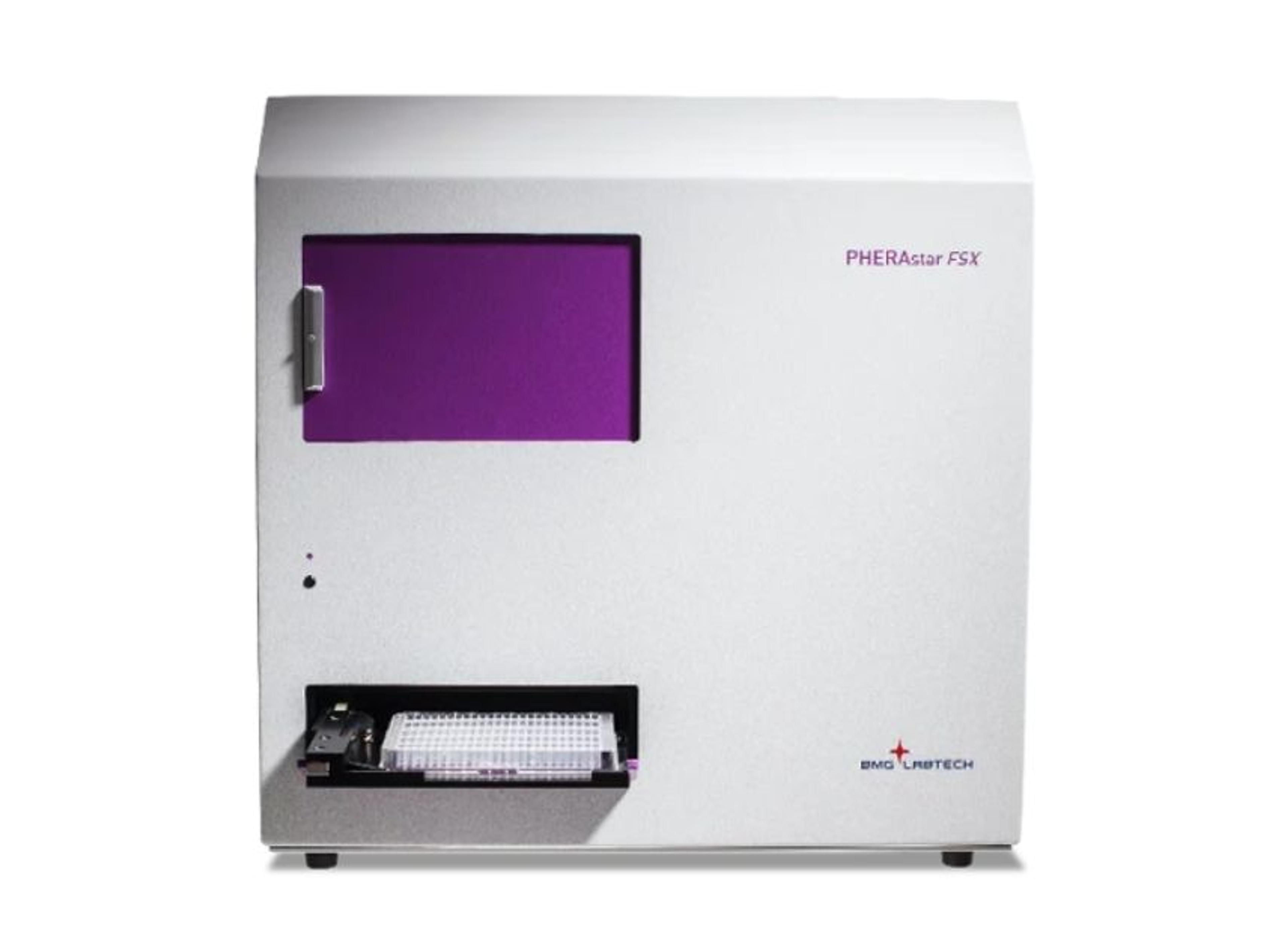
Here enters the PHERAstar FS microplate reader from BMG LABTECH for HTS and Core Lab facilities. Using advanced features on the PHERAstar FS, live cells are quickly and easily quantified for fluorescent ligand binding to the adherent cell layer in a 96-well plate format. Depending on several variables, read times can be as fast as 2 minutes for a 96-well plate. This is in stark contrast to a similar HCA assay, which takes more than 30 minutes. Example data is outlined in the application note Quantifying Fluorescent Ligand Binding to GPCRs in Live Cells using the PHERAstar FS - a new format for HTS. Derived pKi curve plots were comparable to previous radioligand binding assays and good Z’ values show that these fluorescent binding assays with this microplate reader are amendable for HTS and automation.

Safer, Faster Receptor-Ligand Binding Assays
The PHERAstar FS and CellAura fluorescent ligands provide a rapid and robust way to quantify receptor-ligand binding in live cells. Using a 96-well format and a simple assay protocol, whole-cell radioligand binding assays are replaced with this safer and more cost effective alternative. In addition, the time saving advantages over HCA assays make this format suitable for high throughput screening (HTS) and automation.

Find out more about fluorescent ligands at CellAura Technologies, Ltd. at www.cellaura.com and find out more about the PHERAstar FS HTS microplate reader please at www.bmglabtech.com.

Links

Tags

High-Throughput ScreeningHigh-throughput screening (HTS) is an automated drug discovery technique for identification of active compounds against a compound library. Use HTS readers and integrated assay preparation / analysis workstations to screen your compounds. Identify active compounds against various HTS libraries, including membranes, proteins and peptides and HTS cell lines. Find the best high-throughput screening products in our peer-reviewed product directory: compare products, check customer reviews and receive pricing direct from manufacturers.Microplate Readers / DetectorsMicroplate readers are used to automate the detection and analysis of labeled or label-free components in microplates during assays or live-cell monitoring. Microplate readers are generally distinguished by their mode of detection. Types include absorbance, luminescence, fluorescence intensity, fluorescence polarization, TRF / FRET and multimode microplate readers. Microplate readers deliver a high throughput of samples by reading multiple wells simultaneously, with the 96-well format the most commonly used. As a result, microplate readers are often used in the drug discovery, bioassays, research and pharmaceutical industries for screening applications. Microplate loading can also be automated, with robotic microplate stackers to increase throughput. Find the best microplate readers in our peer-reviewed product directory: compare products, check customer reviews and receive pricing direct from manufacturers.Cell-Based AssaysCell-based assays are used to monitor the presence, quantity and activities of a desired cellular analyte including drug molecules or biomarkers. This can reveal information on cell health (apoptosis, cytotoxicity, viability and proliferation assays), cell metabolism, cell migration and cell signaling mechanisms. Find the best cell-based assay products, kits and equipment with our peer reviewed product directory: compare products, check customer reviews and receiving pricing direct from manufacturers.High-Content ScreeningHigh-content screening (HCS), also known as high-content analysis (HCA), is a high-throughput technique used in drug discovery to identify substances that alter the phenotype of cells. HCS uses fluorescent microscopic imaging and automated image analysis to investigate cellular events such as apoptosis, cell viability, GPCR activation, oxide production, neurite outgrowth, and cell signaling. Find the best fluorescent labeling reagents, cellular assays, and high-content imaging systems in our peer-reviewed product directory: compare products, check customer reviews and receive pricing direct from manufacturers.gPCRFluorescence Based AssayFluorescence based assays are widely used in life science research and high-throughput screening to measure a broad range of cellular activities.
A New Automated HTS Format to Quantify Receptor-Ligand Binding to GPCRs in Live Cells