A Guide to the Most Common Pumps – and Which One is Right for You!
Discover some of the different types of pumps, and learn which one best suits your needs
2 Jul 2015
Editorial article
Discover some of the different types of pumps, and learn which one best suits your needs
You can guarantee to find at least one pump in any laboratory around the world. These integral pieces of machinery are used for a range of applications, from pumping liquid nitrogen around a cooling system to creating a vacuum for the operation of an electron microscope. There are many different methods by which pumps can operate, but some are more common than others – and all are suitable for different applications. Read on to discover the five most common types of vacuum and non-vacuum pumps, and which one will be best for your needs.
Vacuum Pumps
Efficient and reliable vacuums are very important in a number of applications – without a vacuum, the ions inside a mass spectrometer would collide with the air and would be useless for molecule analysis. The speed and pressure range of the vacuum required are important to consider when looking at a new vacuum pump, with different pump types capable of different results.
These pumps have generally high operating speeds, allowing vacuums to be pulled down relatively quickly. Diaphragm pumps are also very efficient and particularly quiet, making smaller versions ideal for low vacuum applications in a laboratory setting; for example, as a vacuum pump in a rotary evaporator or in vacuum drying cabinets. Furthermore, they have no moving parts in the stream of the pumped material, so maintain a perfectly clean airflow. They are also relatively gentle, making them suitable for some biological applications where a gentler stream is required. Their rugged nature means they can also be used in some industrial settings, but they can be bulkier than other kinds of pumps and are prone to pulsing of the pumped flow.
A rotary vane pump is another type of positive displacement pump that works equally well pumping liquids or gases. Their oil-lubricated design means that the liquid or gas being pumped is often contaminated, making them most useful as a vacuum pump, where they can pull down higher vacuums, down to 10-3 bar. This is ideal for air-sensitive applications or vacuum drying cabinets. Some pumps are designed to minimize lubrication contact, but even these types of pumps are unsuitable where a completely clean environment for the pumped material is required. However, their cooler pumping environment and reliability also makes them useful for applications with volatile liquids or gases. This, along with their high efficiency, makes them ideal in many industrial applications.
Scroll pumps are capable of very high flow rate, without the use of lubricating oil, which could contaminate what is being pumped, making them ideal as vacuum pumps. They also have a high capacity, with some able to pump almost 5000L/hr, so are capable of pulling down high vacuums fast. They are also known for vibration-minimal operating, as scroll pumps, unlike other rotating pumps, can be perfectly counterbalanced. This makes them very suitable for use in a laboratory, where quieter operation is desired. Scroll pumps have a fairly consistent flow rate, are simple and cheap to maintain, and some have bearing purge ports that extend the life of the pump. These are very useful, as scroll pumps are vulnerable to any outside particulate contamination. The lack of suction valves also means they must also be operated in one direction only; otherwise the pump will stop pumping.
Non-Vacuum Pumps
Pumps that move liquids or gases need to be very chemically resistant, as they are at a higher risk of corrosion. The higher viscosity of what is being pumped means that liquid or gas pumps tend to have lower operating speeds but are usually very reliable. The nature of the substance you are pumping and the volumes are important considerations when choosing a non-vacuum pump.
Syringe pumps are designed for the dispensing of small amounts of liquid in an inert, completely clean environment. By their nature, syringe pumps have low capacity and flow rate, but are exceptionally reliable, with a very smooth flow. This makes them ideal for laboratory applications where fluid dynamics may be important. These pumps are used in applications like the infusion of a calibrant into a mass spectrometer, supercritical water gasification, or the controlled infusion of a therapeutic agent into a patient. As such, robustness and efficiency are important considerations when looking to buy syringe pumps.
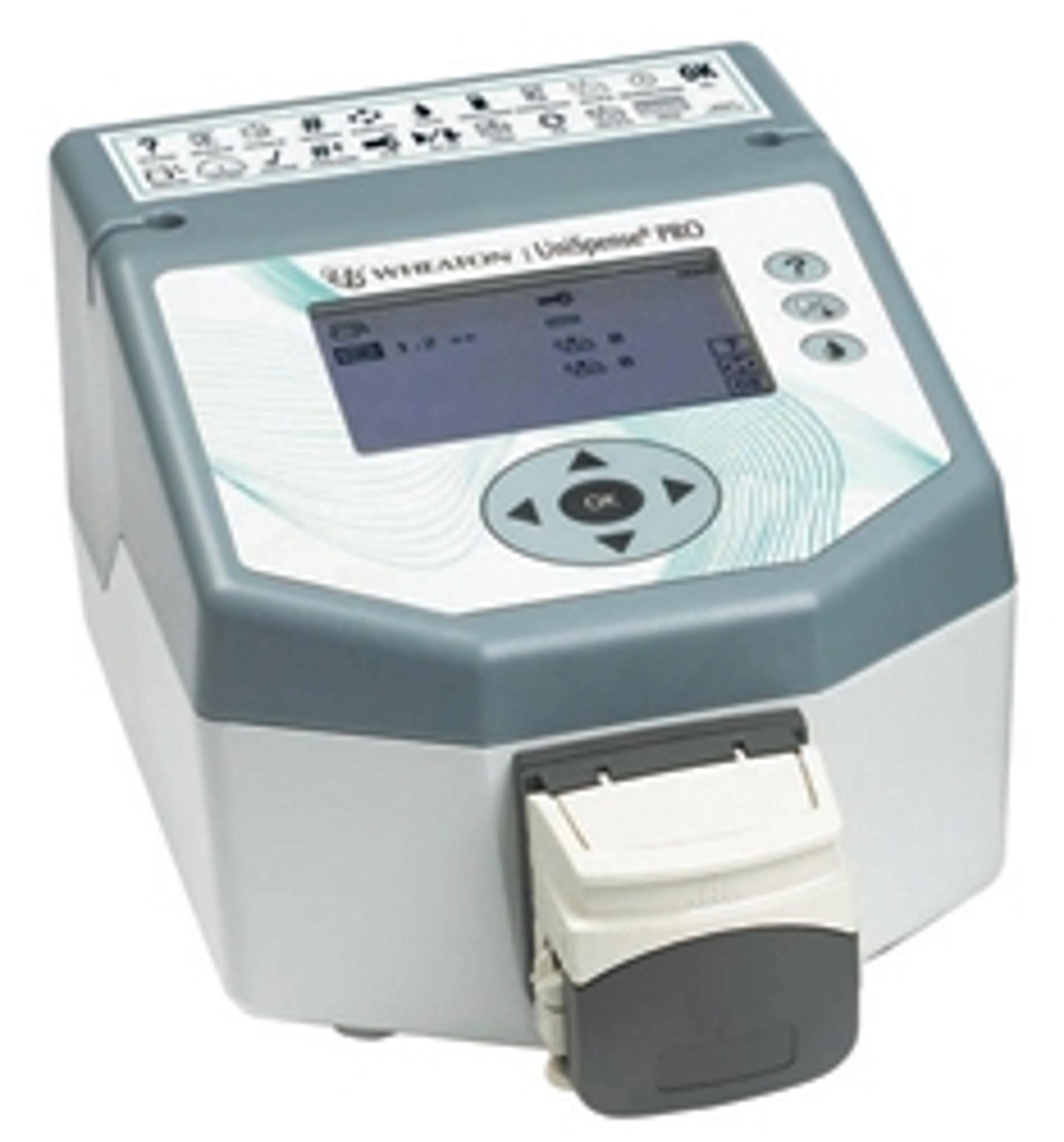
This type of positive displacement pump is best suited for pumping fluids. As there is no risk of contaminating the liquid through contact with pump parts, they are often used for pumping sterile or reactive materials. Peristaltic pumps are particularly suitable for laboratory applications, as their simple method of operation means they are often very small and efficient. They are also ideal for quickly dispensing a large number of smaller aliquots of solutions, such as culture media or buffers. The small size of these pumps makes them very economical, although the rotation of the pumps’ mechanics leads to pulsing at low speeds, so they are not suitable where a reliably consistent flow is required.
Have you used any of the products featured in this article, or do you use one that wasn't? Share your experiences with scientists by writing a review today!
You can find the best pump for your lab’s needs in our pumps product directory.