9 Top Reasons to Become a SelectScience Member

Scientists across the world share their thoughts on the benefits of being a SelectScience member

1 Jan 2018

Bede MacGowan
Online editor

Editorial article

SelectScience has one overarching goal - to improve communication in science and so accelerate critical research, helping scientists make the future healthier. But everything we do depends on the input and involvement of the tens of thousands of scientists around the world who make up our growing membership, so it is vital that we listen to their feedback. We asked a selection of our valued members why they use SelectScience. Read on to find out their reasons and become a member yourself today to receive exclusive content straight to your inbox, completely free of charge.

1. Read quality articles


I use SelectScience because the quality of the news articles is very high and because the product details are very thorough, plus the customer reviews greatly help in evaluating products.

Preston Reynolds  Ansh Labs, Webster, TX


2. Source expert opinion


I use SelectScience as I believe it to be the best source of unbiased expert opinion on equipment and services.

Gary Campbell  Senior Scientist, Sanofi Pasteur


3. Gather vital information


I use SelectScience because it is an excellent resource for gathering information about laboratory instruments and chemicals. I appreciate being able to see what fellow scientists have to say regarding instruments, columns, and chemicals before purchasing. It also helps expose me to brands I may not have researched already.

Rachel Bussert  Senior Formulation Engineer, Stryker


Become a SelectScience member today »

SelectScience members share unbiased opinions on the latest technologies, enjoy reading quality articles on cutting-edge research and watch informative videos


4. Keep up-to-date


I use SelectScience for its fantastic collection of information on up-to-date news in my field, and for user reviews on the different products available on the market. Both keep me apprised of ongoing research and technological advances that can help improve the quality of my own work.

Lizane Pamer  Geoscience Laboratories, Canada


5. Share unbiased reviews


I use SelectScience because since I am also a submitter of the reviews, I know that the reviews are authentic and represent real world users.

Todd Duncan  Asante Three Rivers Medical Center, Oregon


6. Attend world-class webinars


I use SelectScience to stay up-to-date on product offerings and applications. SelectScience hosts useful webinars and is a great resource for product selection eBooks.

Brianna Galli  Lab Supervisor, Department of Chemistry, Western Michigan University


Become a SelectScience member today »
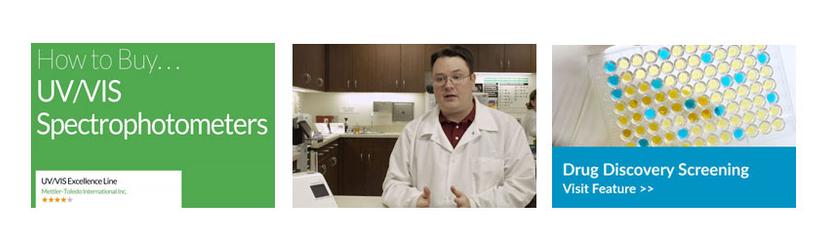
How-to-Buy eBooks are popular with our members, as are the regular Special Features on topics ranging from Drug Discovery Screening to Stem Cell Research and Food Safety


7. Discover cutting-edge technologies


I use SelectScience to keep updated with technologies that have continued to progress since I received teaching and training at university. I don’t always have time to study textbooks and search through academic or industrial literature whilst I’m working, so SelectScience has been a useful tool to help me manage my learning when I have short periods of spare time to watch an interesting webinar, catch up with educational videos, or read about the latest developments in technologies. 

Dr. Kimberley Anderson  Process chemist, Fuels – Manufacturing Technology, Infineum UK


8. Find it all in one place


SelectScience is a hub that I use to find reviews on anything new that I think of integrating in my upcoming new research. Moreover it also give me access to videos and eBooks and its news feature keeps me up-to-date with new products and new tools. Most important is, that I can find all of these in one simple click in one website.

Guy Sovak  Canadian Memorial Chiropractic


9. Be part of the world's best online science community


We use SelectScience as the best portal to review the latest updates in many scientific areas where we are involved in our daily work (automation, microbiology, bioinformatics, genomics, etc.).

Juan Bautista Crespo García  Lab Automation and LIMS Director, Eyown Technologies, Spain


Learn all about the latest methods, make quick purchasing decisions with our new Seals of Quality and keep up to-date on scientific advances with our webinar series

Become a SelectScience member today »

Links

Tags

Gas ChromatographyGas chromatography (GC) is an analytical technique used to separate and quantitate mixtures of small and volatile compounds. Gas chromatographs or GC systems include components such as GC columns, detectors, pumps and autosamplers. Choose from packed or capillary GC columns, flame ionization (FID), photoionization (PID) electron capture detectors and selective or non-selective detectors. Find the best gas chromatographs in our peer-reviewed product directory: compare products, check customer reviews and receive pricing direct from manufacturers.Fluorescence SpectroscopyFluorometers and spectrofluorometers (also called fluorescence spectrometers) are used to measure the intensity and wavelength of fluorescent light emitted from a sample after excitation by illumination. Spectrofluorometers utilize monochromators to select the desired wavelengths, whereas filter fluorometers employ a set of filters. Spectrofluorometers for measuring steady-state fluorescence and lifetime fluorescence (or time-resolved fluorescence) are available, as well as fluorescence microscopes and microplate readers. Find the best fluorescence spectroscopy products in our peer-reviewed product directory: compare products, check customer reviews and receive pricing direct from manufacturers.Infrared / IR SpectroscopyInfrared (IR) spectroscopy measures the interaction of infrared light with a sample, including transmission, reflectance & absorbance, facilitating the identification of analytes. Equipment used for quantitative analysis includes Fourier-transform infrared (FTIR) spectrometers, infrared cameras, FTIR gas analyzers, as well as attenuated total reflectance (ATR) accessories and pellet or film presses. Find the best IR spectroscopy products in our peer-reviewed product directory: compare products, check customer reviews and receive pricing direct from manufacturers.LC-MSLC-MS (liquid chromatography-mass spectrometry) systems and equipment are used for separation and quantitative analysis of complex mixtures, combining liquid chromatography and mass spectrometry. Quantify proteins, contaminants, pesticides or screen for drug metabolites with a high level of sensitivity. LC-MS systems and equipment include reverse phase, normal phase and specialized columns integrated with various MS detectors such as time-of-flight (TOF), quadrupole, orbitrap or ion trap mass analyzers. LC-MS/MS instruments equipped with a qTOF or triple quadrupole analyzer give greater sensitivity and resolving power to your analysis. Find the best LC-MS equipment in our peer-reviewed product directory: compare products, check customer reviews and receive pricing direct from manufacturers.BiosensorsBiosensors are devices used to detect an analyte using biological molecules specific to the analyte coupled to a detector. Biosensor instruments may be photometric, typically using surface plasma resonance (SPR), electrochemical or QCM (quartz crystal microbalance) biosensors. Biosensors should be selective, portable, robust and sensitive and have a fast response time. Systems may be manual or automated and usually have associated software.Chem / BioinformaticsCheminformatics and bioinformatics are computational techniques used in chemistry and biology, respectively, for data acquisition, processing and storage. Cheminformatics focuses on compound information, whereas bioinformatics is mainly applied to analysis and modeling of genomics, genetic and sequencing information. Hardware and software is available for data acquisition, analysis, management and storage.Compound LibrariesCompound libraries, or chemical libraries, are used in drug discovery for the identification of potential therapeutics compounds. Used in conjunction with high-throughput screening, the libraries of stored compounds are often generated for specific purposes as a drug target or disease model. Cheminformatics are commonly used when designing a compound library and software can be used to analyze the screening process.  Clinical GeneticsMolecular Genetics covers the analysis of hereditary genetic disease and chromosomal abnormalities. Genetics can be analysed using DNA, RNA, and protein microarrays, PCR, RT PCR and DNA sequencing. Genetic equipment includes genetic workstations, thermal cyclers, cooling blocks and electrophoresis products. Diagnostic kits are used for DNA / RNA extraction and purification.Electron MicroscopyElectron microscopes (EM) are used to create high-resolution images of samples at the nanoscale by means of an accelerated beam of electrons as a source of illumination. Types of electron microscope include scanning electron microscopes (SEM), transmission electron microscopes (TEM), scanning transmission electron microscopes (STEM) and cryo-electron microscopes. Focused ion beam (FIB) microscopes are useful for modifying or milling a sample surface with nanometer precision, as well as imaging. Find the best electron microscopes in our peer-reviewed product directory: compare products, check customer reviews and receive pricing direct from manufacturers.UltraPerformance Convergence ChromatographyConvergence Chromatography expands the capabilities of reversed phase LC and conventional GC techniques. By varying mobile phase strength, pressure, temperature and stationary phase Convergence Chromatography facilitates the separation, detection and quantification of many compounds and samples. The CO<sub>2< / sub> mobile phase used reduces the need for toxic solvents.Bioprocessing / FermentationBioprocessing is the use of biological materials to perform commercial, scientific or medical research processes. Biological materials used include cells, enzymes and organisms. Usually bioprocessing requires a batch or continuous bioreactor such as a fermentor or cell culture system. The advantages of using a reactor include high productivity, easy configuration, adjustable values and automation.