8 upcoming webinars to expand your research capabilities
Discover insights on topics from lab automation and drug development to clinical LC-MS/MS and point-of-care testing
12 Nov 2021
Expert insights

SelectScience® hosts dozens of informative free webinars for scientists every month, featuring world-class speakers at the very forefront of their respective fields. In this regular feature, we highlight the events you won't want to miss over the next week or so, as well as some of our top on-demand webinars.
Save your spot today to hear about the latest developments, techniques, and technologies from experts in their fields. Upcoming topics range from the role of biomarkers in helping drive early clinical phase trials to characterizing monoclonal antibodies with size exclusion native mass spectrometry, and the place of LC-MS/MS in clinical laboratories. Plus, there are insights into optimizing the drug development pipeline, and how to digitalize and automate your lab.
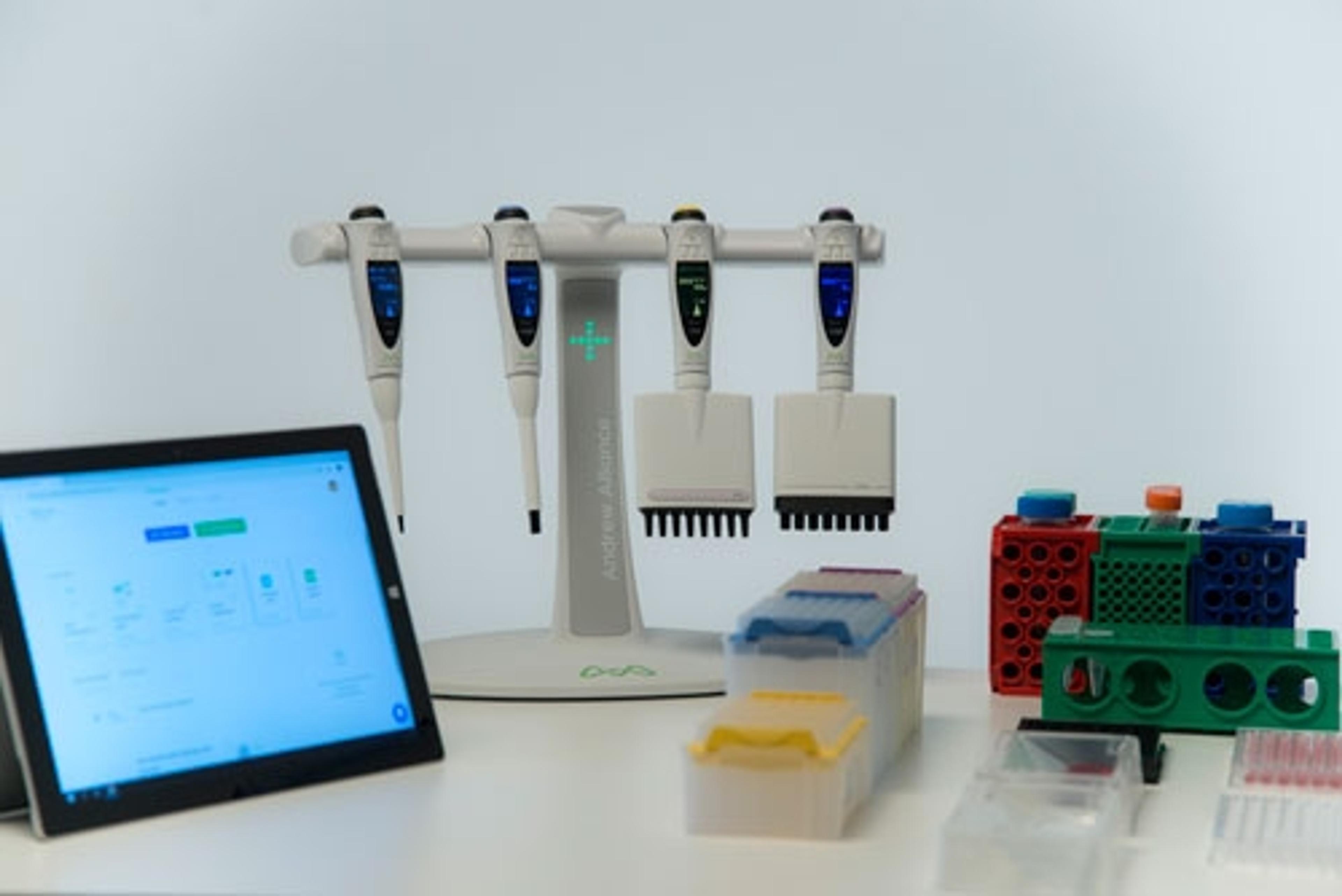
LAB AUTOMATION: Building the foundation of a smart lab
In this SelectScience webinar, learn how to increase efficiency and productivity in the lab by implementing smart solutions such as digitalization and automation. Register now to discover how to reduce factors including device downtime, user error, lack of sample traceability, contamination, and inaccurate data to streamline your processes.
Tuesday, November 16, at 16:00 GMT / 17:00 CET /11:00 EST / 08:00 PST
STREAMLINE PROCESSES: Take control of your research by automating tissue microarrays, multiplexing, whole-slide scanning, and AI analysis for enhanced bioinformatics
Register now to discover how to utilize and automate key processes to accelerate the pace of your research. Join us to hear Chris Coley, Global Market Development Manager, Epredia, discuss how automation can provide a powerful new workflow that drastically saves time while delivering excellent results in support of advanced bioinformatics.
Tuesday, November 16, at 16:00 GMT / 17:00 CET / 11:00 EST / 08:00 PST
DRUG DEVELOPMENT: The right drug targets for the right patient – using biomarkers to solve challenges in drug development
Join us for this virtual roundtable discussion where leading experts will share their thoughts on how biomarkers can help drive early clinical phase trials, explore the history of protein biomarkers within their organization, and predict how the field will evolve to meet future challenges. Plus, challenges and potential improvements for using protein markers in discovery will be highlighted.
Wednesday, November 17, at 14:00 GMT / 15:00 CET / 9:00 EST / 6:00 PST
CLINICAL: Global LC-MS/MS Clinical Laboratories Virtual Event 2021
Don’t miss this virtual event exploring how LC-MS/MS can accelerate clinical laboratory workflows. Connect with clinical experts from around the globe and discuss the added value of LC-MS/MS technology, a very powerful analytical tool, offering high accuracy, precision, sensitivity, and specificity.
Wednesday, November 17, at 16:00 GMT / 17:00 CET / 11:00 EST / 08:00 PS
BIOPHARMA RESEARCH: Size exclusion native mass spectrometry for the characterization of monoclonal antibodies
In this presentation, discover how non-denaturing SEC Native MS can be leveraged to streamline mAb characterization. Register now for insights into column selection, how to optimize volatile mobile phase composition, methods for digestion of mAbs using site-specific proteases to obtain further insight on post-translational modifications, and more.
Wednesday, November 17, at 16:00 GMT / 17:00 CET / 11:00 EST / 8:00 PST
POC TESTING: Demystifying HbA1c testing at the point of care and the impacts of COVID-19 on patients with diabetes
Join our esteemed panel to discuss the differences between central lab and point-of-care testing, and the benefits of testing for HbA1c at a point-of-care facility. Plus, the stringent quality standards in place for HbA1c POC testing will be explored. Lastly, the potential health impacts that could follow a COVID-19 diagnosis for a diabetes patient will be elucidated.
Thursday, November 18, at 16:00 GMT / 17:00 CET / 11:00 EST / 08:00 PST
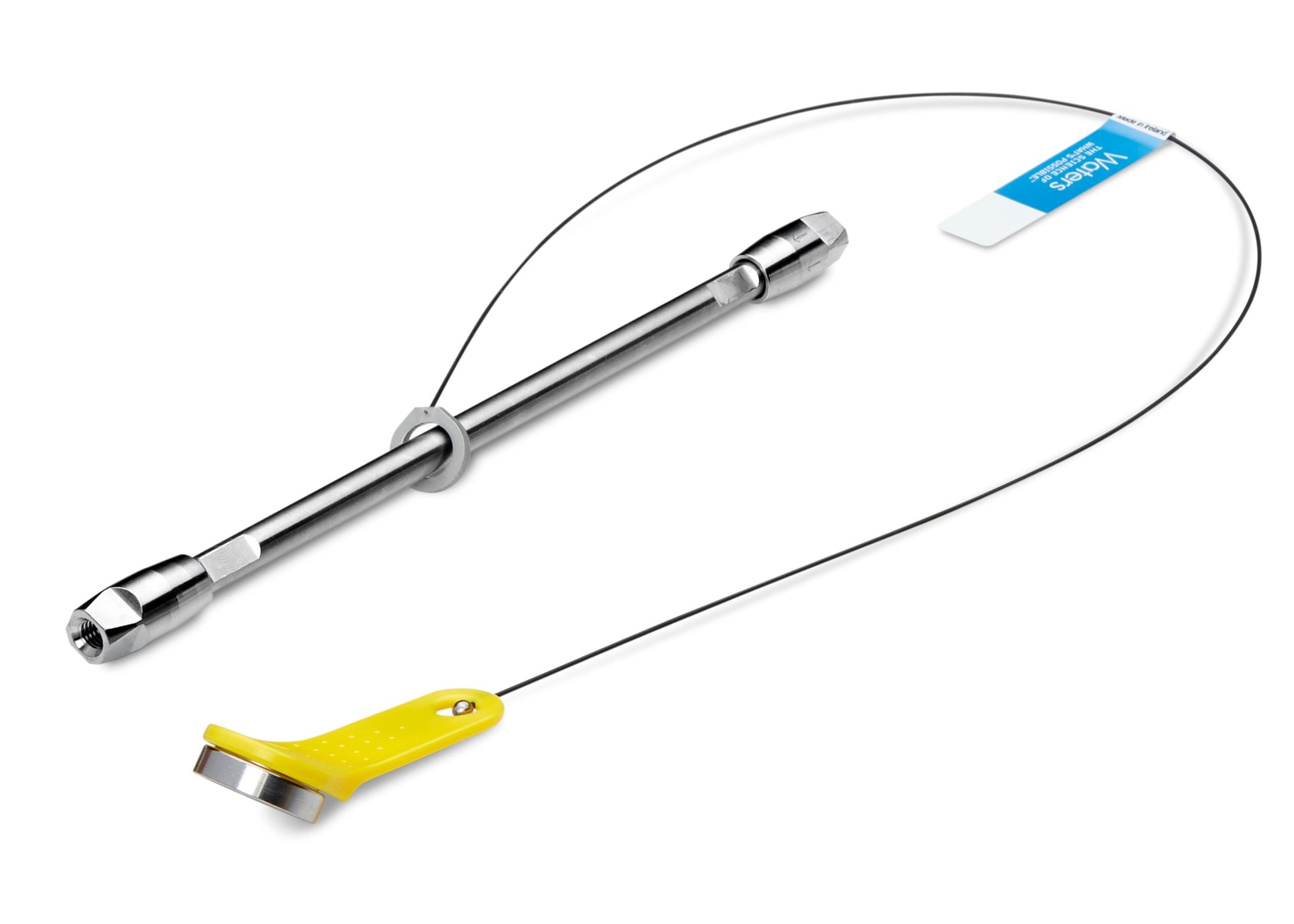
HILIC CHEMISTRY: Separating polar analyte mixtures: Benefits of a new zwitterionic HILIC chemistry
In this SelectScience webinar, the features of hydrophilic interaction chromatography (HILIC) will be explored, as well as how using column hardware with inert surfaces can mitigate unwanted interactions between polar analytes that are known to interact with metal surfaces. Register to discover applications that demonstrate columns separating several important classes of polar analytes.
Friday, November 19, at 15:00 GMT / 16:00 CET / 10:00 EST / 07:00 PST
CANCER RESEARCH: Cancer drug development: Optimizing every stage of the pipeline
Join expert Dr. Catherine Ulich to keep up to date with the latest developments in optimizing drug development workflows. Gain insights into the options available to accelerate the drug development process, learn ways to improve the success of your research goals, and discover examples of alternative strategies that can be employed to address common issues along the drug discovery and validation pipeline
Friday, November 19, at 16:00 GMT / 17:00 CET / 11:00 EST / 08:00 PST
Catch up on these 5 on-demand webinars:
- Staying ahead with COVID-19 testing: Scaling up and monitoring for the future: Discover how Laboratory Healthcare Medical (LHM) has prepared itself for the future of COVID-19 testing by successfully implementing a high-throughput automated workflow. Watch now to learn how LHM has used this new workflow to incorporate non-invasive monitoring with diagnostic assays covering key respiratory pathogens, including SARS-CoV-2, influenza A/B, and RSV. Watch here»
- SARS-CoV-2 variants: Impact on vaccines and laboratory testing: This webinar provides insights into the potential consequences of SARS-CoV-2 mutations and variants on vaccination status and laboratory testing. Dr. Katherine Soreng, Global Director of Clinical Education for Laboratory Diagnostics, Siemens Healthineers, explores viral genetic evolution and the role of antibody testing with variants. Watch here»
- An automated purification workflow to ensure drinking water purity and safety: Watch the second installment in a series of three webinars on best practices to help you overcome the key challenges and setbacks associated with preparative HPLC. Hear Dr. Paul Zimba, CEO of PVZimba LLC, discuss how he used workflow automation to discover four microcystins, cyanotoxins known to impact health and water quality.Watch here»
- Laser-induced breakdown spectroscopy quantification: From fundamental understanding to data processing: In this webinar, Dr. Zhe Wang summarizes the generation mechanisms of measurement uncertainty and explains how signal uncertainty and matrix effects impact quantification performance. Watch now to discover a framework for a quantification improvement strategy for future development, and more. Watch here»
- Ensuring accuracy: An expert guide to selecting fit-for-purpose reference materials: In this webinar, Derrell Johnson, Merck, discusses important concepts such as metrological traceability, certificates of analysis, and stability, along with the different quality grades of reference materials. Plus, how selection of the proper quality grade can ensure optimal fit-for-purpose and testing accuracy. Watch here»
Have a conflicting schedule? Don't worry all SelectScience webinars are made available on-demand, find out more here>>