
7 innovative Scientists’ Channel interviews not to miss: Nobel prize winners, novel disease therapies and the search for extra-terrestrial life
Discover the most innovative videos featured on The Scientists’ Channel over recent years
31 May 2023The Scientists’ Channel® offers an extensive collection of nearly 500 videos showcasing world-renowned scientists working at the forefront of their respective fields. In this curated list, we showcase videos featuring scientists engaged in innovative research that is accelerating science including the search for extraterrestrial life, CRISPR gene editing and glioblastoma research. Follow the links below to access The Scientists' Channel and watch these thought-provoking interviews.

1. 2018: Nobel Prize Winner Richard Henderson discusses the impact of Cryo-EM on pharma
In this interview, Dr. Richard Henderson, a physicist, structural biologist and 2017 Nobel Prize winner, discusses the revolutionary impact of Cryo-EM in determining inaccessible biological structures. Henderson shares his experience of working in the field for 50 years and explains how Cryo-EM has revolutionized structural biology, surpassing traditional methods like X-ray crystallography. Pharmaceutical companies have embraced this technique to develop better drugs by targeting previously inaccessible drug targets, with major companies like Merck, Novartis, Genentech, and Pfizer investing significantly in Cryo-EM. Watch the video to discover Henderson’s optimism for the future of Cryo-EM, leading to “greater health and greater wealth for the UK.”
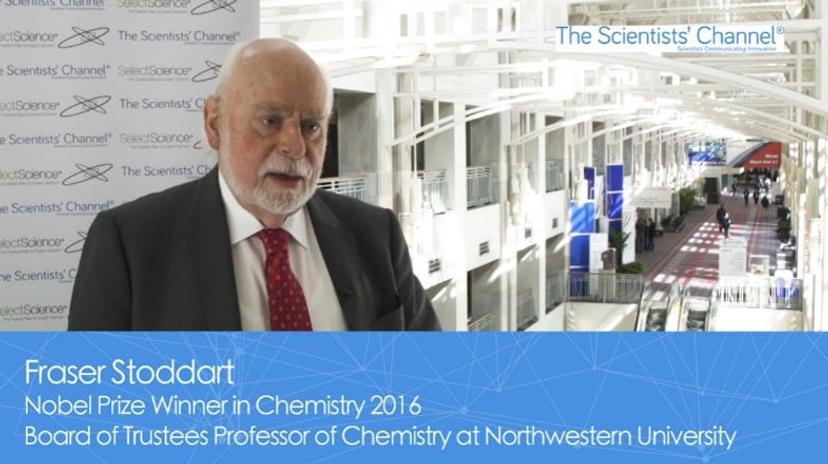
2. 2019: Interview with Nobel Laureate Fraser Stoddart
Fraser Stoddard, Professor of Chemistry at Northwestern University is one of the esteemed recipients of the 2016 Nobel Prize in Chemistry, alongside Jean-Pierre Sauvage and Ben Feringa, for their remarkable contributions to the development and creation of artificial molecular machines. In this interview, Stoddard delves into the fundamental role of chemical discoveries in driving new transformative technologies, touches on his various research projects, and explains the intrinsic creativity involved chemistry, which he likens to “a sculptor who produces a statue.”

3. 2019: A novel target to inhibit glioblastoma invasion
Dr. Aleksandra Dukic, a postdoctoral researcher at the Institute for Cancer Research, Oslo University Hospital, sheds light on a new approach to hinder the invasive nature of glioblastoma cancer as it infiltrates neighboring healthy brain tissue. This innovative study holds significant value in the search for novel therapeutic treatments to combat the relentless progression of this aggressive cancer. Discover the pivotal role played by the cultivation and examination of patient-derived glioblastoma cells in Dr. Dukic's crucial work.
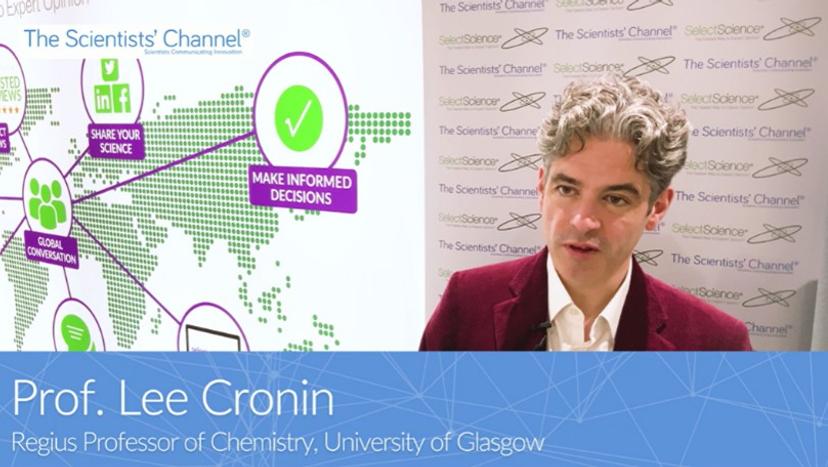
4. 2020: Digitizing chemistry to create artificial lifeforms
Lee Cronin, Regius Professor of Chemistry at the University of Glasgow, discusses the ambitious goals of the Cronin Group. Their research revolves around unraveling the mysteries surrounding the origin of life, including creating artificial lifeforms, searching for extra-terrestrial life, and developing methods to digitize chemistry. Cronin discusses his invention, a programmable robot for molecular discovery, he describes as a “chemical Spotify®” aptly named “Chemify” to create a new era of easily reproducible, open-source chemistry to dramatically reduce the time scientists spend on repetitive routine chemical syntheses. This breakthrough technology has the potential to save countless hours of work and streamline the pathway to new scientific advancements.

5. 2020: Uncovering the chemistry behind behavior: How cell-to-cell differences are advancing our understanding of the brain
Jonathan Sweedler, Professor of Chemistry and Neuroscience at the University of Illinois Urbana-Champaign, discusses the impact of enhanced mass spectrometry techniques, such as MALDI, on his research into the development of novel analytical methods to gain a deeper understanding of chemical processes in the brain. Sweedler explains how studying individual cell-to-cell differences within the brain can offer valuable insights into the neurochemical components that drive emergent behaviors and how it opens exciting prospects for the future of brain science.

6. 2020: How to track viral replication and infection within a living cell
Dr. Maria Harkiolaki, Principal Beamline Scientist at Diamond Light Source, discusses her role in designing microscopes for the X-ray imaging of cells to provide 3D visualization of viruses within living cells. These images give valuable insights into the behavior and interactions of viruses with cell membranes, with the ultimate goal of understanding the virus evolution and infection process to better identify target drugs and aid in the development of new therapies.
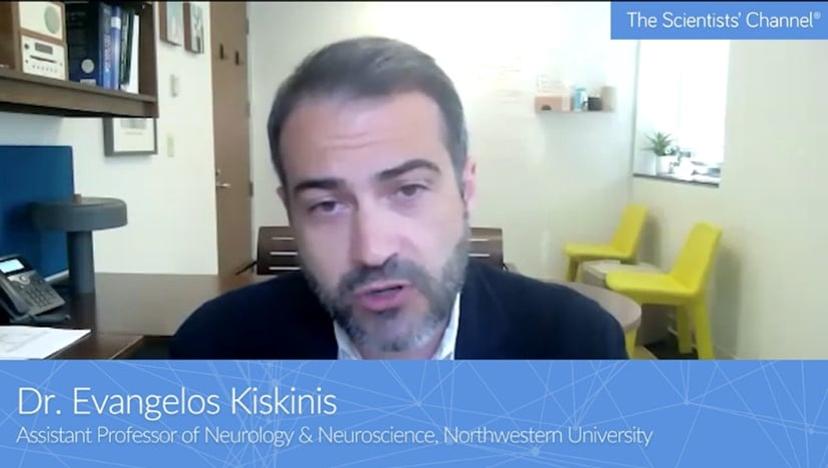
7. 2023: CRISPR-Cas9: A transformative tool for treating debilitating genetic disease
Dr. Evangelos Kiskinis, Assistant Professor of Neurology and Neuroscience at Northwestern University, explains his work that focuses on understanding the impact of rare genetic mutations associated with neurological diseases such as ALS and pediatric epilepsies on human neuronal subtypes. The use of gene editing, particularly CRISPR-Cas9, allows him to test mutations and observe phenotypic effects, offering potential for transformative treatments in debilitating genetic diseases. By utilizing patient-specific induced pluripotent stem cells Kiskinis can study the functional properties of affected cells to identify pathological features and develop rational therapeutic approaches.
Find more news and resources for pharmaceutical scientists in ourAccelerating Science Special Feature >>