
6 upcoming webinars to support your research
Gain insights on a range of current topics, including clinical microbiology, vaccine design, cell viability and more
14 Oct 2021
Expert insights

SelectScience® hosts dozens of informative and insightful free webinars for scientists every month, featuring world-class speakers at the very forefront of their respective fields. In this regular feature, we highlight the events you won't want to miss over the next week or so, as well as some of our top on-demand webinars.
Register now to save your spot and hear from experts as they discuss the latest research, techniques and technologies in their fields, including insights into automating your proteomics sample prep, optimizing cryopreservation to accelerate preclinical pipelines, the benefits of nucleoprotein-based vaccines against SARS-CoV-2, and more.
AUTOMATED PROTEOMICS: Realizing the need for higher throughput, robustness, and standardization
In this webinar, Dr. John P. Wilson, ProtiFi, and Dr. John D. Laycock, Tecan SP, will share how to use the affordable, small-footprint A200 and S-Trap™ 96-well plates to quickly and easily prepare samples for proteomics analysis without further method development.
Monday, October 18, at 15:00 BST / 16:00 CEST / 10:00 EDT / 07:00 PDT
FREEZE DRYING: The importance of precise vacuum technology
In this webinar, VACUUBRAND expert Carsten Ruth explains why precise vacuum is crucial in freeze drying and sublimation, and why too low pressure is counterproductive. You will also receive valuable advice on how to not only achieve optimum results and process times, but also how to effectively protect your vacuum pump from wear.
Tuesday, October 19, at 14:00 BST / 15:00 CEST / 9:00 EDT / 6:00 PDT
CLINICAL MICROBIOLOGY: Fast forward to actionable results with rapid AST technology
Join Dr. Tiziana Di Martino, Chief Medical Officer of Q-linea, to hear how clinical microbiology labs can fast forward to actionable results with a brand new rapid antimicrobial susceptibility testing (AST) technology, and gain an understanding of how clinical diagnostics are being used to address the dangers of sepsis and antimicrobial resistance (AMR).
Tuesday, October 19, at 15:00 BST / 16:00 CEST / 10:00 EDT / 07:00 PDT
IMMUNOLOGY: Detection of functional antibodies against SARS-CoV-2 nucleoprotein
The humoral immune response to SARS-CoV-2 results in antibodies against spike (S) and nucleoprotein (N). However, whilst there are widely available neutralization assays for S antibodies, there is no assay for N-antibody activity. In this webinar, hear from Dr. Anna Albecka-Moreau, Medical Research Council Laboratory of Molecular Biology, who will highlight the potential benefits of N-based vaccines and outline an in vitro assay that enables the antibodies they induce to be tested.
Wednesday, October 20, at 15:00 BST / 16:00 CEST / 10:00 EDT / 7:00 PDT
PRECLINICAL PIPELINES: Optimizing cryopreserved tissue samples using cell sorting to study cellular heterogeneity
Join this webinar to understand how Discovery Life Science’s cell services laboratory processes primary human tissue for downstream analytical evaluation. Dr. Shawn Fahl, Discovery Life Sciences, will describe how the dissociation and cryopreservation of primary solid tissues can accelerate preclinical pipelines and discuss the latest approaches used in downstream single-cell applications.
Wednesday, October 20 at 16:00 BST / 17:00 CEST / 11:00 EDT / 08:00 PDT
CELL BIOLOGY: Is that a live cell or cell debris? Cell viability meets product purity
In this webinar, Dr. Bernardo Cordovez will show how high-throughput, backgrounded membrane imaging and fluorescence membrane microscopy enables the measurement of cell viability and foreign particle impurities quickly and accurately, in a single workflow. Plus, he will detail how these techniques can be used to find residual particulate contaminants such as expansion beads, cellular aggregates, and others in concentrated cell therapy solutions.
Friday, October 22, at 16:00 BST / 17:00 CEST / 11:00 EDT / 8:00 PDT
Catch up on these 5 on-demand webinars:
- Performance of immunotyping (IT) versus immunofixation (IF) for the detection of monoclonal gammopathies: In this webinar, Dr. Katie Thoren discusses a recent study comparing the performance of immunotyping and immunofixation for the detection of M-proteins. Thoren demonstrates that reviewer training and experience are critical to the correct interpretation of IT results and that the analytical and clinical sensitivity is similar to IF for the detection of M-proteins.Watch here»
- Novel technology in non-invasive 3D ex vivo imaging and cultivation platforms: In this webinar, learn about novel 3D imaging platforms that demonstrate robust and versatile technology useful for studying multiple disease/therapeutic areas, including cancer and regenerative medicine, and explore how infrared label-free technology facilitates imaging of 3D structures/organoids as a complementary platform for preclinical (animal-based) drug profiling. Watch here»
- From large cells to nuclei: Key considerations for everyday sorting applications: Catch up on this educational webinar with Dr. Miro Koulnis, Application Scientist, Sony Biotechnology, to learn about the key aspects of cell sorting that should be considered to ensure optimal sorting results for different applications. Watch here»
- Cell line development: How to accelerate process optimization with cell culture and titer measurements: This webinar was the second in our cell line development series, produced in partnership with Sartorius. In this session, experts from Sartorius share the analytical solutions that can be incorporated into cell line selection workflows to accelerate studies and streamline the in-house cell line development process.Watch here»
- Quality control revision: A refreshing course on advanced topics for quality control practice and applications: This webinar is the second installment of three webinars on internal quality control practices and application in clinical laboratories. In this session, Prof. Astrid Petersmann, Head of Institute of Clinical Chemistry and Laboratory Medicine, University of Oldenburg, delves deeper into quality control in a clinical setting.Watch here»
Have a conflicting schedule? Don't worry all SelectScience webinars are made available on demand, find out more here>>
Related products
Request Quote for All Products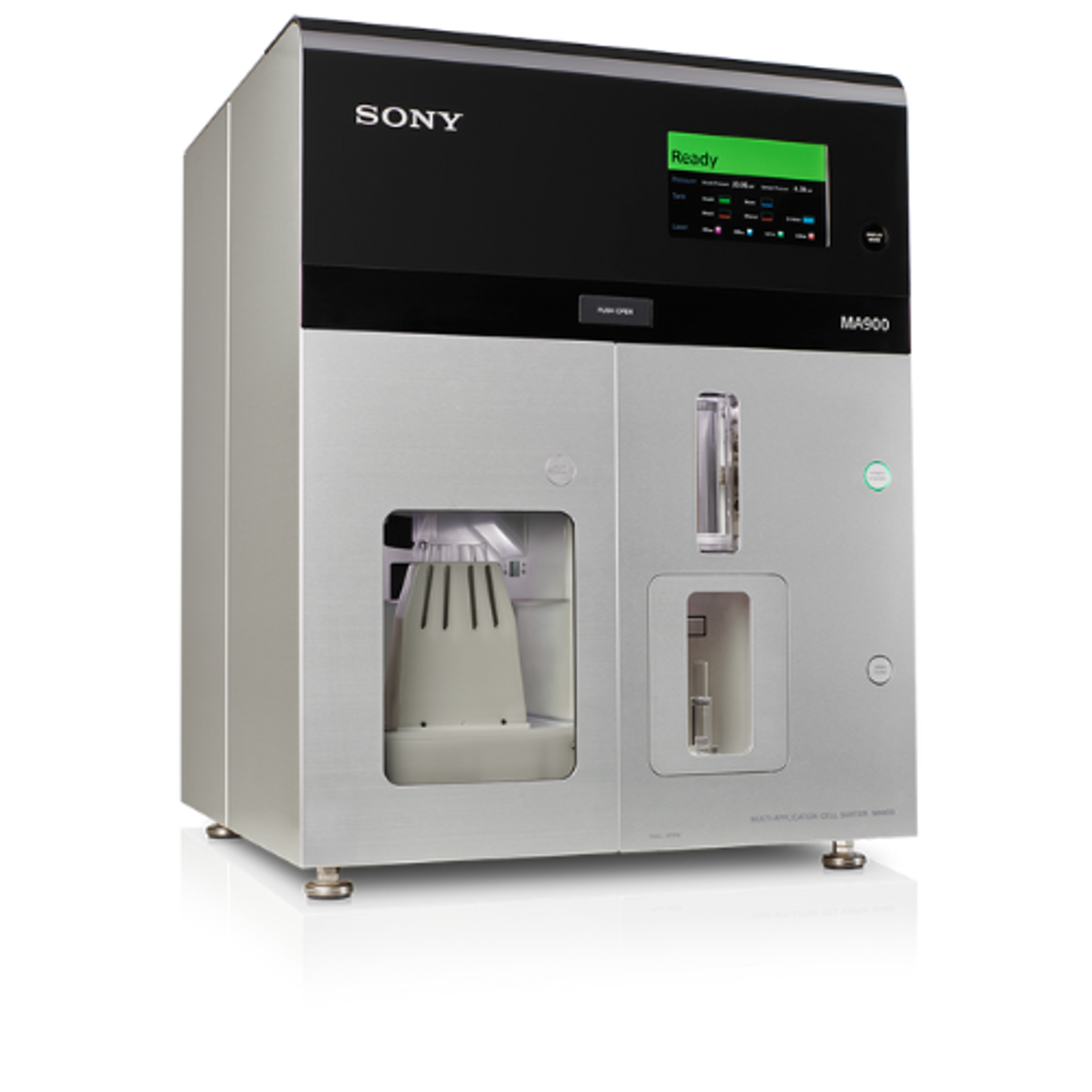
MA900 Multi-Application Cell Sorter
Sony BiotechnologyThe MA900 from Sony meets the needs of most sorting applications, supporting 12 fluorescence parameters and 4-way sorting. Powerful, modern technologies built into the MA900 system include a patented micro fluidic chip-based design, comprehensive fluidic controls, and advanced automation that dramatically simplifies operation to make sorting less subjective and improve reliability.