6 upcoming webinars to boost your research

Discover the latest tools and techniques to expand your research capacity with expert-led presentations on bispecific antibody production, Droplet Digital PCR, sepsis identification, and more

23 Apr 2023
Georgina Wynne Hughes
Editorial Assistant

Expert insights

Upcoming SelectScience Webinars

SelectScience® hosts dozens of informative free webinars for scientists every month, featuring world-class speakers at the very forefront of their respective fields. In this regular feature, we highlight the events you won't want to miss over the next few weeks or so, as well as some of our top on-demand webinars.

This week, explore innovative strategies to accelerate bispecific antibody production, discover how to maximize Droplet Digital PCR data quality, and consider the applications of ICP-MS for food and environmental analysis. Plus, discover a liquid handling platform which provides complete automation of the liquid handling steps in complex workflows, consider the role of lactate in early sepsis identification, and learn why EBSD has become a routine technique for materials characterisation.

Quest for success: Innovative strategies to accelerate bispecific antibody production
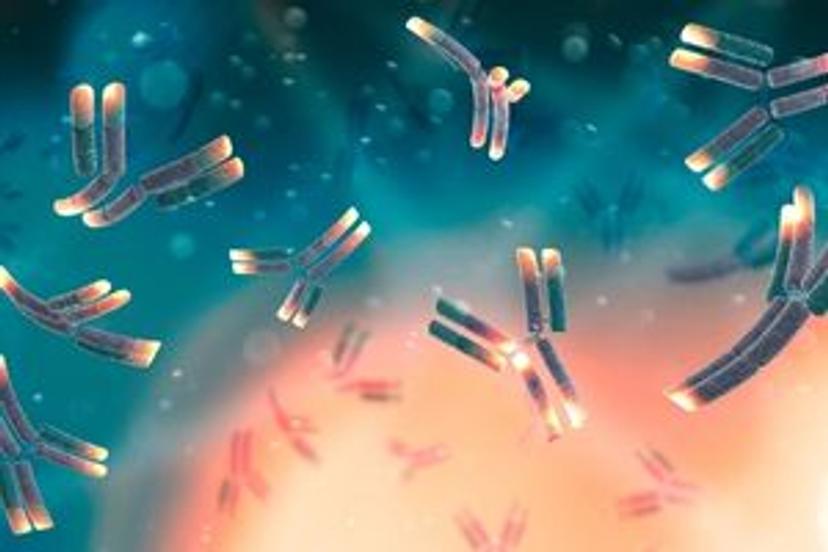
Quest for success: Innovative strategies to accelerate bispecific antibody production

Bispecific antibodies (bsAb) have been heralded as the fourth wave of biopharmaceutical innovation. They are designed and manufactured to target multiple antigens with a single therapeutic. Bioprocessing workflows for bsAb production include critical steps such as antibody screening, characterization, multi-specific drug targetability testing and cell line development. Cell line processing has been enhanced by the use of automated technologies and high-throughput analysis of single-cell cloning, cell expansion, and cell growth analysis. Despite these advancements, challenges remain with bioanalytical assay productivity to evaluate biotherapeutic quality. In this webinar, Dr. Christina Tsai, Head of cell line development at IGM Biosciences will discuss strategies to drive workflow efficiencies and characterize superior antibody drugs.

Monday, April 24, at 16:00 BST / 17:00 CEST / 11:00 EDT / 08:00 PDT

Register here

Maximizing Droplet Digital PCR data quality for biopharmaceutical excellence
Maximizing Droplet Digital PCR data quality for biopharmaceutical excellence

Many people have heard about the power of digital PCR (dPCR), but some may not be accessing the massive potential of this technology. Some dPCR instruments produce data that is error prone and difficult to read, hindering rather than enhancing crucial experiments for cell and gene therapy development and manufacturing. In this webinar, Frank Bizouarn, market development manager from the Digital Biology Group at Bio-Rad, will describe the characteristics of ideal dPCR data, potential causes and consequences of poor data, and strategies for maintaining diligence and avoiding pitfalls.

Tuesday, April 25, at 16:00 BST / 17:00 CEST / 11:00 EDT / 08:00 PDT

Register here


Advances and applications of ICP-MS for food and environmental analysis
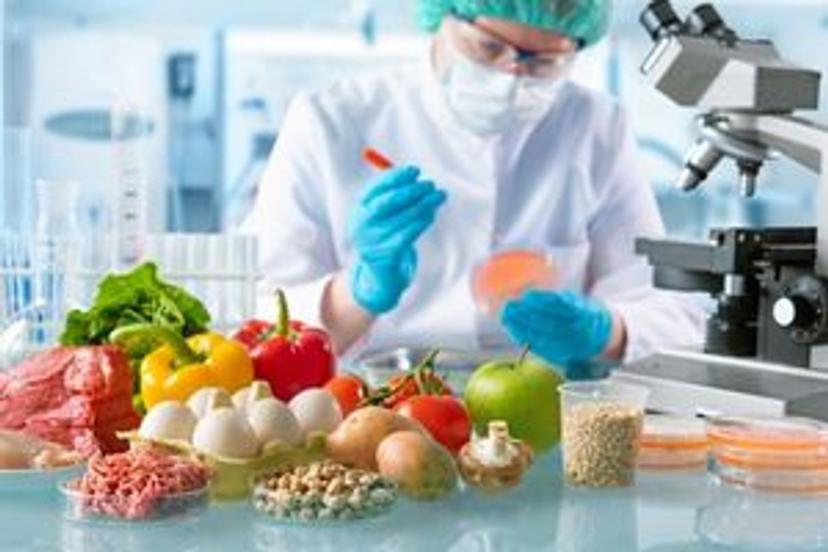
Advances and applications of ICP-MS for food and environmental analysis

In this webinar, Professor Brian Jackson, research professor in earth sciences and Director of the Trace Element Analysis (TEA) Core, will discuss developments in inductively coupled plasma mass spectrometry (ICP-MS) as a result of using helium collision mode. In addition, he will explore the utilization of reaction cell technologies such as those employed in modern triple quadrupole instruments. This webinar will also cover examples of extending the utility of ICP-MS through the use of enriched stable isotopes, and the coupling of GC, LC and laser ablation with ICP-MS. In addition, applications for the speciation and spatial analysis of arsenic, cadmium, and mercury in food and environmental systems will be given.

Tuesday, April 25, at 16:00 BST / 17:00 CEST / 11:00 EDT / 08:00 PDT

Register here


Fast and reliable automation of the NEBNext Ultra II FS DNA library prep kit for Illumina with firefly

Fast and reliable automation of the NEBNext Ultra II FS DNA library prep kit for Illumina with firefly

Library preparation workflows are labor-intensive and difficult to scale while maintaining quality. As such, they are ideal candidate workflows for automation. The firefly® liquid handling platform provides complete automation of the liquid handling steps in complex workflows such as library preparation. It does so by combining pipetting, dispensing, shaking, and incubation within a compact benchtop system. A unique non-contact dispensing technology helps to reduce plastic waste, while low-volume accuracy enables the miniaturization of common workflows to drive down reagent costs. In this webinar, we will give an overview of this next-generation liquid handler.

Wednesday, April 26, at 15:00 BST / 16:00 CEST / 10:00 EDT / 07:00 PDT

Register here


The role of lactate in early sepsis identification: Experiences from intensive care

The role of lactate in early sepsis identification: Experiences from intensive care

Lactate measurements are essential in the assessment of critically ill patients. This webinar will review the importance of lactate measurement and the clinical implications of an increased blood lactate level in the context of sepsis. Specific hospital sepsis protocols are outlined in detail with the therapeutic measures associated with each stage of sepsis. The role of lactate in the risk assessment of patient morbidity and mortality will be presented. Plus, the advantages of obtaining a point of care lactate result versus traditional laboratory analysis will be reviewed.

Wednesday, April 26, at 17:00 CEST / 16:00 BST / 11:00 EDT / 08:00 PDT

Register here


From niche to mainstream: Why EBSD has become a routine technique for materials characterisation

From niche to mainstream: why EBSD has become a routine technique for materials characterisation

Electron backscatter diffraction (EBSD) in scanning electron microscopes is a surface analysis technique that has been commercially available for over three decades. However, only in recent years has it become a well-established tool for routine materials characterization. In this webinar, we will look at the recent developments, from faster detectors to more automated software, that have enabled the transition of EBSD into a mainstream analytical method. We will assess the latest advances in EBSD technology and show how these are opening up new application fields, from biomaterials to batteries.

Session 1: Thursday, April 27, at 09:00 BST / 10:00 CEST / 04:00 EDT / 01:00 PDT
Session 2: Thursday, April 27, at 16:00 BST / 17:00 CEST / 11:00 EDT / 08:00 PDT

Register here


Watch our webinars at a time that suits you

Missed one of our webinars? Fortunately, all SelectScience webinars are made available on demand after the live event. Catch up on some of our latest webinars below:

Solving the integration puzzle: Only an open ecosystem holds the key to unlock the potential of lab data

Watch here»

How leaders can drive more efficient, cost-effective, and value-based healthcare

Watch here»

Pushing the limits: Optical spectroscopy at the extremes

Watch here»

Next generation solutions for proteomics sample preparation

Watch here»

How NASA scientists brought real time microbial profiling to the International Space Station

Watch here»

Overcoming Dissolution Challenges with Low-Dose Pharmaceuticals and Medical Devices

Watch here»

Optimizing equipment for optical spectroscopy

Watch here»

A deep dive into OriginPro for the analysis of high-resolution DGE-AUC data

Watch here»


SelectScience runs 10+ webinars a month across various scientific topics, discover more of our upcoming webinars>>

Links

Tags

AntibodiesAntibodies are used in techniques such as confocal and fluorescence microscopy, flow cytometry, ELISA, ELISPOT, immunohistochemistry, western blotting and immunopreciptation. Select specific antigen reactivity, high specific affinity, low non-specific binding, monoclonal or polyclonal, primary or secondary antibodies and associated conjugates such as an enzyme or dye for visualization.Point-of-CarePoint-of-Care Testing (POCT) or Near Patient Testing (NPT) products are available for urine, blood and other clinical chemistry analyses. POCT includes: blood glucose testing, blood gas and electrolytes analysis, rapid coagulation testing (PT / INR), rapid cardiac markers diagnostics, drugs of abuse screening, urine strips testing, pregnancy testing, fecal occult blood analysis, food pathogens screening, hemoglobin diagnostics, infectious disease testing and cholesterol screening.X-Ray Diffraction and SpectroscopyX-Ray diffraction & spectroscopy are used in material characterization to discern the structure and elemental composition of a sample. X-Ray diffractometers (XRD) are superior instruments in elucidating the dimensional atomic structure of crystalline materials, including powders, thin films and single crystals. For large unit cells or ordered macromolecules, consider small-angle X-ray scattering (SAXS). X-ray spectroscopic techniques include X-ray fluorescence (XRF) and X-ray photoelectron spectroscopy (XPS), both providing simple and accurate methods for determining the elemental composition of a material. Energy dispersive (EDXRF) and wavelength dispersive (WDXRF) XRF spectrometers are available, as well as handheld/portable devices. High-resolution, 3D microstructure characterization of materials can be achieved with X-ray microscopes combining sub-micron resolution imaging with 3D computed tomography. Find the best XRD and XRF spectrometers in our peer-reviewed product directory: compare products, check customer reviews and receive pricing direct from manufacturers.Automated Liquid HandlingAutomated liquid handling equipment is used to mix, dilute and dispense allotted volumes of liquid into microplates and other vessels automatically. The robotic, liquid handling arms can dispense from single channel to 3456 multichannel as well as operate nanoliter dispensing, enabling high throughput of samples. Find the best automated liquid handlers in our peer-reviewed product directory: compare products, check customer reviews and receive pricing direct from manufacturers.Mass SpectrometryMass spectrometry (MS) is a powerful analytical technique used to identify and quantify molecules based on the mass-to-charge ratio of gas-phase ions. It provides detailed information about the structure, composition, and properties of compounds and is widely used across fields such as environmental monitoring, materials science, drug discovery and development, food and beverage testing, and wider chemical research. Key MS techniques include tandem mass spectrometry (MS/MS), liquid chromatography–mass spectrometry (LS-MS) and inductively coupled plasma (ICP-MS). Choosing from these wide range of techniques and technologies can be a daunting task, so keep up to date with scientific applications, performance expectations, and customer reviews here all in one place. Visit our product directory to receive quotes direct from the manufacturer. BatteriesICP-MSInductively Coupled Plasma Mass Spectrometry (ICP-MS) is a powerful analytical technique used to determine the concentrations of elements and their isotopes in a variety of samples, including water, soil, and biological tissues. It involves ionizing elements in the samples with extremely high-temperature Argon (Ar) plasma and then using a mass spectrometer to measure the number of ions based on their mass-to-charge ratio (m/z). Explore ICP-MS systems in our peer-reviewed product directory; compare products, check reviews, and get pricing directly from manufacturers.Antibody ProductionAntibody production is essential for a wide range of applications in biochemistry and immunology. Ensuring high-quality monoclonal and polyclonal antibodies are produced is key. Explore antibody production tools in our peer-reviewed product directory; compare products, check reviews, and get pricing directly from manufacturers.Liquid HandlingLiquid handling involves the precise transfer, mixing, and dispensing of liquids in laboratory settings. It is essential for accurate and consistent results in biological, chemical, and pharmaceutical research. Automated liquid handling systems improve efficiency and reduce human error in sample preparation and analysis. Explore liquid handling tools in our peer-reviewed product directory; compare products, read customer reviews, and get pricing directly from manufacturers.AutomationAutomation in laboratories and manufacturing processes enhances efficiency, precision, and scalability by reducing the need for manual intervention. It plays a critical role in improving productivity, minimizing human error, and accelerating workflows in fields like diagnostics, drug development, and industrial testing. Automation technologies include robotic systems, automated liquid handlers, and process control systems that streamline complex tasks and ensure consistent, reproducible results. Explore our peer-reviewed product directory to discover the best automation solutions, compare options, read user reviews, and get prices directly from manufacturers.SepsisSepsis is a life-threatening response to infection causing organ dysfunction. Research focuses on early detection, biomarkers, and therapies to reduce mortality. Explore tools for sepsis diagnostics and analysis in our peer-reviewed product directory, including detection kits and biomarkers.Point of Care SolutionsPoint of care solutions provide medical diagnostics and treatments at or near the site of patient care. These technologies offer rapid results, helping healthcare providers make quick decisions. From glucose monitors to molecular diagnostics, point of care solutions are transforming healthcare delivery by reducing wait times and improving patient outcomes. Explore the best point of care products in our peer-reviewed product directory, compare options, check reviews, and get pricing directly from manufacturers.
6 upcoming webinars to boost your research