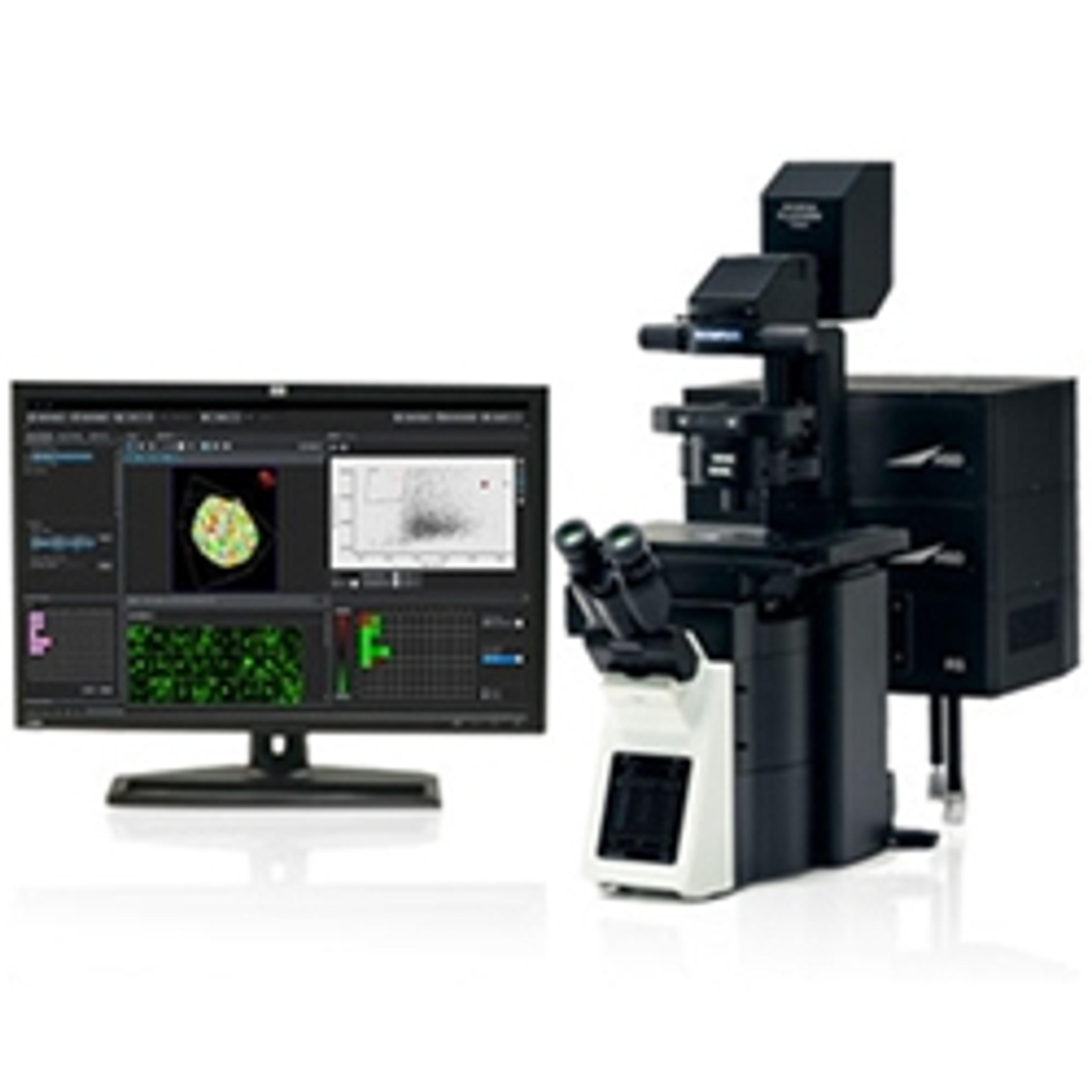
3D high-content analysis: An emerging solution for drug discovery
Learn about Olympus’ new solution for 3D high-content analysis and how patient-derived organoids can be utilized for more effective drug candidate profiling
18 Aug 2019
Expert insights
To date, a majority of cell cultures used in drug discovery have been 2D. Despite increasing investments in drug discovery, the drug failure rate of candidates is also increasing, making it clear that 2D systems are no longer sufficient. 3D analysis of patient-derived organoids is the next step in improving drug discovery models as they are much more physiologically relevant and better at mimicking the human environment.
In this SelectScience webinar, now available on demand, Brendan Brinkman from Olympus Life Science discusses how patient-derived organoids are applied to drug discovery research and the results of a collaborative study with Fukushima Medical University to evaluate drug binding to patient-derived tumor organoids using 3D imaging.
Read on for highlights from the webinar Q&A session or register to watch the webinar on demand.
Watch Webinar Now
Q: You mentioned that NoviSight was able to find a significant difference in IC50 values compared to more traditional analyses. How much of a difference did you find, and what do you attribute the difference to?
BB: Our team was testing CellTiter-Glo and Staurosporine in IC50 response. When they compared CellTiter-Glo and the True 3D analysis with NoviSight, they found about an eightfold difference, which was quite significant. The difference is down to the precision of the imaging data, coupled with a more precise set of measurements throughout the volume of the organoid.
Q: Are the specific genetics of the patient-derived organoids important?
BB: As these 3D models become more prevalent, just like the proliferation of different cell lines that have been established throughout the world, the genetic diversity of these models is also important. It was great that the team at Fukushima Medical University could establish such a model. The genetic variation is often quite important in drug studies.
Q: If you spend a lot of time developing analysis assays, how does your software compare for the speed of analysis?
BB: We've had some very large companies evaluating NoviSight compared to the speed of both existing turnkey commercial solutions and software that could be modified to create specific assays that they needed and also various kinds of free software. Without saying who, they've told us that it saved them significant time and effort in creating the analysis assays. In one case, the time savings were of the order of at least days, if not weeks. They could tailor their assays in NoviSight in about 30 minutes. Of course, it depends on the assay type and the type of structures that people are looking at. We built NoviSight to allow us to provide a more in-depth customization service which we're happy to talk about with people who need to be able to run more complex assays.
Q: Is the 3D analysis done on organoid culture with Matrigel?
BB: In this study, I believe there was a matrix being used, I don't believe it was Matrigel. But I do know, from serving the field quite a bit and speaking with a lot of people, there's quite a bit of discussion about the constituents of different kinds of gel matrix reagents and what effect they can have on drug studies and on the compactness of these 3D models. This can play a role in their physiological responses and also the specific components of the matrix may affect different growth rates and so on.
Q: Will this microscopy software be useful in the case of complex tissues like skin?
BB: Certainly. I think it depends on the nature of the question that you're trying to answer scientifically. We can categorize inside and outside and different kinds of layers; it gets down to the fundamental question of how you are structuring your study. The software is flexible, we do have a couple of preset assays that are useful for that. If there is some well-defined need, we can certainly work to tailor a solution for the kind of question that's being asked.
Q: Patient tumor organoids are heterogenic in shape and composition. How do you compare drug response and normalize the data?
BB: In terms of how we come at that question, the data certainly has some normalization in it. It depends on how you acquired the images, the heterogeneity itself is somewhat complex in terms of how you decide to normalize your data. The software allows you to quantify all the objects and shape and size, as well as intensity across sample. The combination of the imaging technology and the high-quality images with that analysis is able to address most people's needs. Inside any particular study, it's going to depend on how you were doing your experiment.
Q: Is there a trial version of the software available?
BB: Certainly. You can contact us and ask for a demonstration and we would be happy to go through that in an online context. If you feel like sharing some of your image data, we could conduct a preliminary analysis to make sure that we are getting the answers that you need.
Find out more on this topic by watching the full webinar on demand>>
SelectScience runs 3-4 webinars a month across various scientific topics, discover more of our upcoming webinars>>