3D cell culture: The technology driving advancement and innovation

Meet the 3D cell culture technology that is breaking boundaries in cancer research, drug discovery, and beyond

12 Apr 2023


Dora Wells
Clinical Content Editor

Editorial article

3D cell culture technology has revolutionized the way researchers study cell behavior and its response to drugs and diseases. By replicating the three-dimensional structure of tissues and organs, 3D cell culture offers a more realistic environment for studying cell behavior, making it a promising tool in drug discovery, disease modeling, and regenerative medicine. In this special feature, we highlight some of the latest advancements in 3D cell culture technology and how they are transforming drug discovery, cancer research, and other fields.

Explore the resources below to learn how AI-based analysis is accelerating translational cancer research, understand how to gain deeper insights with automated culturing and monitoring, explore how to improve your cell assays with a seamless transition to 3D cell models, discover a matrix hydrogel optimized for advanced 3D cell culture applications, and much more.

AI-based analysis: Accelerating translational cancer research

AI-based analysis: Accelerating translational cancer research

3D organoid technology holds potential for many biological research applications. Discover how automated tumoroid analysis in combination with Tecan’s Spark® Cyto live-cell imaging plate reader provides a solution.

Watch interview


Automated monitoring: Analysis of iPSC-derived 3D cerebral organoids

Automated monitoring: Analysis of iPSC-derived 3D cerebral organoids

Molecular Devices describes a method for semi-automated culturing and monitoring of cerebral organoids, as well as the testing of functional neuronal activity by means of recording Ca2+ oscillations.

Download info


High throughput screening: 5 ways to improve your cell assays

High throughput screening: 5 ways to improve your cell assays

Learn how to empower your cell based research with GrowDex® Hydrogels by UPM Biomedicals. This resource guides you through transitioning from 2D to 3D cell culture to create human-like 3D cell models with scaffold-based matrices.
Download info

Matrix hydrogel: Grow your organoid culture with advanced solutions

New Extragel hydrogel: Grow your organoid culture with advanced solutions

Discover the Extragel Matrix from AMSBIO, a like-for-like replacement for Matrigel™, available immediately with overnight shipping. Extragel is an optimized and effective growth scaffold for organoid, pluripotent stem cell, and advanced 3D culture applications. It’s also suitable for PDX transplantation.

Download info

Expand your 3D cell culture toolkit with these top resources:

  • Find out how organ-on-a-chip (OOC) technology can provide robust and reproducible data that is predictive of the human response.
    Watch video >> 
  • See how the application of advanced cellular imaging capabilities allows all portions of an invading 3D cellular tumoroid structure to be captured in focus.
    Download info >> 
  • Explore how OOC technology is aiding toxicologists in de-risking drug-induced liver injury by providing human-specific safety data.
    Read article >> 
  • Gain tips for reducing microbial contaminations in mammalian cell culture labs, how best to protect cell cultures to enhance cell growth, and more.
    Read article >>
  • Learn about the impact of pH in cell culture and best practices for achieving pH stability.
    Read article >> 

Your recommendations

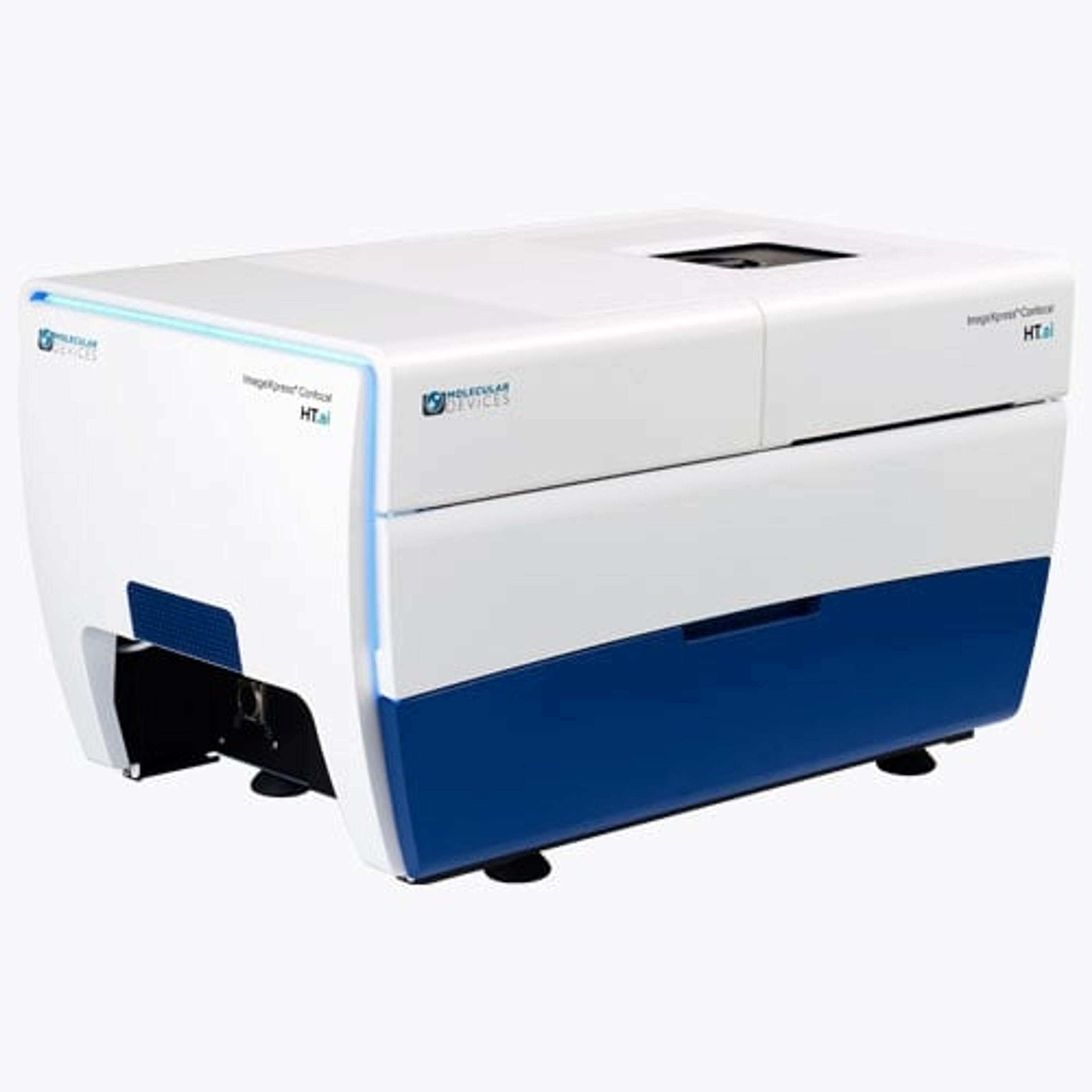
Find out what researchers across the globe are saying about the products they use! Yuhong Du, at Emory University, shared this review of the ImageXpress Confocal HT.ai High-Content Imaging System by Molecular Devices.


Review of ImageXpress Confocal HT.ai High-Content Imaging System by Molecular Devices

Extragel

AMSBIO

Extragel is a reconstituted matrix hydrogel formed by basement membrane components. It is mainly composed of laminin, collagen IV, and heparan sulfate proteoglycans as well as various growth factors such as EGF, PDGF, NGF, FGF-2, TGF-β) and IGF.

(0)

Links

Tags

Cell / Tissue CultureCell culture or tissue culture is used to study the biology of cells or tissues and to isolate cellular products in an environment which can be manipulated and well defined. Accurately control your culture environment with bioreactors or culture incubators, bind your cells to a surface or together with an extracellular matrix. Distinguish cell types with differential media or proliferate cells with certain characteristics using selective media. Enrich your media with supplements such as growth factors, sera and vitamins. Find the best cell and tissue culture products, kits and equipment in our peer-reviewed product directory: compare products, check customer reviews and receive pricing direct from manufacturers.Lab-on-a-ChipLab-on-a-chip (LOC) technology uses microfluidic chips, such as microarrays, to perform biochemical assays on a small scale. Benefits of lab-on-a-chip include the small volume of sample required as well as the speed of analysis. In selecting lab-on-a-chip devices consider the assay, cost, reliability, sensitivity and signal to noise ratio.Cell-Based AssaysCell-based assays are used to monitor the presence, quantity and activities of a desired cellular analyte including drug molecules or biomarkers. This can reveal information on cell health (apoptosis, cytotoxicity, viability and proliferation assays), cell metabolism, cell migration and cell signaling mechanisms. Find the best cell-based assay products, kits and equipment with our peer reviewed product directory: compare products, check customer reviews and receiving pricing direct from manufacturers.Cell AnalysisThe analysis of cells allows researchers to understand the factors which contribute to cell health and function. These influencing processes can then be predicted and altered, leading to the development of medication and disease treatments.Image AnalysisImage analysis involves the extraction of meaningful information from images, often using software to quantify and interpret visual data. It is widely used in cell biology, material science, and diagnostics. Increasingly, AI is being used to streamline image analysis. Explore image analysis tools in our peer-reviewed product directory; compare products, check reviews, and get pricing directly from manufacturers.Drug DiscoveryDrug discovery is the process of identifying potential new medications, involving stages such as target identification, compound screening, and preclinical development. It relies on cutting-edge technologies like high-throughput screening, artificial intelligence, and molecular modeling to accelerate the identification of drug candidates. Drug discovery plays a pivotal role in developing new therapies for diseases ranging from cancer to rare genetic disorders. Browse our peer-reviewed product directory to find the latest drug discovery technologies, compare options, check customer feedback, and get pricing directly from manufacturers.Cell Based AssaysCell-based assays use living cells to measure biological responses to various treatments or stimuli. They are essential for drug discovery, toxicology testing, and understanding cellular mechanisms. These assays are used to assess cell viability, proliferation, gene expression, and other cellular activities. Browse our peer-reviewed product directory to find the best cell-based assay tools and reagents, compare products, read customer reviews, and get pricing directly from manufacturers.OrganoidsDrug Discovery & Development ScreeningCancer ResearchAlthough cancer is often referred to as a single condition, it actually consists of more than 100 different diseases. Microscopy, mass spectrometry, high throughput sequencing and flow cytometry are some of the most common techniques employed in cancer research labs.