10 Top Tips for Life Science Laboratory Efficiency

3 Feb 2017

Sarah Thomas
Associate Editor

Editorial article

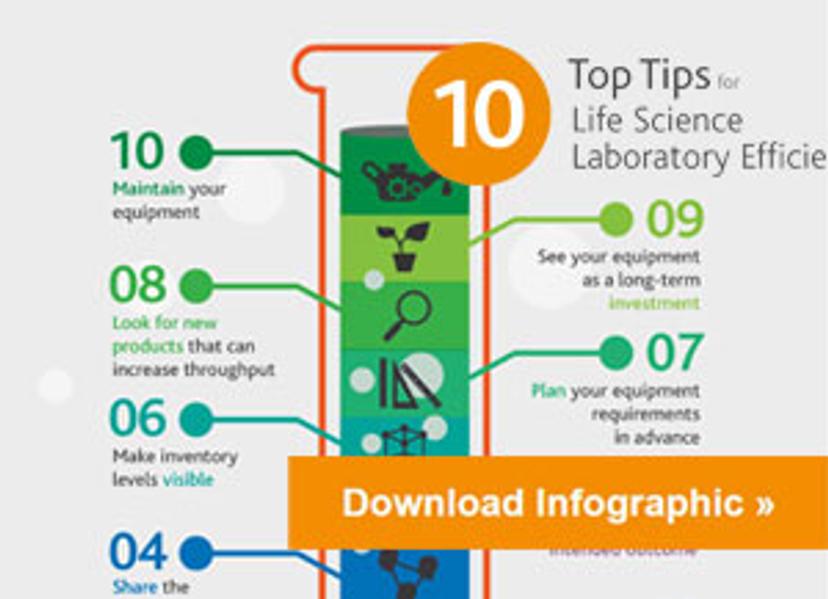
Download the infographic

There are three variables that dictate the level of efficiency in a life science laboratory. Firstly, the people working in the lab, secondly the processes they follow and thirdly what equipment they have and how they use it.

As the study of living systems and of the materials derived from these systems Life Science is arguably the most variable of all the scientific disciplines. Working with living organisms means that even the slightest change in process or environment can lead to a radical change in the outcome of any test.

Is your incubator running a little warm? Expect to see a change in culture growth on your agar plates. Have you changed microcentrifuge tube to a cheaper, less well-contained alternative? You might find that your proteins aren’t quite as intact as they used to be.

Get more great content like this sent to your inbox: Register as a SelectScience member today.

Not only is the substrate variable, but things acting upon this substrate, like enzymes, are also innately variable. This variability means that planning and ensuring continued tight control over processes, training and equipment is vital for efficient and consistent running of Life Sciences laboratories.

From setting out your bench correctly to choosing the right type of storage boxes, this article sets out 10 simple tips to make your lab more efficient today:

People

1. Hire the right people

Nothing is more important to an efficient life science laboratory (or any laboratory for that matter) than its people. Whether in the academic, commercial or public sector, lab teams require strong leadership, continuous education and training and motivation with clear, achievable objectives.

2. Foster a culture of innovation

Actively ask, and encourage others to ask “why am I doing it this way?” If there is a better way, apply proper scientific method to validate the new protocol.

Rather than everyone having free-reign, regular method review should be a planned exercise so as to avoid distractions from the task at hand.

Processes

3. Lean your bench space

Being lean doesn’t have to involve anything complex; as a starting point place the items you use most next to your dominant hand and have a few ‘dry runs’ of any new methods to ensure that your bench space is laid out in a logical way.

Consider including a bench layout plan in the method to ensure that your labmates can be as efficient as possible too.

4. Share the responsibilities

Making certain people accountable for particular areas of the lab in terms of cleanliness and organization will ensure that the whole environment, not just one or two benches, is conducive to working in an efficient way.

5. Start with the intended outcome

Efficiency improvements will be constrained by the output requirements of the lab and process planning and method development should start from the required output.

Knowing your aim and working backwards saves the wasted time and effort of getting to the end of writing up a method only to realize that it isn’t possible to process as many samples as you need to.

6. Make inventory levels visible

Instead of filling every inch of available storage space with cardboard boxes, consider using see-through storage boxes so that it is obvious when stocks are running low. Plus, cardboard is a hive of activity for all manner of fungi and other nasties that would like nothing more than to interfere with your assays at a moment’s notice.

Equipment

7. Plan your equipment requirements in advance

Having an equipment calendar makes it much easier to ensure that everyone has what they need, when they need it.

There are plenty of free shared online calendars that can be accessed by everyone in the lab to allow them to plan ahead.

8. Look for new products that can increase throughput

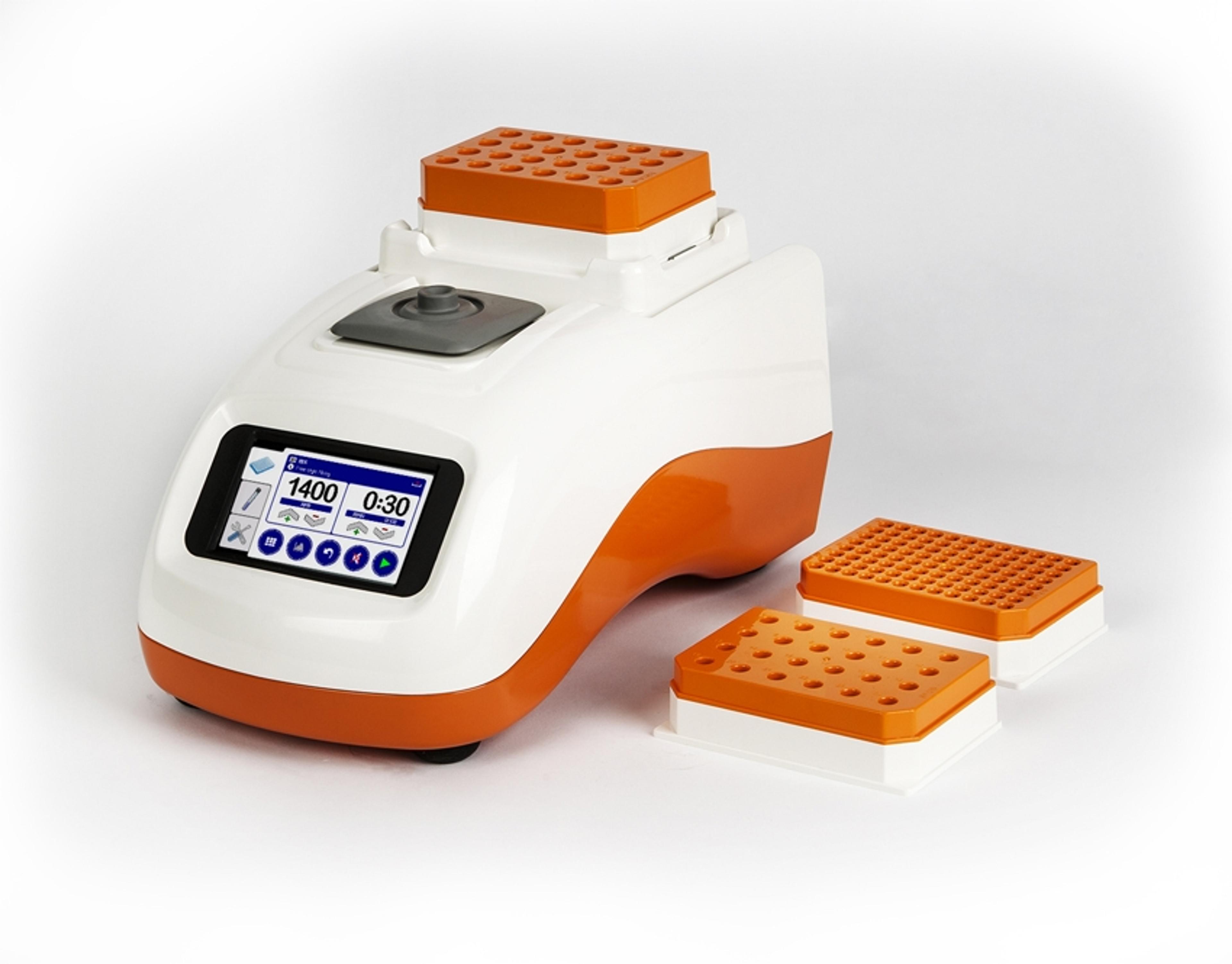
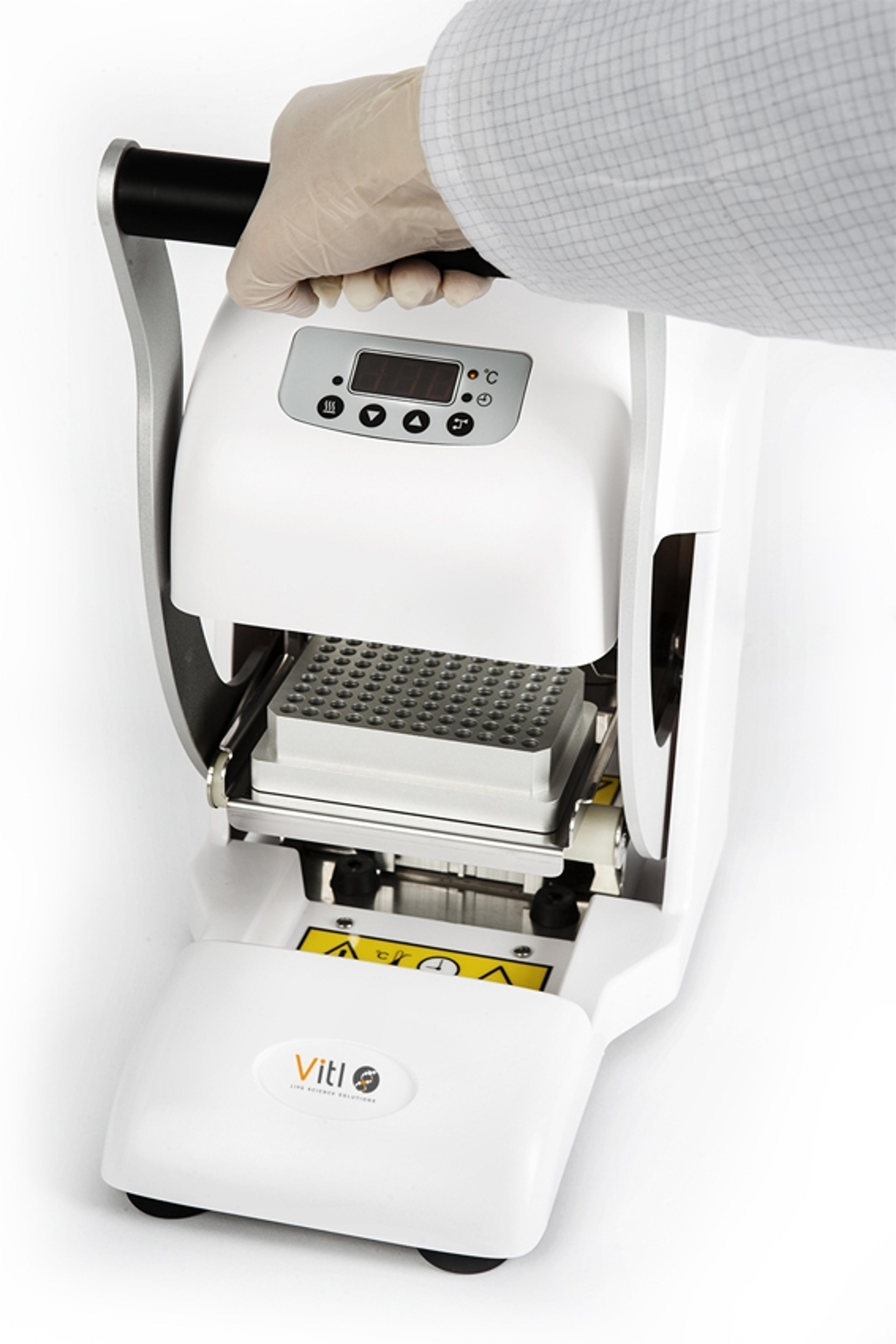
There are plenty of new laboratory products available every year, seeking to increase sample throughput and make protocols more efficient. Keep an eye out for the new generation of programmable lab equipment (such as the Vitl Co-Mix) that allows you to set a protocol and leave the unit running for hours or even days without requiring supervision.

Don’t always assume that the big players have all of the answers. If you have suggestions for an improvement to a product that would benefit your method, smaller, more flexible manufacturers may well be able to modify their equipment to better suit you.

9. See your equipment as a long-term investment

From pipettes to complex HPLCs, life science laboratory equipment should be viewed as an investment. If your output demand was to double in a year’s time, could your current equipment still meet your needs?

Equally, rank the quality of the instrument against your needs. If you are buying something that you are going to use all day, every day, perhaps spending a little extra on something well-built will be better in the long run than going for the “cheap and cheerful” option that needs to be replaced every few months.

10. Maintain your equipment

As well as being fit-for-purpose now and in the future, consider how your equipment will be maintained. Without regular maintenance and servicing, even the most well-engineered equipment will operate less efficiently (you wouldn’t buy a car that had no service history!).

Worse still, an equipment fault that rendered your key piece of instrumentation unusable would have disastrous consequences for your throughput.

Share your opinion about the lab equipment you use for the chance to win a $400 Amazon voucher or iPad.

Links

Tags

Capillary ElectrophoresisCapillary electrophoresis (CE) is used to separate molecules based on charge, size and hydrophobicity. Pressure, voltage or a vacuum is used to introduce the sample to fused silica capillaries. Fluorescence, UV/Vis, UV or diode array detectors are used to visualize components. Types of CE systems include capillary electrochromatography (CEC), capillary zone electrophoresis and capillary gel electrophoresis. Find the best capillary electrophoresis equipment in our peer-reviewed product directory: compare products, check customer reviews and receive pricing direct from manufacturers.ElectrophoresisElectrophoresis equipment is used to separate mixtures of protein, DNA or RNA, based on their electric charge, size and other physical characteristics, by passing them through a medium such as a polyacrylamide gel, an agarose gel or a capillary tube. Electrophoresis equipment includes horizontal and vertical gel electrophoresis chambers, isoelectric focusing systems, 2D electrophoresis and capillary electrophoresis instruments. Precast gels with a gradient can be used or gels can be hand cast. Samples are run alongside ladders or markers to identify the approximate size of a molecule. Separated proteins and nucleic acids in the gel can be stained or probed with fluorescent markers and then imaged and detected using gel documentation instruments, transilluminators, densitometers and scanners. Find the best electrophoresis equipment in our peer-reviewed product directory: compare products, check customer reviews and receive pricing direct from manufacturers.Gas ChromatographyGas chromatography (GC) is an analytical technique used to separate and quantitate mixtures of small and volatile compounds. Gas chromatographs or GC systems include components such as GC columns, detectors, pumps and autosamplers. Choose from packed or capillary GC columns, flame ionization (FID), photoionization (PID) electron capture detectors and selective or non-selective detectors. Find the best gas chromatographs in our peer-reviewed product directory: compare products, check customer reviews and receive pricing direct from manufacturers.UHPLC and HPLCHigh performance liquid chromatography (HPLC) and ultra high performance liquid chromatography (UHPLC), also known as UPLC, are analytical techniques used to separate, identify and quantitate components of complex mixtures including biological samples such as proteins and lipids as well as chemical mixtures of pesticides, drugs and oils. Both techniques are liquid chromatographic methods but differ by operating pressures (HPLC < 6000 psi < UHPLC ). Components of HPLC and UHPLC systems include columns, detectors, pumps, autosamplers and column heaters. Explore a range of UHPLC and HPLC columns for your specific sample needs including reverse phase, normal phase, ion exchange, HILIC, ion exclusion and size exclusion columns. For more specialized HPLC, explore FPLC, countercurrent LC and simulated moving bed systems. Find the best UHPLC and HPLC equipment in our peer reviewed product directory: compare products, check customer reviews and receive pricing direct from manufacturers.Sample PreparationSample preparation can improve the quality and speed of separation techniques. Products to assist sample preparation include filtration equipment, evaporators, membranes and sieves.Mass SpectrometryMass spectrometry (MS) is a powerful analytical technique used to identify and quantify molecules based on the mass-to-charge ratio of gas-phase ions. It provides detailed information about the structure, composition, and properties of compounds and is widely used across fields such as environmental monitoring, materials science, drug discovery and development, food and beverage testing, and wider chemical research. Key MS techniques include tandem mass spectrometry (MS/MS), liquid chromatography–mass spectrometry (LS-MS) and inductively coupled plasma (ICP-MS). Choosing from these wide range of techniques and technologies can be a daunting task, so keep up to date with scientific applications, performance expectations, and customer reviews here all in one place. Visit our product directory to receive quotes direct from the manufacturer. UV-Visible SpectroscopyUltraviolet-visible (UV-Vis) spectrophotometers are used to measure the interaction of UV and visible light with a sample, including transmission, reflectance & absorbance. The two major instrument classes are single-beam or double-beam spectrophotometers. More specialized equipment includes colorimeters, spectroradiometers and refractometers. Portable and microvolume spectrophotometers are also available. For the modular spectroscopy lab, explore a range of light sources for combination with a spectrograph/spectrometer and optics. Find the best UV-Vis spectroscopy products in our peer-reviewed product directory: compare products, check customer reviews and receive pricing direct from manufacturers.AntibodiesAntibodies are used in techniques such as confocal and fluorescence microscopy, flow cytometry, ELISA, ELISPOT, immunohistochemistry, western blotting and immunopreciptation. Select specific antigen reactivity, high specific affinity, low non-specific binding, monoclonal or polyclonal, primary or secondary antibodies and associated conjugates such as an enzyme or dye for visualization.BiosensorsBiosensors are devices used to detect an analyte using biological molecules specific to the analyte coupled to a detector. Biosensor instruments may be photometric, typically using surface plasma resonance (SPR), electrochemical or QCM (quartz crystal microbalance) biosensors. Biosensors should be selective, portable, robust and sensitive and have a fast response time. Systems may be manual or automated and usually have associated software.Western BlottingWestern blotting equipment is used to transfer and identify specific proteins within a sample, reveal protein modifications, as well as give a semi-quantitative estimation of their concentration. Western blotting equipment includes all apparatus necessary to transfer proteins from gel to membrane and subsequent processing steps. Protein transfer can be performed by electroblotting with wet, semi-dry and dry transfer systems onto nitrocellulose and PVDF membranes. Blocking, washing and labeling of membranes follows, involving buffers, blocking reagents, blotting / incubation trays, labeling reagents, immunoblotting assays, antibodies and conjugates. Automated equipment for these steps is available to accelerate your lab workflow. Finally, detection and imaging of proteins can be conducted using gel documentation and imaging systems. Find the best western blotting equipment in our peer-reviewed product directory: compare products, check customer reviews and receive pricing direct from manufacturers.Cell Adhesion AssaysCell adhesion assays are used to quantitate attachment and analyze the molecular mechanisms for extracellular matrix adhesion, cell migration and sensitivity to inhibitors. Find the best cell adhesion assay equipment in our peer-reviewed product directory: compare products, check customer reviews and receive pricing direct from manufacturers.Cell / Tissue CultureCell culture or tissue culture is used to study the biology of cells or tissues and to isolate cellular products in an environment which can be manipulated and well defined. Accurately control your culture environment with bioreactors or culture incubators, bind your cells to a surface or together with an extracellular matrix. Distinguish cell types with differential media or proliferate cells with certain characteristics using selective media. Enrich your media with supplements such as growth factors, sera and vitamins. Find the best cell and tissue culture products, kits and equipment in our peer-reviewed product directory: compare products, check customer reviews and receive pricing direct from manufacturers.Genome AnalysisGenomics, the study of genomes, includes functional genomics, evolutionary genomics and comparative genomics. There are many genomic technologies such as DNA sequencing of whole genomes, computational biology and bioinformatics. DNA and nucleic acids must be isolated and concentrated from cells for analysis with kits, automated analyzers and software. Other useful technologies for studying genomics include PCR, microarrays and electrophoresis.ELISAEnzyme-linked immunosorbent assays (ELISA), also known as enzyme immunoassays (EIA), are used for the detection and quantification of proteins, peptides and antibodies in a sample. ELISA often comes in kit format, with pre-selected antibody pairs to detect specific proteins or biomarkers of diseases such as diabetes and obesity, or cardiovascular and neurological disorders. Detection is made possible with chemiluminescent, fluorescent or colorimetric substrates and detection instruments such as microplate / ELISA readers. Other kits available include: Enzyme-linked immunospot (ELISPOT) assays for the quantification of protein-producing cells and chemiluminescent immunoassays (CLIA) kits. Find the best ELISA kits and products in our peer-reviewed product directory: compare products, check customer reviews and receive pricing direct from manufacturers.GlycobiologyGlycobiology encompasses research into the biological functions, synthesis and structures of glycans, including glycoproteins, glycolipids, proteoglycans and free oligosaccharides. Mass spectrometers and their software are commonly used in the study of glycobiology, along with structure predicting tools, chromatography and NMR.