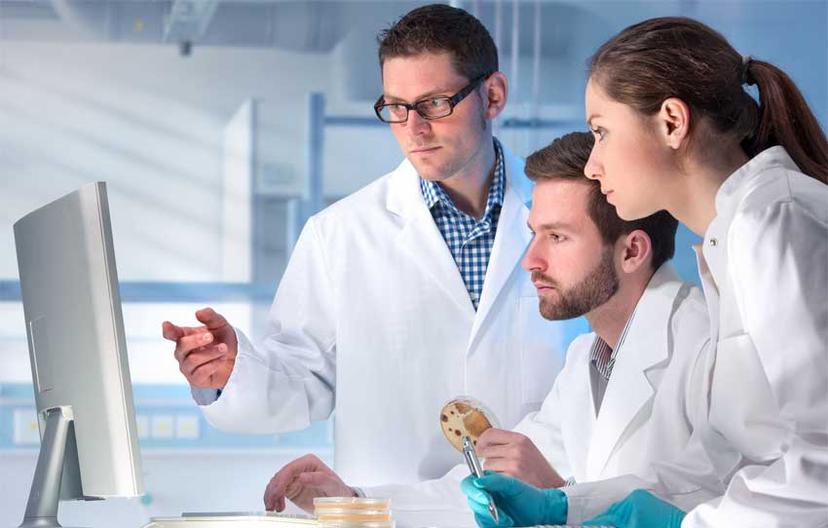
10 Top Technical Webinars.... #8 was the Most Washed*

Discover 10 wonderful webinars popular with scientists across the globe in 2017 — and watch them on demand

27 Feb 2018
Lui Terry
Administrator / Office Personnel

Editorial article

2017 was a great year for webinars at SelectScience®. In total, we ran 37 webinars over the course of the year, spanning across our different scientific communities, helping scientists like you learn new methods and techniques from leading experts in the field.

Our technical webinars provide an educational platform for members to learn about the most current and effective techniques for a variety of applications, as well as tips and tricks from world-leading application scientists to help you overcome complications in your lab.

Below, we’ve highlighted 10 of our top performing webinars, not to be missed:

1. Stay safe in the laboratory

Are you looking to keep your lab safe? Then this webinar is for you. Annett Schneider, safety and essential global product manager at Merck, illustrates how safety can easily be optimized by combining perfectly matching components: solvents - packaging - withdrawal system - safety accessories. She discusses basic safety risks and rules for regular solvents handling and how to improve daily processes in regard to personal safety. Watch the webinar here>>>

2. UV/VIS in life sciences explored

Want to know what UV-Vis spectrometer applications are relevant for the life science laboratory? In the webinar, Dr. Derek C. Lenz, UV-VIS technology and applications consultant at Mettler-Toledo, reviews the most relevant applications of UV-Vis spectrometry for life sciences and gives hints and tips for optimizing measurement accuracy. Watch the webinar here>>>
3. UHPLC analysis solutions

Need guidance with your UHPLC? In this webinar, Scott Krepich, senior field application scientist at Phenomenex, gives advice to analysts on UHPLC techniques, explaining what columns are applicable for your method development needs, giving tips based on recent industry-specific application work and further providing important and useful method screening and development strategies. Watch the webinar here>>>
4. Why water purity really matters

Ever had a week where your experiments just will not work? Perhaps you’re forgetting something? In this webinar, Dr. Estelle Riche, senior application scientist at Merck, explains the potential impact of water impurity on your experiments, how to identify contaminants in your lab's water and how to obtain the best water quality in your lab. Watch the webinar here>>>

5. Membranes masterclass

You might be surprised by how much a liquid sample can tell you about its microbiological content! Over the years, membrane filtration has become a standard for microbial enumeration of colonies in the pharmaceutical and beverage industries. In this webinar, Tommaso Ronconi, in-process testing global product manager at Merck, outlines how membranes are made and the performance variation, which membranes are suitable for which applications and how to deal with hard-to-filter matrices and antibiotics. Watch the webinar here>>>

6. Real-time analysis of cellular phagocytosis

Alongside intense efforts to exploit T cells as immunotherapies for cancer, other immune cell types for novel targets are being considered, including the enhancement of macrophage function via inhibitors of CD47 “don’t-eat-me” signaling proteins, enabling tumor cells to evade clearance by neighbouring phagocytes. In this webinar, Dr. Tim Dale, co-founder of Essen BioSciences, discusses novel, direct and validated live-cell assays for identifying CD47 and phagocyte modulators. In particular, he explains how real-time live-cell analysis using pH-sensitive fluorescent probe-labeled target cells can be used to visualize and quantify phagocytosis. Watch the webinar here>>>
7. Characterizing glycoproteins

Are you looking for help on how to characterize glycoproteins and their interactions with therapeutic or target proteins? In this webinar, Dr. Daniel Some, principal scientist at Wyatt Technology, presents two techniques for the absolute determination and characterization of glycoproteins: size-exclusion chromatography multi-angle light scattering ultraviolet refractive index (SEC-MALS-UV-RI) and composition gradient multi-angle light scattering (CG-MALS). He also discusses the limitations of analytical SEC and native PAGE for characterizing glycol proteins and how SEC-MALs and CG-MALs improve upon these techniques. Watch the webinar here>>>
8. Keep it clean

*Pun intended. In this webinar, Annett Schneider, safety and essential global product manager at Merck, explains how residue-free cleaning is essential for reliable processes in both laboratory and production facilities, illustrating ways to improve cleaning process effectiveness with a view to helping you achieve reliable analytical results. Watch the webinar here>>>

9. Live-cell analysis for immunologists

In this webinar, Dr. Del Trezise, co-founder of Essen BioSciences, discusses how immunologists can effectively use real-time live-cell analysis, using automated time-lapse imaging for the kinetic quantification of and functional analysis of immune cells, giving a number of case studies including T cell proliferation and clustering, phagocytosis, chemotaxis, cytolysis and viral infection assays. Watch the webinar here>>>

10. Quantitating your NMR

Are you in need of an alternative method for quantifying your sample? In this webinar, Dr. Clemens Anklin, vice-president of NMR applications at Bruker, presents how NMR can be used to quantify a material, discussing the key parameters and experimental conditions that need to be controlled for accurate results. Watch the webinar here>>>
Watch more free webinars from SelectScience® here.

Links

Tags

UHPLC and HPLCHigh performance liquid chromatography (HPLC) and ultra high performance liquid chromatography (UHPLC), also known as UPLC, are analytical techniques used to separate, identify and quantitate components of complex mixtures including biological samples such as proteins and lipids as well as chemical mixtures of pesticides, drugs and oils. Both techniques are liquid chromatographic methods but differ by operating pressures (HPLC < 6000 psi < UHPLC ). Components of HPLC and UHPLC systems include columns, detectors, pumps, autosamplers and column heaters. Explore a range of UHPLC and HPLC columns for your specific sample needs including reverse phase, normal phase, ion exchange, HILIC, ion exclusion and size exclusion columns. For more specialized HPLC, explore FPLC, countercurrent LC and simulated moving bed systems. Find the best UHPLC and HPLC equipment in our peer reviewed product directory: compare products, check customer reviews and receive pricing direct from manufacturers.Size Exclusion ChromatographySize exclusion chromatography (SEC) is a liquid chromatographic technique used to separate and identify molecules based on their size, including polymers, proteins, nanoparticles & nucleic acid. SEC is further subdivided into gel filtration chromatography (GFC) and gel permeation chromatography (GPC) when an aqueous or organic mobile phase is used respectively. HPLC-based SEC systems and columns are available for analytical separation alongside SEC spin columns or filters to prep samples for many protocols. Find the best size exclusion chromatography equipment in our peer-reviewed product directory: compare products, check customer reviews and receive pricing direct from manufacturers.LC-MSLC-MS (liquid chromatography-mass spectrometry) systems and equipment are used for separation and quantitative analysis of complex mixtures, combining liquid chromatography and mass spectrometry. Quantify proteins, contaminants, pesticides or screen for drug metabolites with a high level of sensitivity. LC-MS systems and equipment include reverse phase, normal phase and specialized columns integrated with various MS detectors such as time-of-flight (TOF), quadrupole, orbitrap or ion trap mass analyzers. LC-MS/MS instruments equipped with a qTOF or triple quadrupole analyzer give greater sensitivity and resolving power to your analysis. Find the best LC-MS equipment in our peer-reviewed product directory: compare products, check customer reviews and receive pricing direct from manufacturers.NMR and EPR SpectroscopyNuclear magnetic resonance (NMR) spectroscopy is used to resolve the local chemical environment of atomic nuclei with spin, revealing information on molecular structure, dynamic processes and chemical reactions of organic molecules, from proteins to synthetics. Electron paramagnetic resonance (EPR) also known as electron spin resonance (ESR) spectroscopy is used to detect and quantify paramagnetic species in a sample, including free radicals as transition metal ions. By immersing the sample in a strong magnetic field, both NMR and EPR spectrometers probe the sample with either radio waves or microwaves respectively. A range of benchtop, solid-state and time domain NMR spectrometers & EPR spectrometers are available, as well as NMR tubes, NMR solvents, software, coils, and magnets. Find the best NMR & EPR equipment in our peer-reviewed product directory: compare products, check customer reviews and receive pricing direct from manufacturers.UV-Visible SpectroscopyUltraviolet-visible (UV-Vis) spectrophotometers are used to measure the interaction of UV and visible light with a sample, including transmission, reflectance & absorbance. The two major instrument classes are single-beam or double-beam spectrophotometers. More specialized equipment includes colorimeters, spectroradiometers and refractometers. Portable and microvolume spectrophotometers are also available. For the modular spectroscopy lab, explore a range of light sources for combination with a spectrograph/spectrometer and optics. Find the best UV-Vis spectroscopy products in our peer-reviewed product directory: compare products, check customer reviews and receive pricing direct from manufacturers.AntibodiesAntibodies are used in techniques such as confocal and fluorescence microscopy, flow cytometry, ELISA, ELISPOT, immunohistochemistry, western blotting and immunopreciptation. Select specific antigen reactivity, high specific affinity, low non-specific binding, monoclonal or polyclonal, primary or secondary antibodies and associated conjugates such as an enzyme or dye for visualization.GlycobiologyGlycobiology encompasses research into the biological functions, synthesis and structures of glycans, including glycoproteins, glycolipids, proteoglycans and free oligosaccharides. Mass spectrometers and their software are commonly used in the study of glycobiology, along with structure predicting tools, chromatography and NMR.FiltrationFiltration and microfiltration are used to separate solids, particulates or large molecules from fluids (liquid or gases) in order to purify the filtrate. Explore a range of filter formats, including filter paper, plates and membranes for your separation needs. While larger particulates may be separated by gravity filtration, smaller particulates may require additional force for timely separation. Microfiltration equipment includes vacuum filters, as well as positive pressure, crossflow and centrifugal filtration devices. Find the best filtration products in our peer-reviewed product directory: compare products, check customer reviews and receive pricing direct from manufacturers.Washing EquipmentWashing equipment is more convenient than ever before with automated systems, integrated and multi-application systems available. For instance microplate washers can be programmable, combined with reagents dispensers and used for applications such as ELISA, multiplex assays and PCR clean up.ImmunologyImmunological techniques measure and characterize immune responses. Immunology kits and analysis systems often use techniques such as ELISA, radioimmunoassay (RIA) and immunodiffusion assays, Immunohistochemistry, and flow cytometry. Immunologists use equipment such as flow Cytometers, plate readers, plate washers and fluorescent microscopes.Cellular PathologyCellular Pathology deals with the microscopic analysis of tissue samples and cells. Sample preparation and processing includes fixation, staining, sectioning and slide mounting, using equipment such microtomes and cryostats. In choosing immunohistochemistry and immunocytochemistry kits, consider chromogens, staining method, antibodies, microscopes and imaging.In Vivo Imaging Systems<i>In vivo</i> imaging systems, including pre-clinical imaging systems and medical imaging systems are used to non-invasively visualize and capture images of live animals and plants. Monitor the natural processes or diseases of your subjects using small-animal pre-clinical imaging systems, including single photon positron emission tomography (SPECT), positron emission tomography (PET), computed tomography (micro-CT), magnetic resonance imaging (MRI), X-ray radiography, ultrasound, fluorescence and bioluminescence imagers. Multimodal systems and software solutions are also available for correlative analysis of organ, tissue, cell, or molecular-level processes. Find the best in vivo imaging products in our peer-reviewed product directory: compare products, check customer reviews and receive pricing direct from manufacturers.Clinical MicrobiologyMicrobiology is the study of microorganisms including protists, prokaryotes, fungi, and, often, viruses. Microorganisms are a useful research tool as genetic vectors and, in immunology, for antibiotic susceptibility testing, cellular biology and genetics. Microorganisms commonly grow readily in incubators with microbial culture media; this can contain chromogenic supplements to differentiate between cell lines. Estimate your culture’s density of microorganisms with colony counters, or screen and select colonies for desirable clones with automated colony pickers. Additionally, equipment is available to monitor environments for the presence of microbes and identify with microbial identification instruments. Find the best microbiology products in our peer-reviewed product directory: compare products, check customer reviews and receive pricing direct from manufacturers.pH and Conductivity MetersIon and pH meters, used for electrochemical techniques and measurements, measure the concentration of specific ions using electrodes (probes) and a meter. Features of ph and ion meters to consider include temperature compensation, auto-calibration, adjustable resolution, measurable range and accuracy. Meters can be handheld, portable, benchtop and modular.Particle CharacterizationParticle characterization instruments are used to determine particle size distribution, shape, surface area, zeta potential, density and porosity of particles and materials. Multiple tecchniques are available for determining particle size, shape and count including dynamic light scattering (DLS), laser diffraction, electrozone (Coulter technique), imaging particle analysis and single particle optical sensing. Determine the density of your material with a gas pycnometer or examine its surface area and porosity with gas adsorption analyzers and mercury porosimeters. Find the best particle characterization instruments in our peer-reviewed product directory: compare products, check customer reviews and receive pricing direct from manufacturers.